Guides
The forces shaping painting contractor demand
Painting contractor demand is moved by seven forces, from housing age to coating regulation. How to read each one locally instead of trusting a national forecast.
What to take away
- National forecasts are close to useless for a painting company. Demand is set street by street, and the readings that matter are local and free.
- Seven forces move repaint demand. Track them yourself rather than waiting for someone to publish a number.
- Regulation moves this trade more quietly than fashion does. Coating formulation rules and lead-safe requirements change methods and costs.
- Labor supply is a demand story too. When crews are scarce, backlogs grow and prices firm, which changes what you can sell.
The seven forces
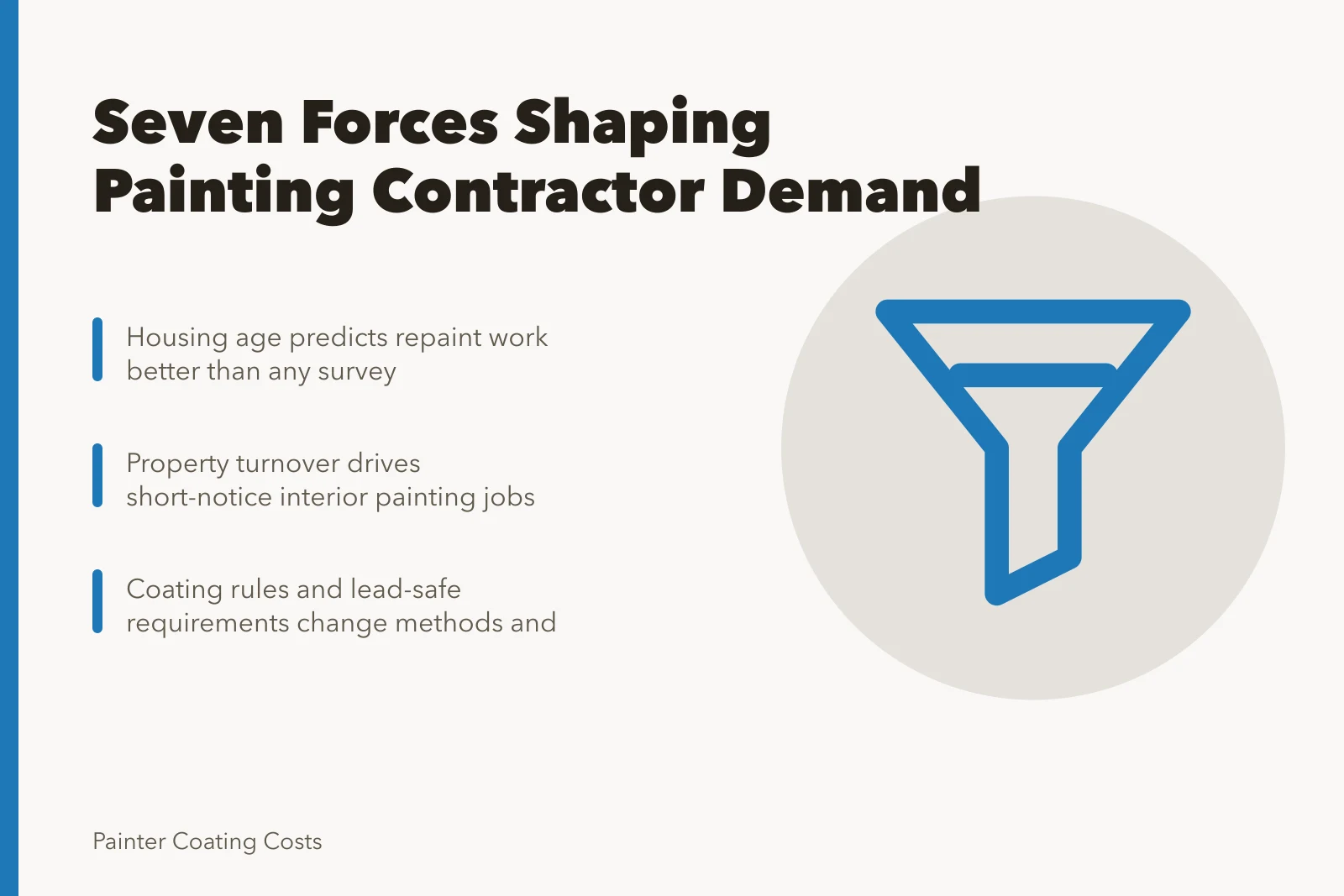
Housing age. The oldest and steadiest driver. Paint fails on a schedule set by substrate, exposure, and the last coating, so a market's age profile predicts repaint work better than any survey. County assessor records give you the ages.
Property turnover. Houses get painted when they are sold and after they are bought. Watch local listing activity: a market with brisk turnover produces short-notice interior work, and the best markets for a painting contractor business piece covers how to read that.
Rental and multifamily stock. Turnover painting runs year round and is insulated from the seasons. Its volume follows tenancy churn rather than home sales.
Weather and climate exposure. Storm damage, prolonged wet seasons, and intense sun all shorten coating life on exteriors. A run of severe weather in your area is a demand signal, and a shortening of your workable exterior weeks is a capacity signal.
Labor supply. When experienced painters are scarce, backlogs lengthen across every company in a market. That is a demand condition as much as a staffing one, and the wage estimates in the Bureau of Labor Statistics wage tables by state and metro give you a read on how tight your local market is.
Coating regulation and formulation. Rules on coating composition are set at federal, state, and sometimes district level, and they change what is available and how it behaves. New formulations can alter dry times, recoat windows, and application temperature ranges, which affects your scheduling before it affects your pricing.
Lead-safe requirements. Not a trend so much as a standing condition that grows in importance as the housing stock ages. The EPA renovation, repair and painting program for contractors sets out certification and work practices for pre-1978 properties, and the licensing and compliance guide covers the rest of the picture.
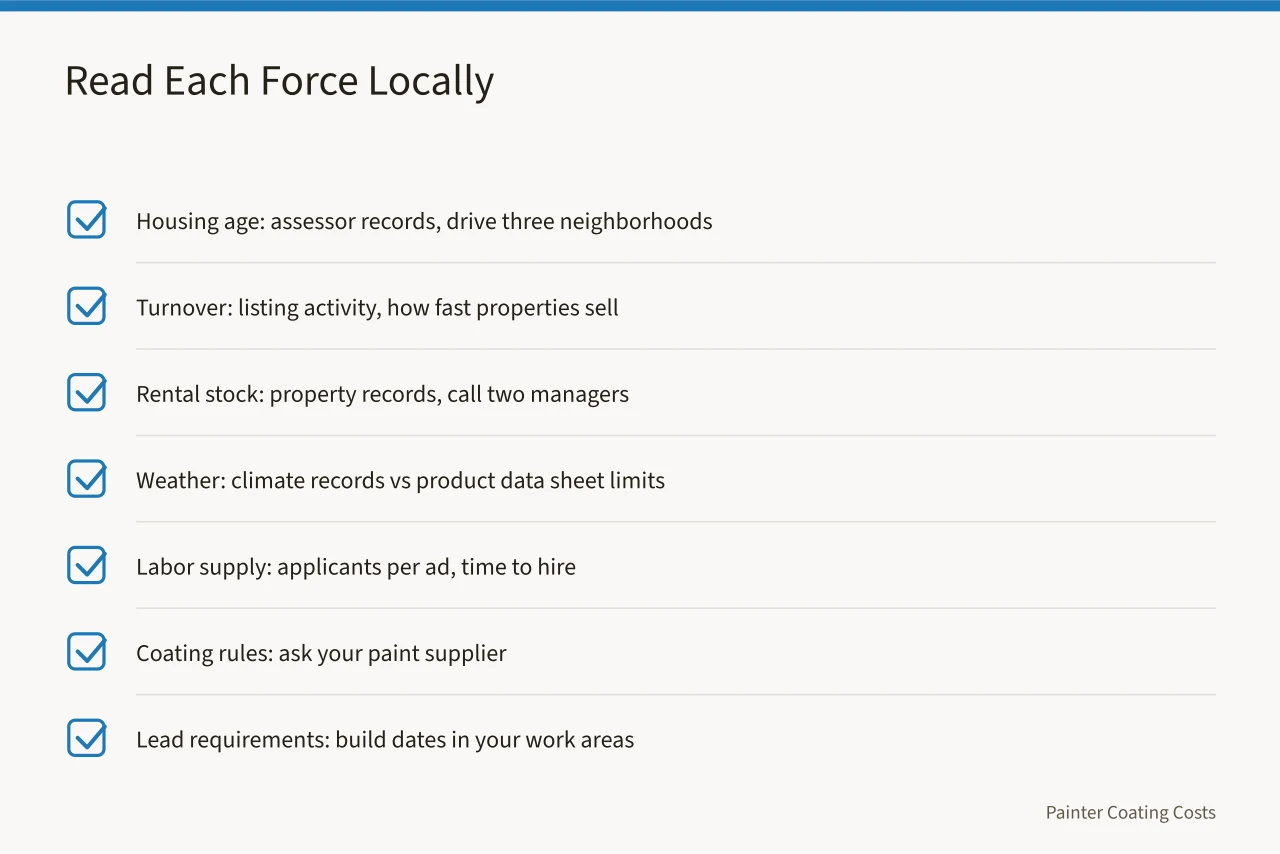
How to read each force locally
| Force | Local reading, free |
|---|---|
| Housing age | Assessor records plus a weekday drive through three neighborhoods |
| Turnover | Listing activity and how quickly properties change hands |
| Rental stock | Property records, and calls to two property managers |
| Weather | Local climate records against product data sheet limits |
| Labor supply | How many painters apply to an ad, and how long a hire takes |
| Coating rules | Your paint supplier, who knows before you do |
| Lead requirements | Build dates in the neighborhoods where you actually work |
Your supplier is the most underused source on this list. They see what every contractor in the area is buying and what has changed in the products.
What a trend should change, and what it should not
A trend should change your capacity planning, your training, and your purchasing. It should rarely change your standards.
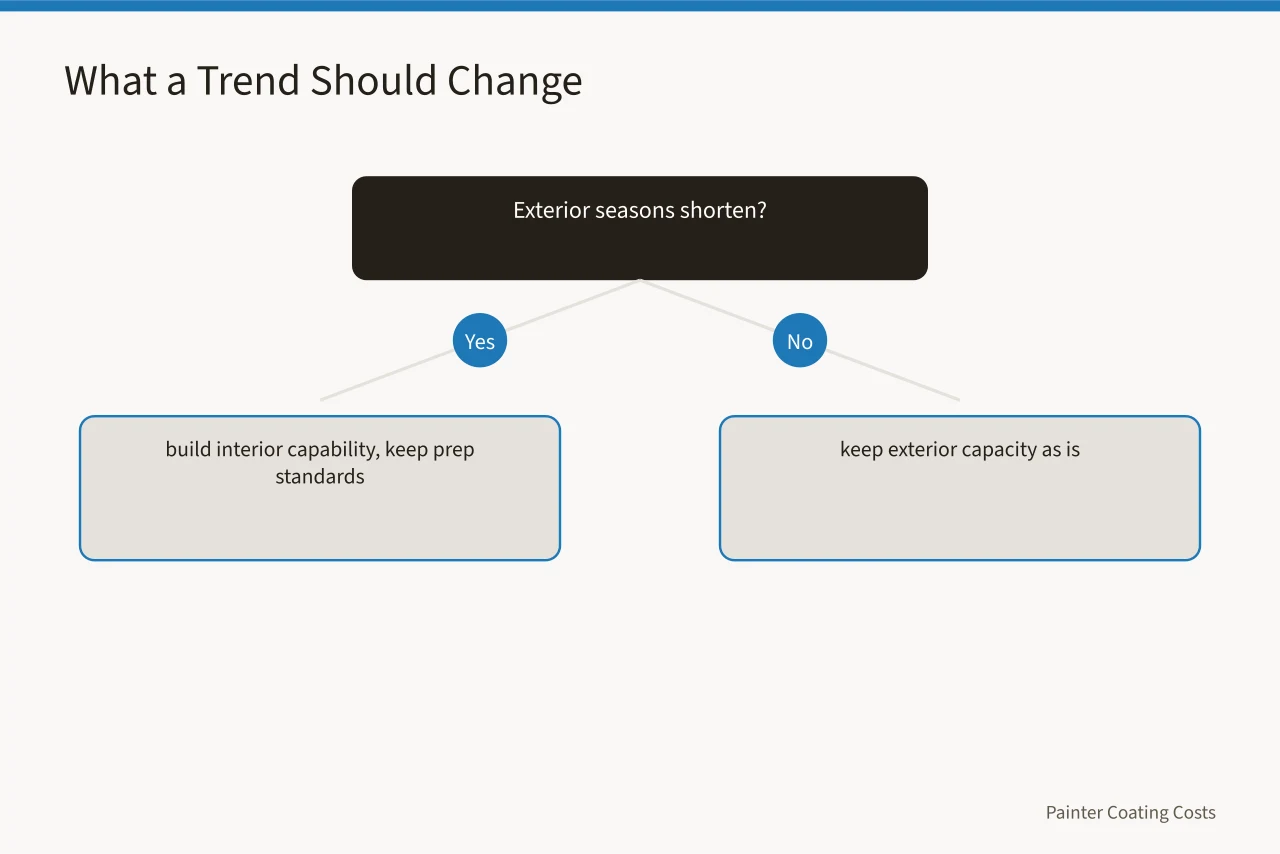
If exterior seasons shorten, build interior capability instead of cutting preparation to fit more exterior work into fewer weeks.
If a new coating formulation has a different recoat window, retrain rather than assume. When labor is tight, invest in the ladder that keeps people. It is set out in the equipment and setup guide on the tooling side and your training plan on the human side.
Method changes have equipment consequences, and they arrive faster than most owners plan for. When a product or a practice changes, the equipment checklist for new owners is the right shape to work from: what is needed now, what a job triggers, and what can wait.
Treating forecasts with suspicion
Published forecasts for construction and home improvement cover very large areas and mix segments that behave differently. A national figure that rises while your county's housing stock is new and its turnover slow tells you nothing about next month's calendar.
Two habits work better. Keep your own record of inquiries by month over several years, which becomes the only seasonal forecast that describes your market. And read general business guidance for the structural questions rather than the predictive ones: the SBA's business guide is useful for planning and financing decisions, not for telling you what demand will do.
Common questions
Will color and finish fashions change my workload?
They change what customers ask for more than how much they buy. A shift toward a particular sheen or toward more repainting of cabinetry changes your skill and equipment needs, which is worth watching through supplier conversations.
Is exterior demand really weather dependent?
Yes, and in two directions. Weather shortens coating life, which creates work, and it shortens the season in which you can do it. Markets with severe weather often have high demand compressed into fewer weeks.
Should I plan for changes in coating regulation?
Plan for the possibility rather than for a specific change. Keep supplier contact, read the product data sheets when a formulation changes, and treat a reformulated product as a new product for training purposes.
How far ahead can a painting company realistically plan?
One season with confidence, and one year in outline. Beyond that, keep the capacity flexible: rentals rather than purchases, and a crew ladder that can absorb a hire without restructuring.