Guides
Cash flow for a painting contractor business: the books an owner has to keep
Painting contractor bookkeeping built around job costing and cash timing: what to code where, why deposits are not revenue, and how to survive a slow month.
What to take away
- Profit and cash are different problems. A painting company can be profitable on paper and unable to make payroll in the same week.
- Code costs to jobs or to overhead deliberately. Equipment costs buried in job costs make every margin comparison wrong.
- Deposits are money you owe work against, not revenue. Spending them on last month's payroll is how contractors get trapped.
- Reconcile weekly during the busy season. Monthly reconciliation finds problems a month after they mattered.
The chart of accounts a painting company actually needs
Keep it small and consistent.
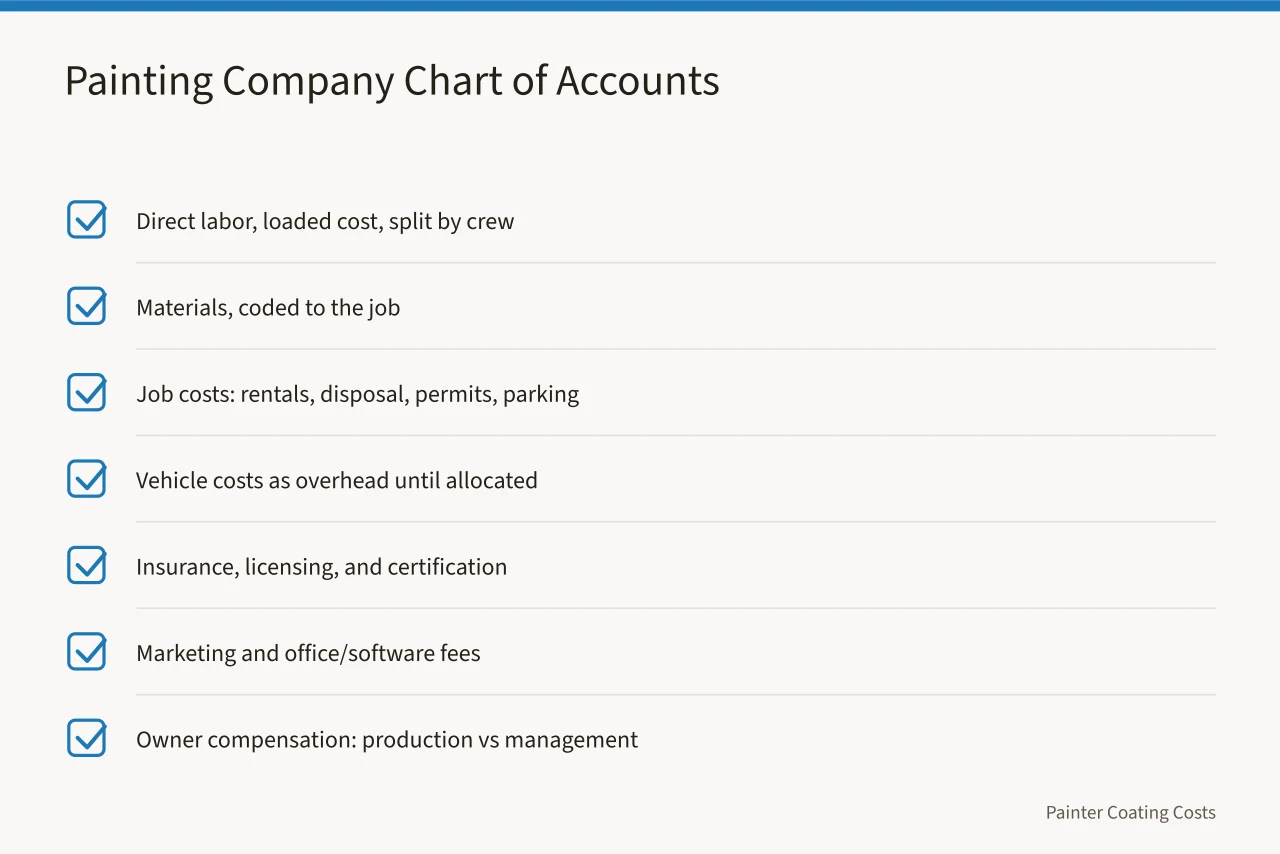
- Direct labor, at loaded cost, split by crew if you have more than one.
- Materials, coded to the job.
- Job costs: rentals, disposal, permits, parking, subcontractors.
- Vehicle costs, which are overhead until you can allocate them honestly.
- Insurance, licensing, and certification.
- Marketing.
- Office, software, and professional fees.
- Owner compensation, split between production time and management time.
The last one matters more than it looks. An owner who paints and does not record the hours produces job costs that no successor could ever reproduce, and a business that appears to work only because someone is unpaid.
Job costing, the part that pays for itself
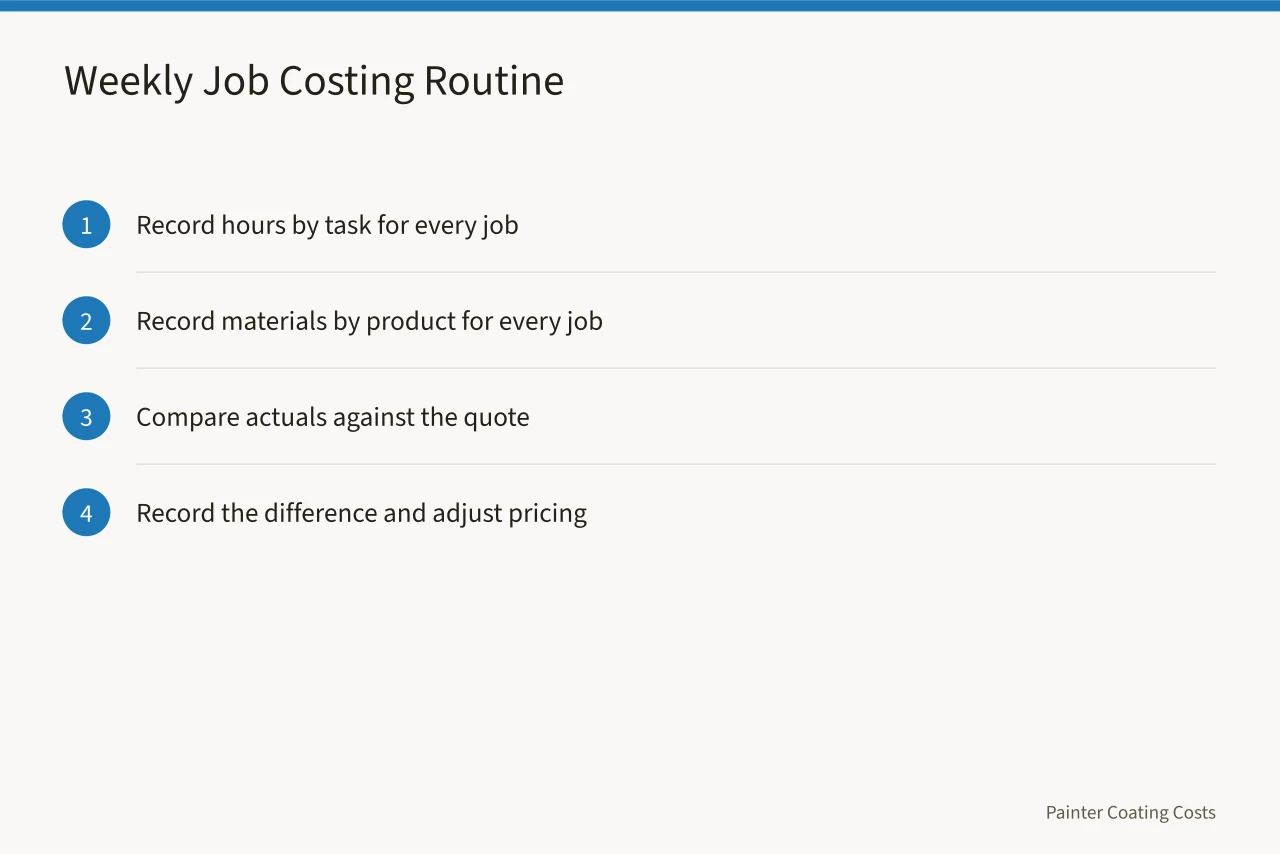
Every job gets hours by task and materials by product. Compare that against the quote and record the difference. Do this weekly, not at year end, because a pricing error found in March is a fixed model and a pricing error found in December is a lost season.
Keep the supporting records to the standard set out in the IRS guidance on the records a business should keep, which describes what should support income, expenses, and purchases. The same files serve two purposes: your tax position and your estimating model.
Where the numbers should end up, and which of them to review each month, is set out in the software and KPI guide.
Cash timing, where painting companies fail
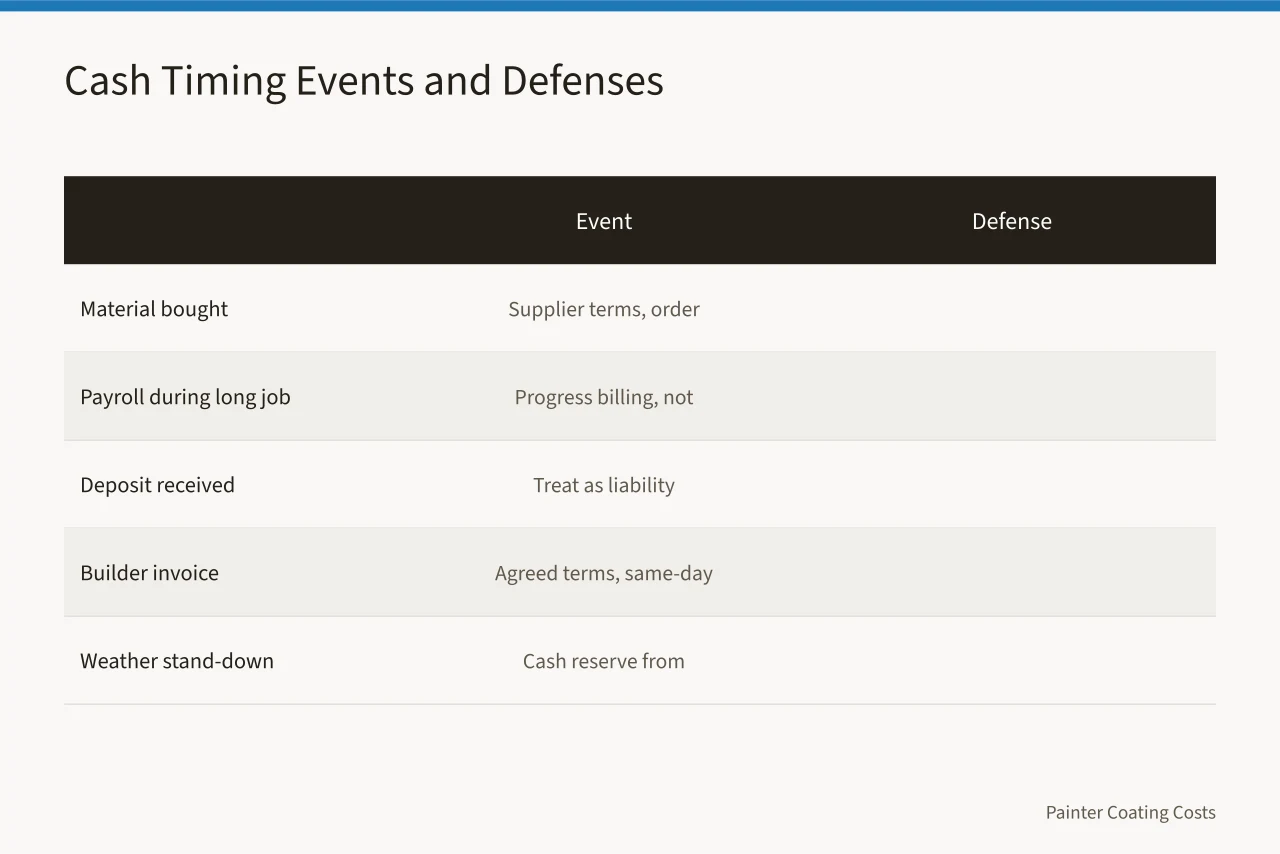
| Event | Cash effect | Defense |
|---|---|---|
| Material bought for a job | Cash out, often weeks before payment in | Supplier account with terms, and ordering close to the start |
| Payroll during a long job | Cash out weekly regardless of billing | Progress billing rather than payment on completion |
| Deposit received | Cash in, obligation created | Treat it as a liability until the work is done |
| Builder or property manager invoice | Cash in, weeks later | Agreed terms, invoicing the same day, and a chase routine |
| Weather stand-down | No revenue, same overhead | A cash reserve built in the strong months |
The pattern is that costs lead and revenue lags. Everything sensible you can do about cash flow comes down to shortening that gap: deposits where permitted, progress billing on longer jobs, invoicing on the day work completes, and firm terms with commercial customers.
Deposits, progress billing, and terms
Worked example
Take a deposit where your state allows it and the contract states it, and be aware that some states regulate deposits on residential contracts. Confirm the local position rather than copying another contractor's form.
Bill progress on anything longer than a few days, tied to visible milestones such as preparation complete or first coat complete. Customers accept milestone billing when the milestones are ones they can see.
Set terms in writing for commercial work and enforce them from the first invoice, not the third. Contractors who begin chasing at ninety days have taught the customer that ninety days is acceptable.
The routines that keep it under control
Weekly: enter time, code materials to jobs, send invoices for completed work, and look at who owes what.
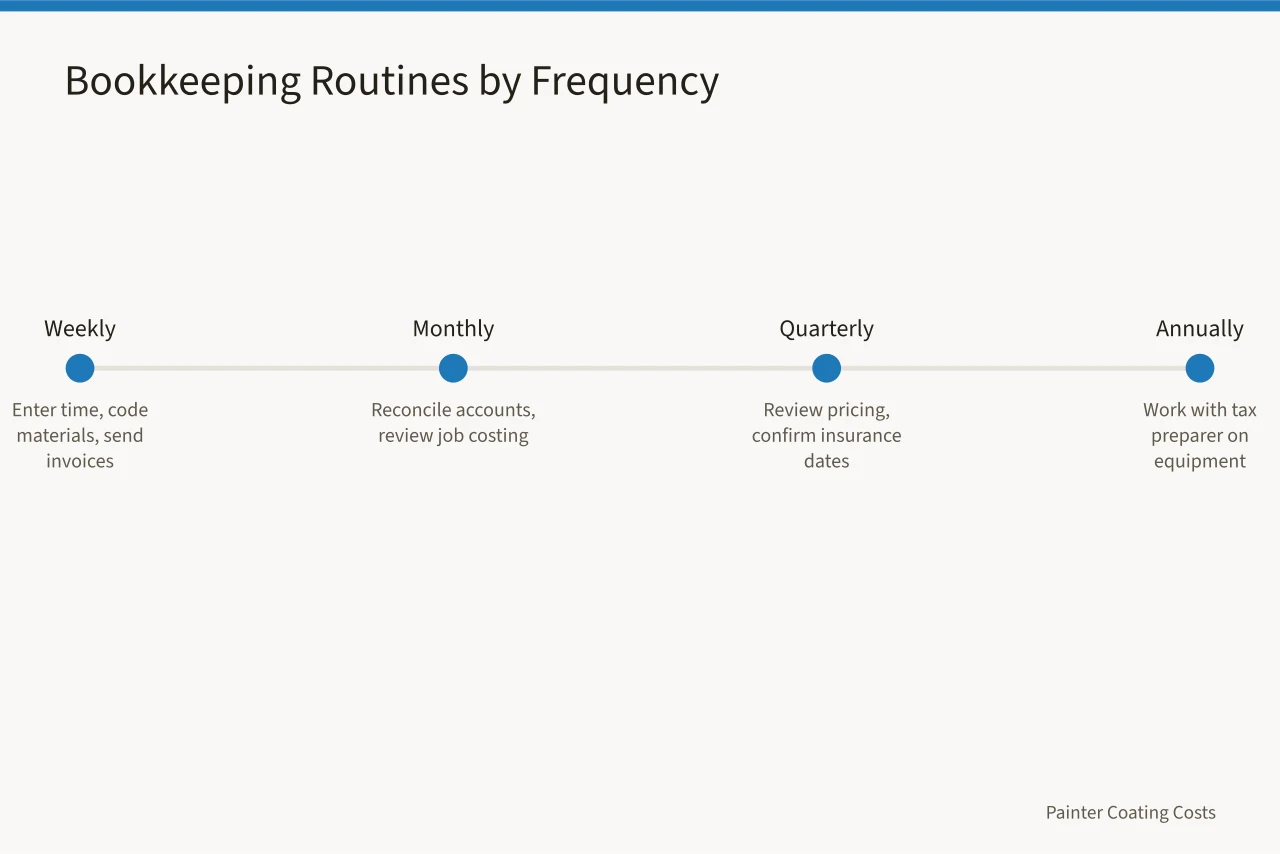
Monthly: reconcile accounts, review job costing against quotes, and check that overhead is being recovered at the rate your pricing assumed. The pricing side of that is covered where labor costs are built up in the hiring and training guide.
Quarterly: review pricing against material costs and wages, and confirm insurance and licensing dates.
Annually: work with a tax preparer on equipment treatment and entity questions rather than deciding those alone.
Protecting the money and the records
Contractor payment fraud is common and usually arrives as an email that looks like a supplier or a customer changing bank details. Confirm every change by phone using a number you already had.
The NIST small business cybersecurity quick-start guides set out the basics for a company with no IT staff, and the CISA resources for small and medium businesses cover practical steps and current threats. Multi-factor authentication on banking and email, tested backups, and separate accounts for operating cash and tax money are the four that matter most here.
Cash discipline shapes what you can buy and when, and equipment bought in a strong month with money owed to a slow quarter is a common failure.
The buying order in the equipment and setup guide and the wave structure in the equipment checklist for new owners both delay purchases until a job requires them.
Which customers pay reliably is a market question, covered in best markets for a painting contractor business.
Common questions
Cash or accrual accounting for a painting company?
Talk to a tax preparer, because eligibility and consequences depend on your size and structure. Whichever you use for tax, run job costing on the work itself, otherwise margins move with billing timing rather than with performance.
Do I need a bookkeeper?
Most owners need one before they think they do. The test is whether invoices go out on the day work finishes. If they do not, the bookkeeping is already costing you more than the fee.
How much cash reserve should a painting business hold?
Enough to cover payroll and material through your longest collection gap plus a stretch of unworkable weather. That figure is local to you and cannot be taken from a page.
Should I use a separate account for taxes?
Yes. Moving an agreed share of every payment into a separate account on the day it arrives is the simplest defense against a tax bill arriving in a slow month.