Guides
What Painting a Brick House Costs per Square Foot
The cost to paint a brick house exterior runs $1.40 to $4.25 per square foot in most US markets. Masonry prep, moisture and freeze-thaw drive the spread.
What to take away
- Most US homeowners pay $1.40 to $4.25 per square foot of brick wall for a full exterior paint job, materials and labor included.
- Prep, not paint, decides the price. Brick absorbs, holds moisture and moves with freeze-thaw, so sealing and repair can run 30 to 50 percent of the invoice.
- Labor is usually 60 to 70 percent of the total. A 2,000 square foot wall is roughly $2,800 to $8,500 depending on access and condition.
- Quotes that skip masonry prep, weep holes or moisture testing are not cheaper. They are unfinished.
- Homes built before 1978 add lead-safe work practices under the EPA Renovation, Repair and Painting rule.
What the range covers
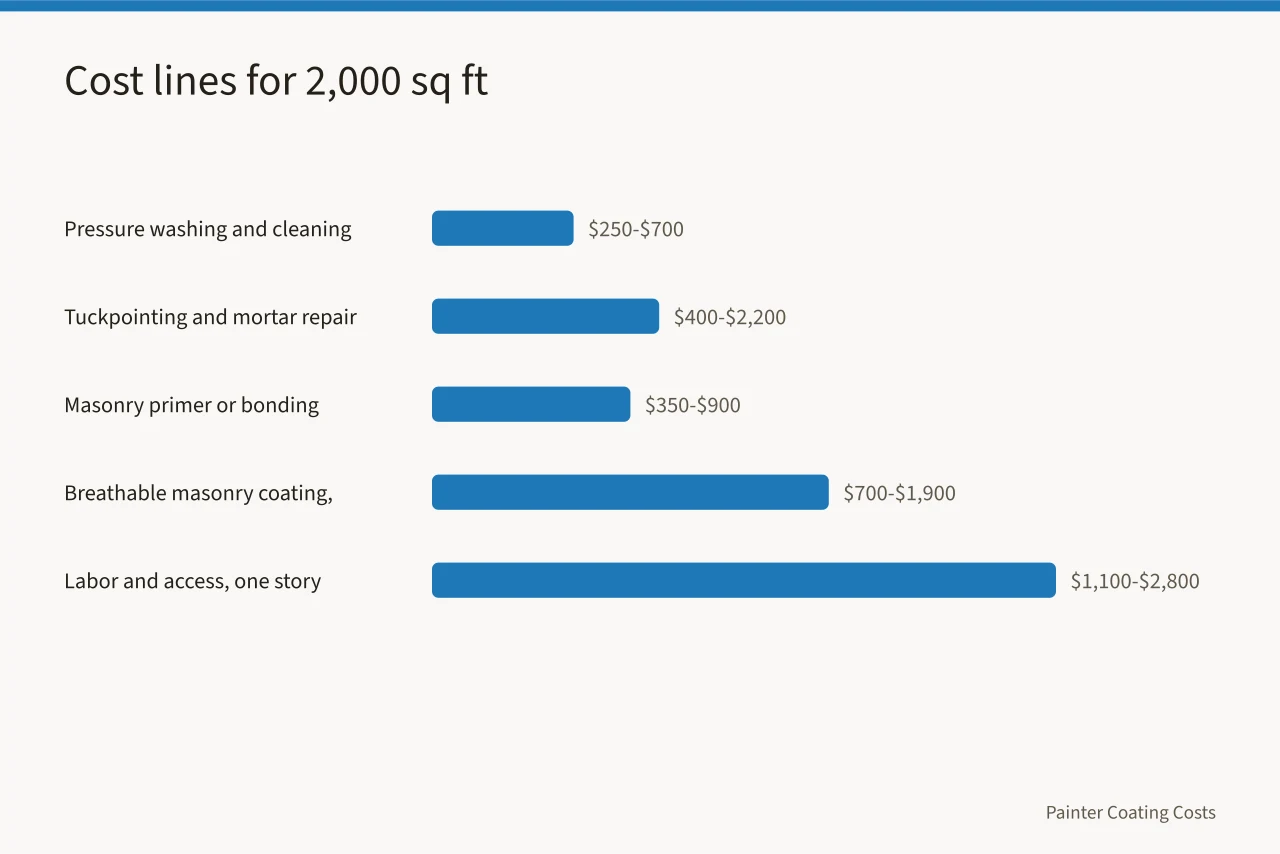
The numbers below are illustrative US ranges for a single-family home with brick on all four sides. They assume a one-story wall of about 2,000 square feet, normal access and no structural repair. Two-story work, steep grades and tight side yards push toward the top of each band.
Brick is a masonry surface, so the coating has to breathe. Water that enters brick and cannot escape pushes the coating off from behind. That is why elastomeric and acrylic masonry coatings dominate this work rather than standard exterior latex.
| Cost line | Low | High |
|---|---|---|
| Pressure washing and cleaning | $250 | $700 |
| Tuckpointing and mortar repair | $400 | $2,200 |
| Masonry primer or bonding primer | $350 | $900 |
| Breathable masonry coating, two coats | $700 | $1,900 |
| Labor and access, one story | $1,100 | $2,800 |
| Total, 2,000 sq ft wall | $2,800 | $8,500 |
The same job on two stories commonly lands between $4,200 and $12,000, mostly because of ladders, lifts and slower production.
Line by line
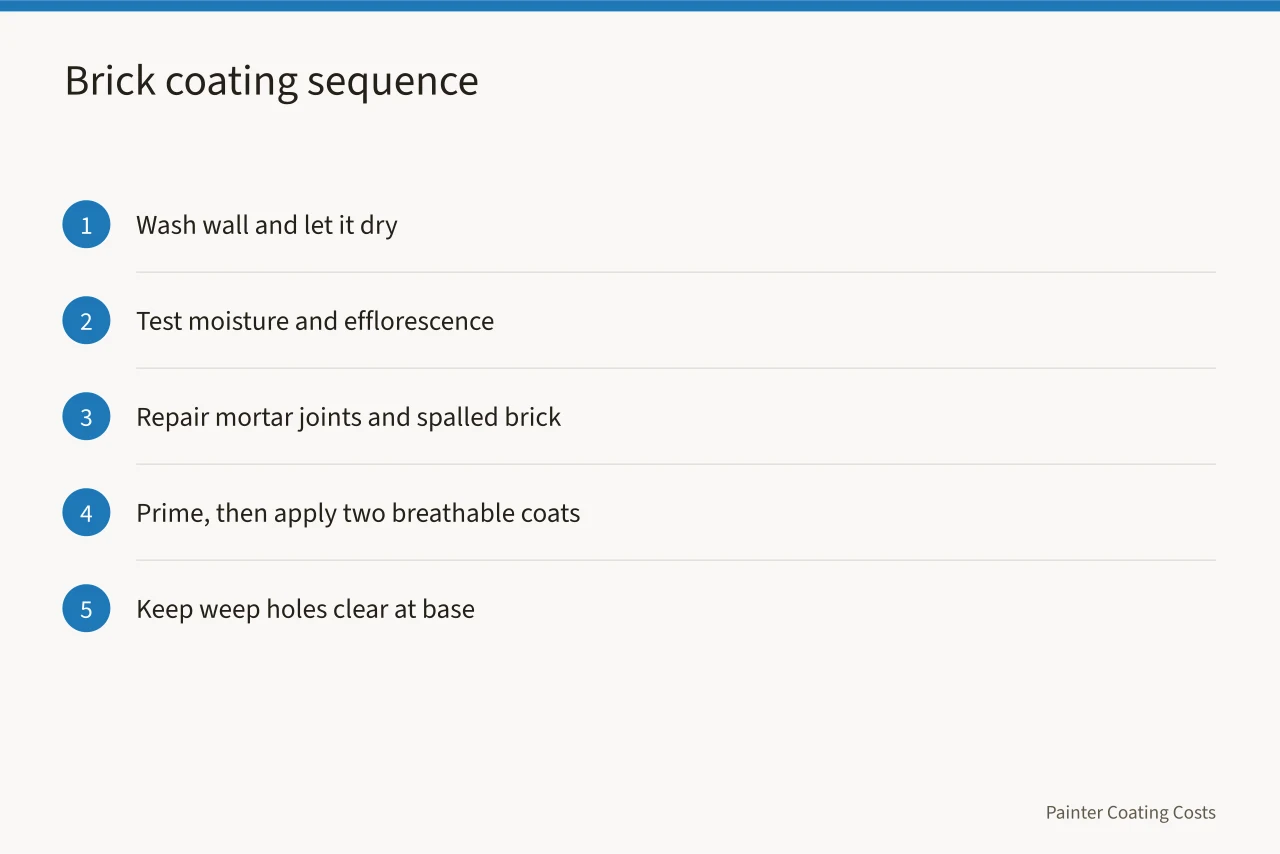
- Wash the wall and let it dry. Brick can hold water for days after rain, and coating over damp masonry traps moisture.
- Test for moisture and efflorescence. A simple plastic sheet taped to the wall for 24 hours shows whether vapor is still moving out.
- Repair mortar joints and replace spalled brick before any coating goes on.
- Prime with a masonry-specific product, then apply two coats of breathable coating.
- Keep weep holes clear at the base of the wall so water can drain.
A painter who skips step two is guessing. Ask what the moisture reading was and when it was taken.
What moves the number
Condition of the mortar sets the floor. A wall with failing joints can add $400 to $2,200 before a drop of paint is bought, and tuckpointing is skilled masonry work, not painting work.
Access is the second driver. A one-story ranch is fast. A two-story colonial with a steep roof line can double labor hours, and a lift rental adds $300 to $800 for the week.
Climate is the third. In the Midwest, freeze-thaw cycles open joints and drive water in. In the South, sun and humidity break down coatings faster and demand more mildew-resistant products. Both raise the price of doing it right. Phoenix vs Seattle exterior repaint costs, how climate changes coating choices shows how far the same square footage can spread between markets.
A brick wall that stays wet is a brick wall that will not hold paint. Fix drainage and grading before you fix the color.
What quotes leave out
Lead paint is the most common omission. Any pre-1978 home falls under the EPA Renovation, Repair and Painting Program, which requires certified firms and lead-safe work practices. That certification adds cost, and a quote without it may be non-compliant.
Coating choice is the second gap. Standard exterior latex on brick traps vapor and fails early. Breathable masonry coatings cost more per gallon but last longer. The EPA Safer Choice program lists products with lower solvent content, which matters on occupied homes.
Disposal is the third. Leftover coating and wash water are regulated waste in many states, and hauling it away is a real line item.
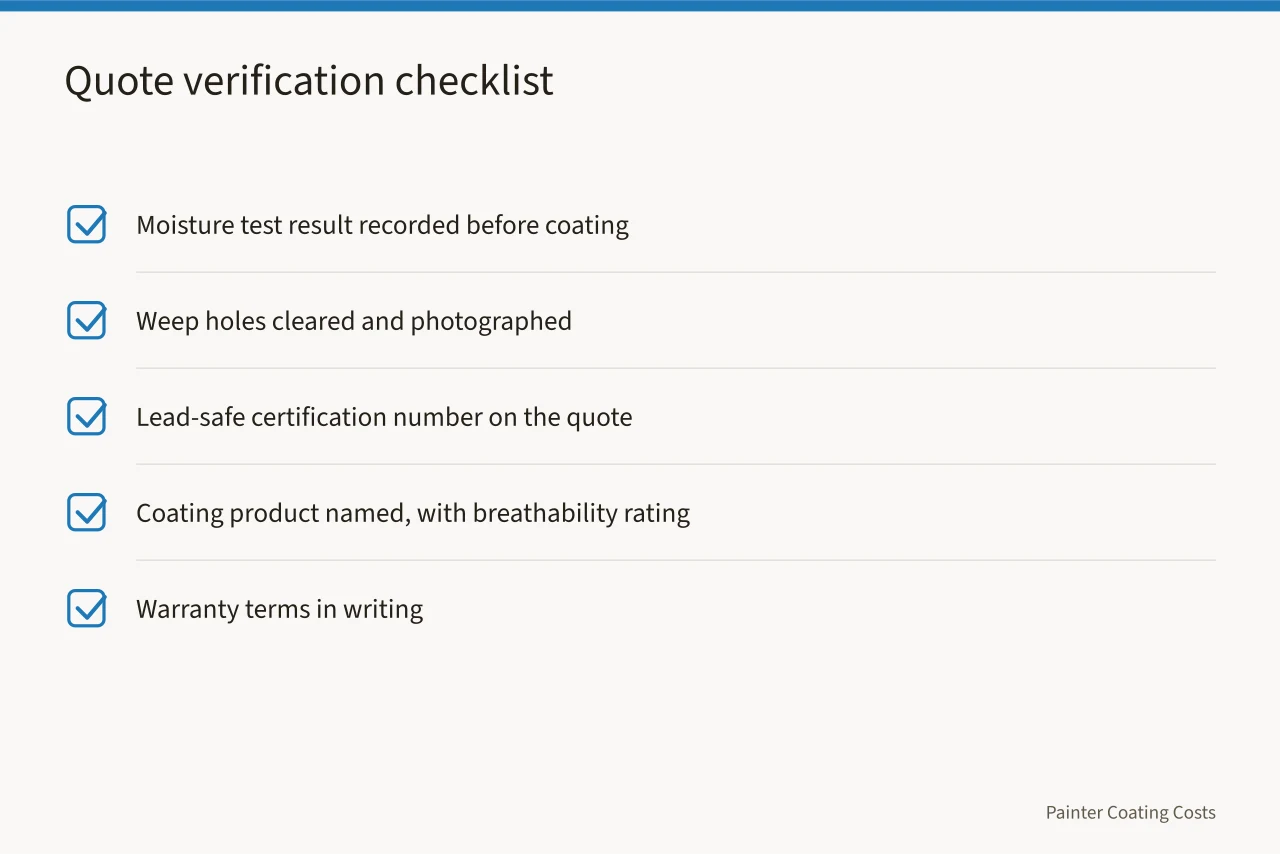
- Moisture test result recorded before coating
- Weep holes cleared and photographed
- Lead-safe certification number on the quote
- Coating product named, with breathability rating
- Warranty terms in writing
Example
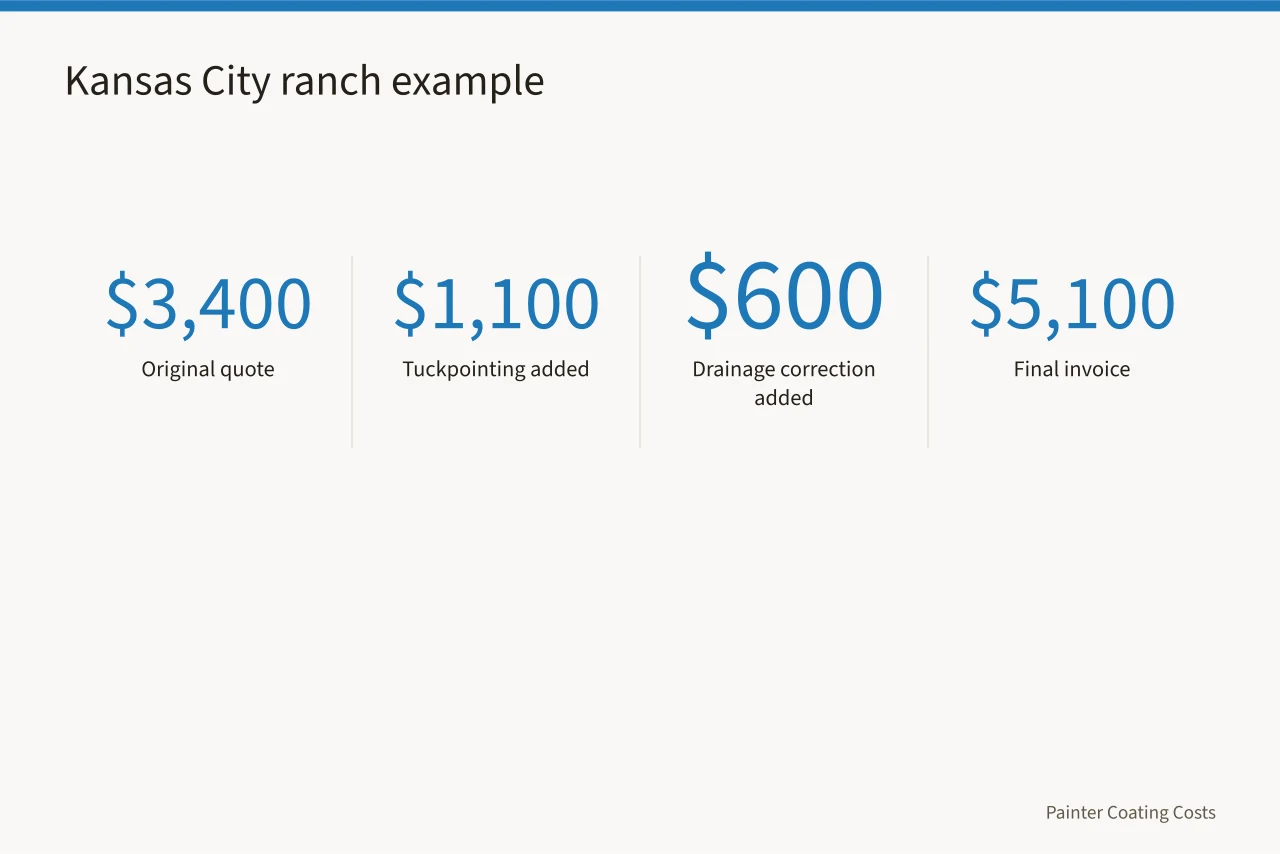
A 1,900 square foot brick ranch near Kansas City quoted at $3,400. The wall had failing mortar on the north face and a graded bed that trapped water. Tuckpointing added $1,100, drainage correction added $600, and the final invoice was $5,100. The coating failed in two seasons on the original low bid because the moisture was never addressed.
Where people overspend
Paying for a third coat rarely helps. Two properly applied coats of a breathable masonry product outperform three thin ones.
Upgrading to elastomeric coating on a sound, dry wall is often unnecessary. Elastomeric earns its price on cracked stucco, not on intact brick.
Color changes cost more than refreshes. Going from red brick to white typically needs a blocking primer, which can add $300 to $900.
Finally, timing matters. Scheduling in a dry stretch avoids rework. Where does winter interior painting work come from in Minneapolis and Chicago? is worth reading if you are weighing exterior seasonality against interior work.
Common questions
Is painting brick cheaper than siding? Usually yes on a per-square-foot basis, because the wall already exists. Repainting brick runs $1.40 to $4.25 per square foot, while full siding replacement often exceeds $6 per square foot installed.
How long does brick paint last? With correct prep and a breathable coating, seven to ten years is typical. Poor drainage or trapped moisture can cut that to two or three.
Does painting brick cause moisture problems? Only if the wrong coating is used. Breathable masonry coatings let vapor escape. Standard latex seals the surface and traps water.
Do I need a lead-safe certified contractor? If the home was built before 1978, yes. The EPA rule applies to renovation and painting work that disturbs painted surfaces.