Guides
How a painting contractor business turns customers into referrals
Painting contractor referrals come from the job itself, not from a program. What crews do on site, when to ask, and the rules on rewarding a recommendation.
What to take away
- Referrals are produced on site. Protection, tidiness, and turning up when promised generate more recommendations than any incentive.
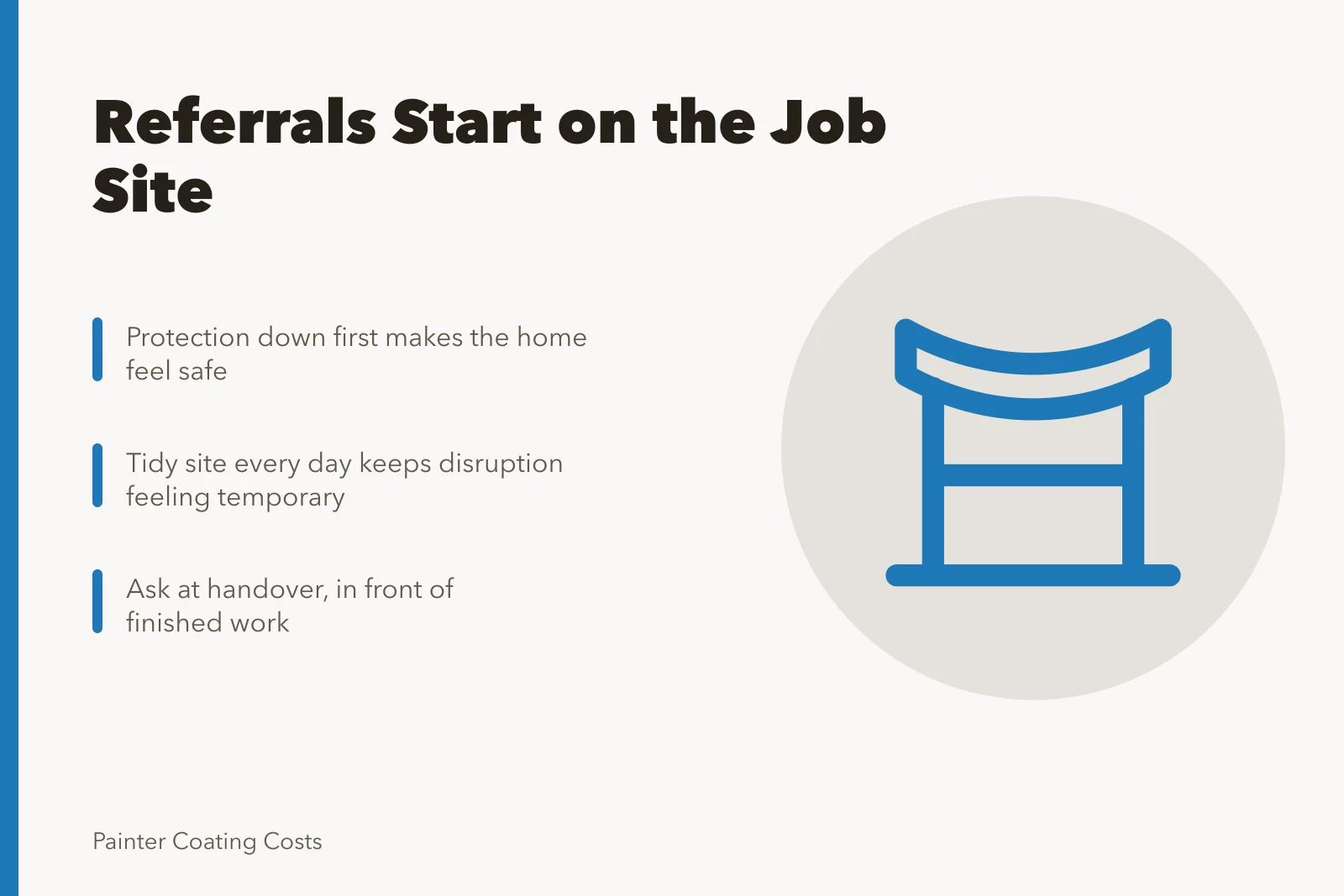
- Ask at the right moment: at handover, when the customer is looking at finished work, not weeks later by email.
- If you reward referrals, keep it simple and disclose it. A recommendation that hides a payment is a problem for both of you.
- Neighbors are the shortest path to the next job. A well-run site on a residential street is an advertisement nobody skips.
What actually causes a referral
| On-site behavior | Why it produces recommendations |
|---|---|
| Protection down before anything else | The customer's first impression is that their home is safe |
| A tidy site at the end of every day | The disruption feels controlled and temporary |
| The same faces each day | Trust builds with people, not with a company name |
| Saying what will happen tomorrow | Removes the uncertainty that makes people anxious |
| Fixing a small defect without argument | The story people tell later is about how you handled a problem |
None of that is marketing spend. All of it is your quality system showing up where the customer can see it. Getting there also depends on being properly equipped, since a crew improvising with insufficient masking makes a mess that the customer remembers, which is the practical argument in the equipment and setup guide.
Asking, and when
Ask at handover, standing in front of the finished work, after the walk-through and after any small fix. That is the moment of highest satisfaction and the only moment when the specifics are fresh enough for the customer to describe your work to someone else.
Ask for two things: a review and an introduction to anyone they know considering painting. Keep the request the same for every customer, which is fair and required practice.
The FTC guidance on soliciting and paying for online reviews sets out what marketers may and may not do. Do not condition the request on a positive rating, buy or write reviews, or fail to disclose when something of value changes hands.
Leave something physical: labeled touch-up material, a card, and a note of what was used on each surface. Customers hand that document to the next owner of the house, which is a referral three years later.
Rewarding referrals without creating a problem
If you pay for referrals, keep three rules.
- Say plainly that a reward exists, so the person recommending you can tell their friend.
- Pay after the job completes rather than on the introduction, which keeps the incentive aligned with a good outcome.
- Never reward a review. A reward for an introduction is ordinary; a payment attached to a rating is not.
A simple alternative that avoids the issue entirely is to give returning and referring customers priority scheduling. In a trade where the calendar fills in the good weather, a guaranteed slot is worth more than a small discount.
Neighbors and the street you are already on
The cheapest job you will ever win is the house four doors down. While you are working:
- Keep the site neat and the vehicle parked considerately.
- Put a sign in the yard, with the customer's permission.
- Say hello to the neighbors who ask what you are doing, and leave a card.
- Offer to look at anything they point out while you are in the street, and follow up in writing.
That last point converts. People will ask a painter already on their street a question they would never make a phone call about, and the conversion path from there is the one set out in how to win more painting contractor customers.
Keeping the relationship alive between jobs
Repaints have long cycles, so the referral engine has to survive years of silence. Two things work: a short annual message offering a condition check, and remembering what you painted. A message that names the rooms and the colors reads as a company that kept records, not as a mailing list.
Keep your listing details accurate so the people they refer can find you. Google's own guidance on improving a Business Profile's local ranking covers what its listing signals are, and the wider maintenance routine is in the local SEO checklist for painting contractors.
Where those referrals come from also tells you something about where to work. If most of them cluster in a few neighborhoods, that is a market signal worth acting on, as covered in best markets for a painting contractor business. How referrals fit against every other channel is set out in the marketing and growth guide.
Common questions
How do I ask without being awkward about it?
Say it plainly at handover: you are glad they are happy, most of your work comes from recommendations, and you would be grateful for an introduction or a review. Asking directly once is more comfortable than hinting three times.
Should I offer a discount for referrals?
You can, and priority scheduling often works better. Whatever you offer, disclose it and never attach it to a review.
What if a referred job goes badly?
Handle it faster than you would any other job, because the cost extends to the relationship that produced it. Tell the person who referred you what happened and what you did about it.
How do I track where referrals come from?
Ask on every inquiry and write the answer down. A month of that tells you which customers are actually sending work, which is worth knowing before you spend anything on advertising.