Guides
Florida and California HOA painting rules, a compliance guide
Florida and California HOA condo painting rules decide who may paint, in what color, and when a crew can start work on the building exterior.
What to take away
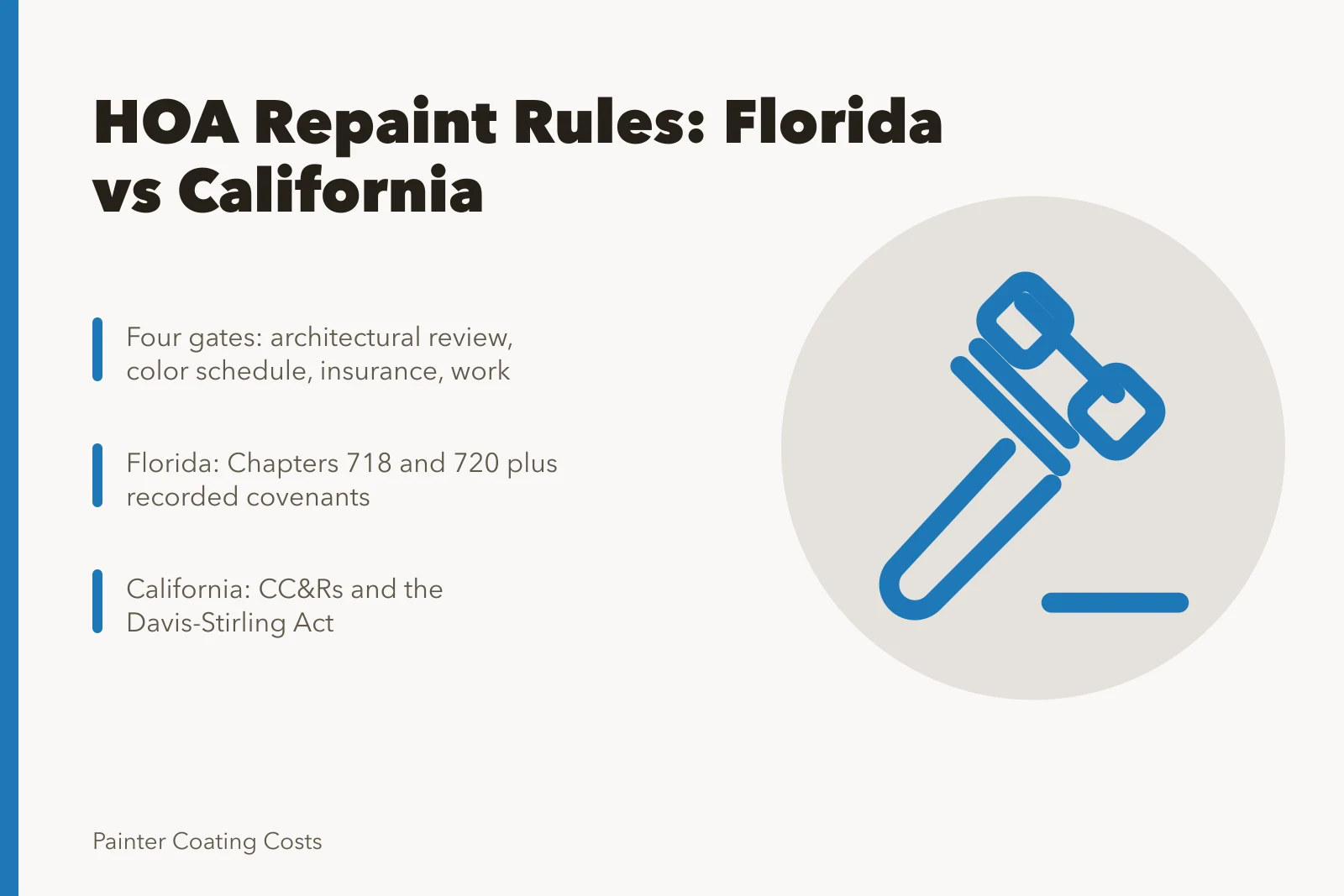
- Four gates control an HOA repaint: architectural review, the approved color schedule, insurance endorsements, and the work-hour window.
- Florida associations answer to recorded covenants plus Chapters 718 and 720 of the Florida Statutes. California associations answer to their CC&Rs and the Davis-Stirling Act.
- A certificate of insurance is not additional insured status. Associations want the endorsement, and often a waiver of subrogation.
- Approval can run four to eight weeks where a committee meets monthly. Price the gap between signature and first crew day.
- Pre-1978 buildings in either state fall under the EPA Renovation, Repair and Painting Rule.
Who actually controls the repaint
On a single family house the owner signs and the crew starts. On a condo or HOA building the association controls scope, color and timing, and a unit owner's preference carries no weight against the recorded documents.
That changes the sale. You are pricing for a board and a property manager, not for the person who lives behind the door.
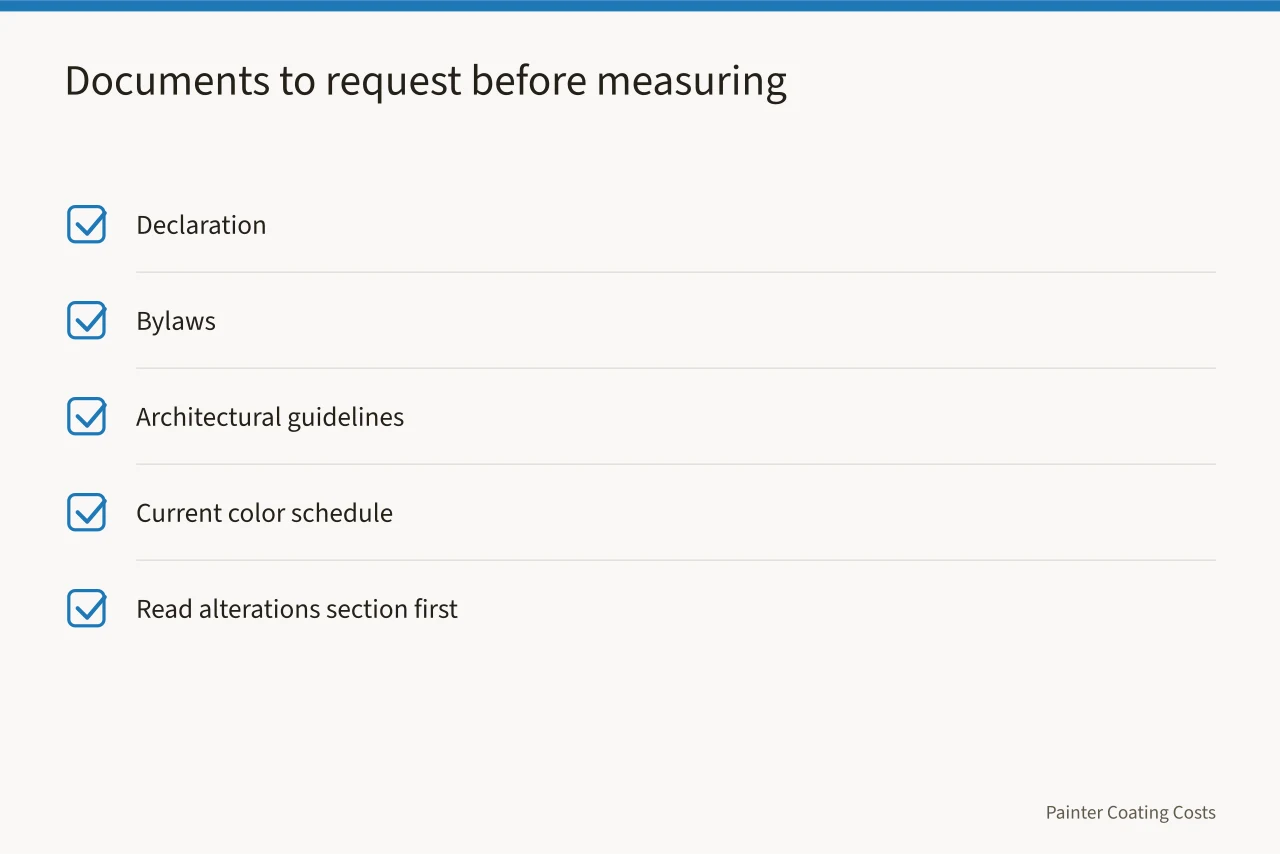
Ask the manager for four documents before you measure anything: the declaration, the bylaws, the architectural guidelines, and the current color schedule. Read the alterations section first. It usually names the application form, the deposit, and who signs the approval.
Most packets want a written scope, product data sheets, color chips, insurance certificates, and sometimes a sample panel on a concealed wall. Two gallons and an hour of labor buys that panel, and a failed inspection costs far more.
Complete packets clear review faster and win the next building. The same discipline that supports service standards on a residential job keeps a board file intact when a new director takes over mid project.
Expect one revision. Boards approve scope and then question a sheen, a brand, or a color that reads differently on a chip than on a wall.
Florida: statute, covenants, and the color schedule
Florida condo repaint approval runs through the association's architectural review committee. The declaration and any recorded amendments are the controlling text. Chapter 718 of the Florida Statutes governs condominiums and Chapter 720 governs homeowners associations.
Many Florida associations now carry a milestone inspection and structural integrity reserve study process. Painting frequently rides along with other envelope work, so your scope may sit inside a larger project with its own schedule.
Color is the flashpoint. Florida boards commonly adopt one schedule for walls, trim, doors and shutters, and enforce it by violation letter. Some let a unit owner repaint a front door or a lanai in a listed color. Others repaint everything on a common cycle.
Coastal buildings add a product class rather than a brand. Salt air, wind driven rain and ultraviolet exposure shorten coating life, so the specification usually names a performance level and leaves the manufacturer to the contractor.
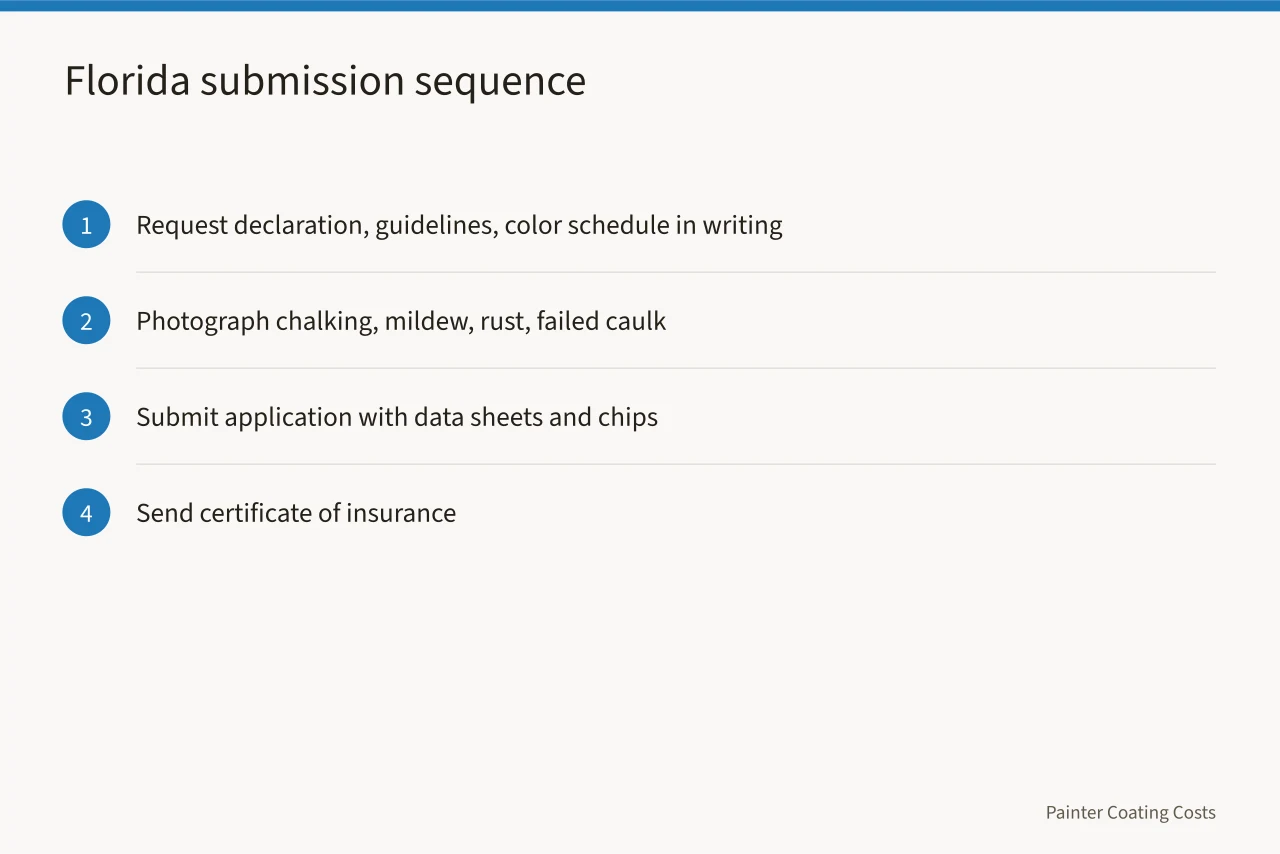
The sequence that clears most Florida submissions:
- Request the declaration, architectural guidelines and current color schedule in writing from the manager.
- Photograph existing conditions: chalking, mildew, rust staining, failed caulk joints.
- Submit the application with product data sheets, color chips, and a moisture and adhesion test summary.
- Send the certificate of insurance and the additional insured endorsement with the packet.
- Attend the review meeting or send a written scope summary for the minutes.
- Collect written approval with colors listed surface by surface.
Licensing is separate from approval. Florida requires a state certified or registered contractor for many painting and coating scopes, and local building departments may require a permit for pressure cleaning and coating on some structures. Confirm the current requirement with the Florida Department of Business and Professional Regulation and the local building department.
California: CC&Rs, Davis-Stirling, and lead paint
California runs on CC&Rs, the covenants recorded against the property. The Davis-Stirling Common Interest Development Act sets the procedure an association must follow, and that procedure creates deadlines you can plan around.
An association generally must give an owner notice and an opportunity to be heard before it fines the owner or denies a proposed change. That is the association's obligation, not yours, but it explains why a decision slips a month.
Paint colors are usually fixed in the architectural guidelines. Many associations require a specific palette for walls, trim and doors, and some let an owner choose from a short list.
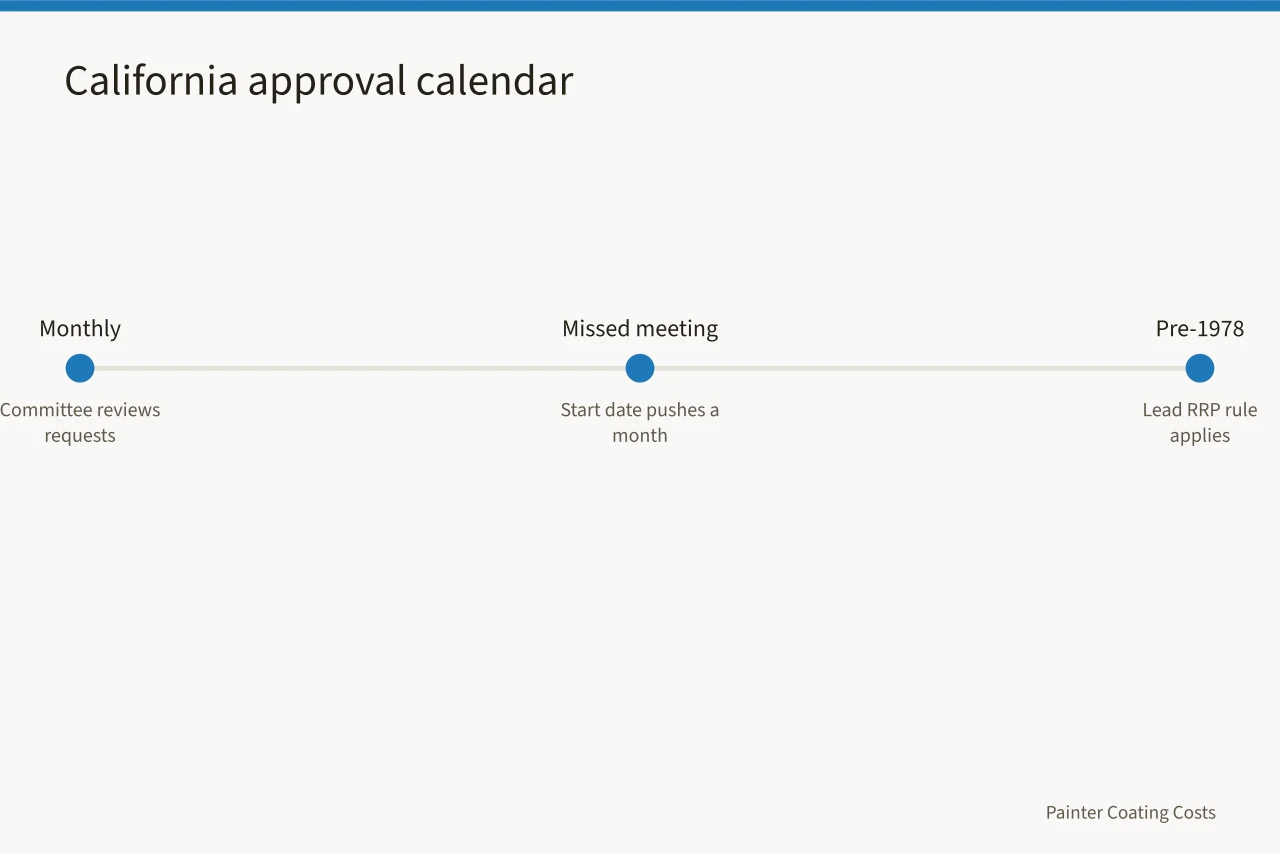
Requests often go to a committee that meets monthly. A missed meeting pushes the start date a month, which is why the schedule on these jobs begins at the calendar rather than the weather.
California also holds a large stock of stucco and wood siding. Stucco patching, elastomeric coatings and wood repair change both appearance and cost, so describe each in the application.
Lead paint is a real factor on pre-1978 buildings. The EPA Lead Renovation, Repair and Painting Rule covers work that disturbs painted surfaces in pre-1978 housing and requires certified firms and trained workers. Confirm the current requirements with the EPA and use a certified training provider.
State licensing runs through the Contractors State License Board. A C-33 painting and decorating license covers most repaint scopes, and the CSLB license lookup is routine board due diligence.
Building codes can touch coating work where fire rated assemblies, egress or exterior wall systems are involved. The International Code Council maintains the model codes many jurisdictions adopt, and its codes and standards pages list current editions.
The International Building Code family drives local amendments on those assemblies, so check the edition your city or county has adopted before you promise a coating system.
Insurance paperwork that stops a start date
A certificate of insurance is the one page summary your carrier issues showing general liability, auto, workers compensation and umbrella limits. An additional insured requirement goes further: the association asks to be named on your general liability policy by endorsement, so it holds coverage rights if a claim arises from your work.
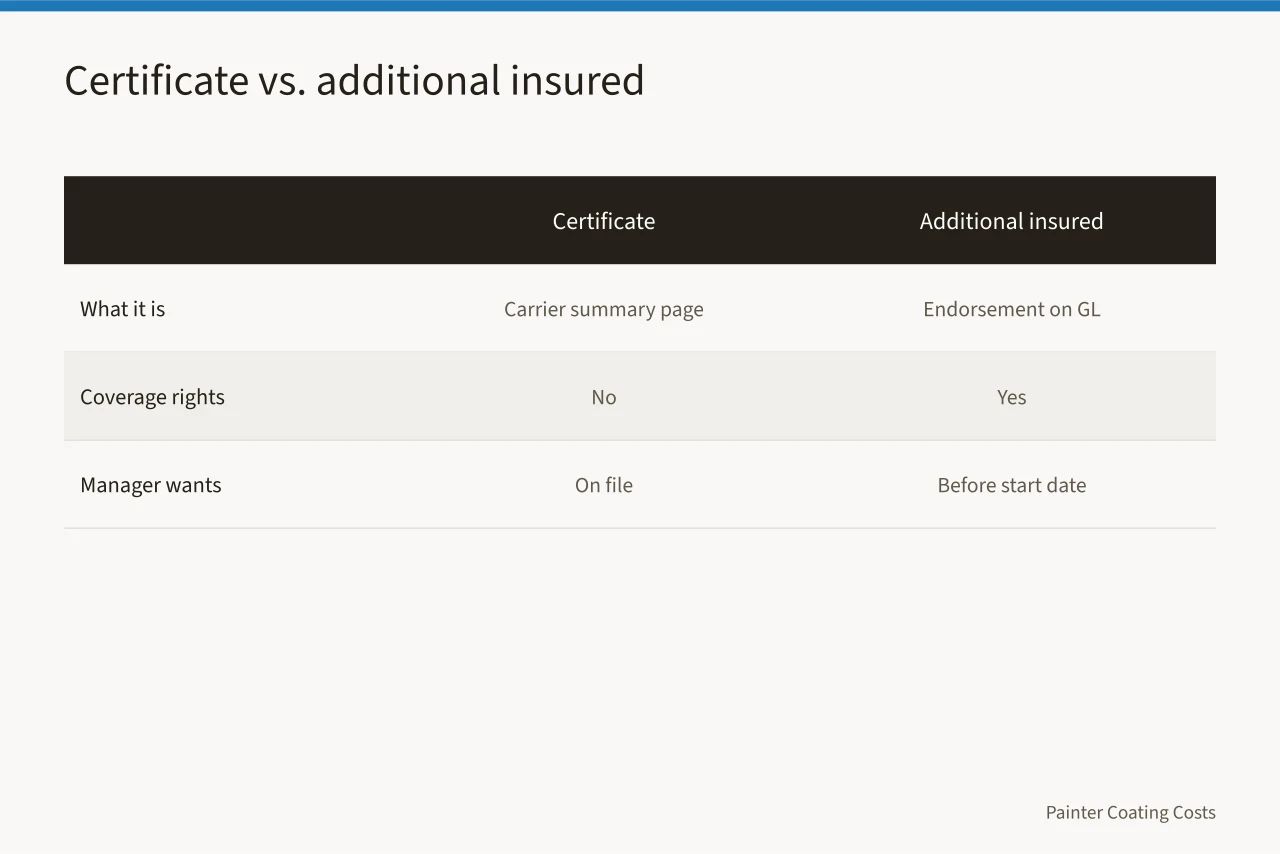
The endorsement is not the certificate. A certificate alone does not confer additional insured status, and managers increasingly know the difference. Send both.
Common requests include a waiver of subrogation, primary and non contributory language, and thirty days notice of cancellation. Some associations name a specific endorsement form number.
Workers compensation is the other sticking point. If you carry an exemption, expect questions. Many associations will not allow uninsured labor on the property at all.
Managers in both states want the endorsement before the start date, not with the final invoice. A substituted form usually triggers a second review. Send the packet early, because a delay erodes the trust that keeps a complaint handling process quiet.
Keep a current certificate on file with each manager. Forward renewals, limit changes and new endorsements without being asked.
Work hours, access, and water restrictions
The schedule on an HOA repaint is a negotiation with people who live inside the work zone. Quiet hours, elevator use, parking, balcony access and the hours a spray rig may run all come from the association, and local noise ordinances often sit on top.
Typical rules bar loud work before a set morning hour and after an evening hour, and many associations prohibit weekend work. Some allow Saturday for prep and cleanup only.
Access is the second constraint. Elevators may need padding and a reserved window. Stairwells stay clear. Balconies full of furniture must be cleared by residents on a posted date.
Water is the third. Pressure cleaning and rinsing can be restricted during drought conditions, and some associations restrict runoff into storm drains. Confirm the current local rule with the water district or city before you schedule a wash day.
Weather sets the outer boundary, and the two states pull in opposite directions. Florida work targets the drier months outside hurricane season. California splits between coastal fog and inland heat, and both affect cure times and recoat windows.
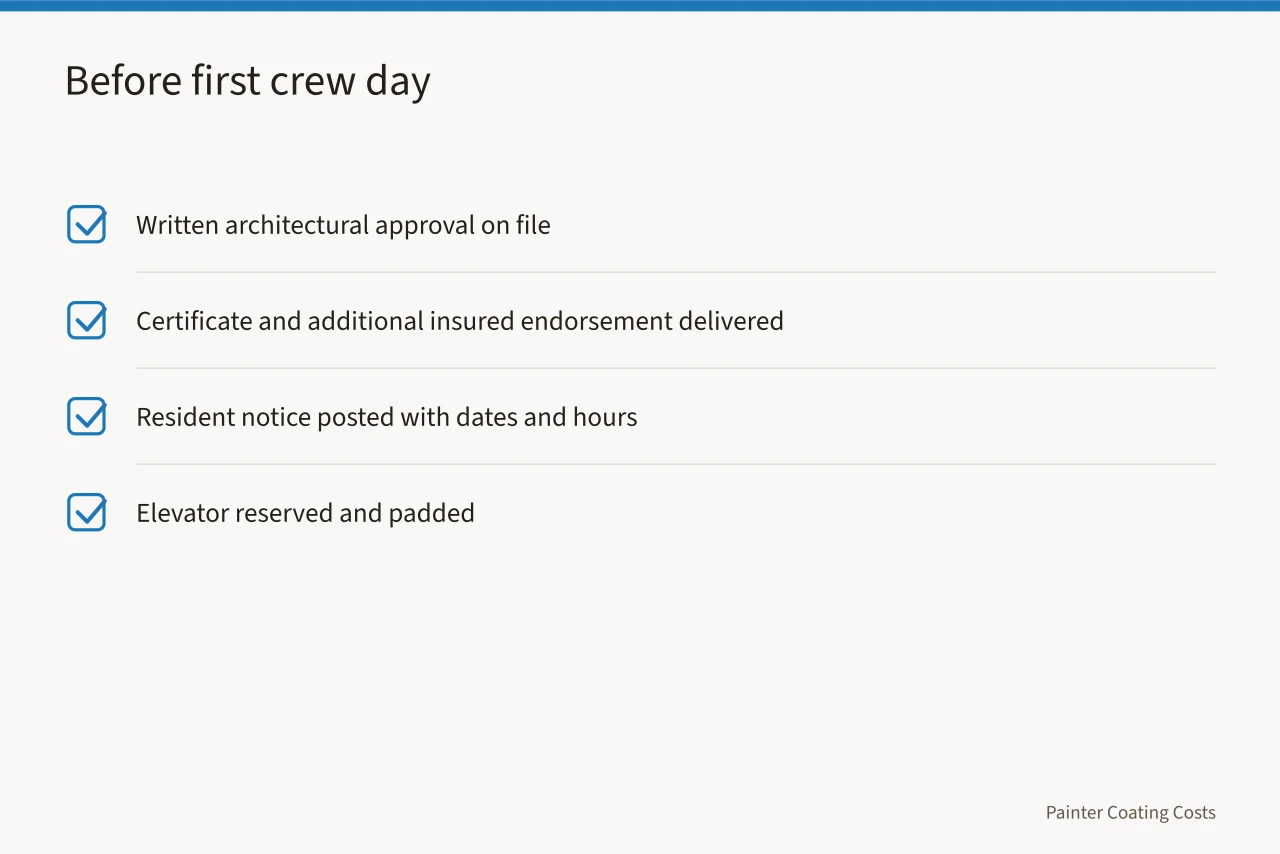
Run this checklist before the first crew day.
- Written architectural approval on file, with colors listed by surface
- Certificate of insurance and additional insured endorsement delivered
- Resident notice posted with dates, hours and balcony clearing instructions
- Elevator, parking and staging plan confirmed with the manager
- Water source, power source and restroom access confirmed
- Lead safe work practices documented for pre-1978 surfaces
- Daily cleanup and end of day walkthrough assigned to a named lead
Demand for this work tracks housing activity. The housing economics data published by the National Association of Home Builders is one way to read the trend before you build a season plan. Regulatory context varies by state and city, and the NAHB state and local resources page tracks many of the rules that affect contractors.
Pricing the approval gap
Most contractors lose money on HOA work in the gap between approval and production, not on the paint. Build the gap into the price and the calendar.
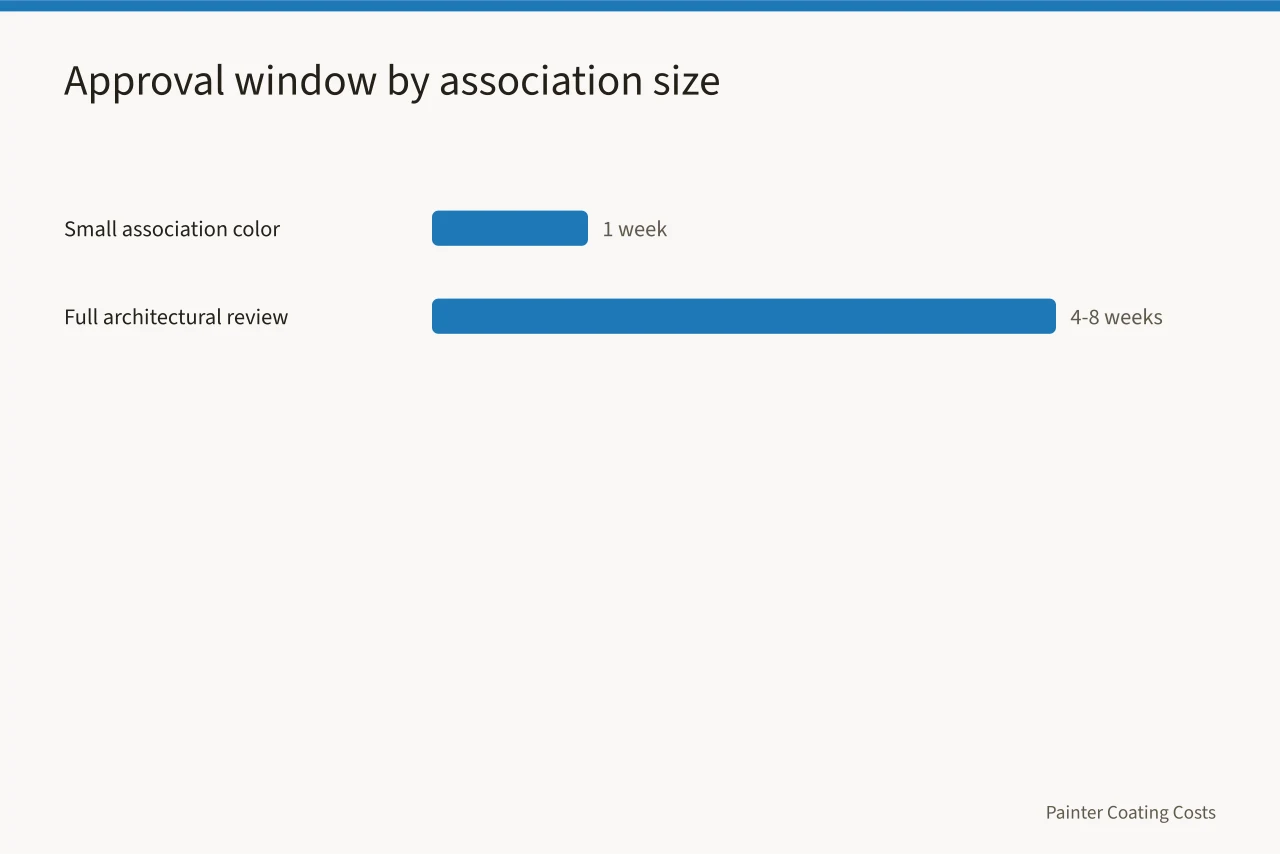
Start with a realistic approval window. A color confirmation on a small association may take a week. A full architectural review before a monthly committee can take four to eight weeks.
Then add the pre-construction items: sample panels, resident notices, elevator reservations, material staging. Each is a small job that happens before the big one.
Carry the approval work as its own line in the quote template so the board sees what it is buying. A single lump sum hides the work and invites a price fight at the end.
Put a validity period on the pricing. Coating costs move, and a bid held open for three months can lose its margin.
Add a mobilization line for the return trip if the schedule slips. A crew that sits idle waiting on a signature still costs money.
Tie the finish standard to a written quality assurance checklist so the punch walk is objective. Boards respond to a documented standard, and it protects you at final payment.
If you sell maintenance programs, describe them in your services and packages so the board can plan the next cycle instead of treating every repaint as an emergency.
Common questions
Does an HOA have to approve my paint color in Florida?
Usually yes. The declaration and architectural guidelines control exterior color, and most Florida associations require written approval before work starts, even when the color already appears on the approved schedule. Read your own association's documents, and ask the manager which form the committee wants.
Can a California HOA stop a unit owner from repainting?
It can enforce the CC&Rs, but Davis-Stirling requires the association to give notice and an opportunity to be heard before it fines an owner or denies a proposed change. The specific procedure sits in the association's documents and in the statute, so take a disputed case to a qualified attorney.
What insurance does an HOA typically require from a painting contractor?
General liability, auto, workers compensation and often an umbrella, plus a certificate naming the association as an additional insured with a waiver of subrogation. The endorsement is what creates the status, not the certificate, so send both pages.
How long does HOA paint approval take?
It depends on the committee calendar. A color confirmation can take a week, while a full architectural review before a monthly meeting can take four to eight weeks. Ask for the next meeting date before you quote a start date.