Guides
How Denver hail and UV drive exterior coating and insurance repaint demand
Denver hail and UV drive exterior coating and insurance repaint demand, with claims turning on documenting impact damage apart from sun fade.
What to take away
- Hail leaves circular fractures, chipped edges and bruised film; UV leaves chalking, fade and gloss loss. Insurers pay for the first and not the second.
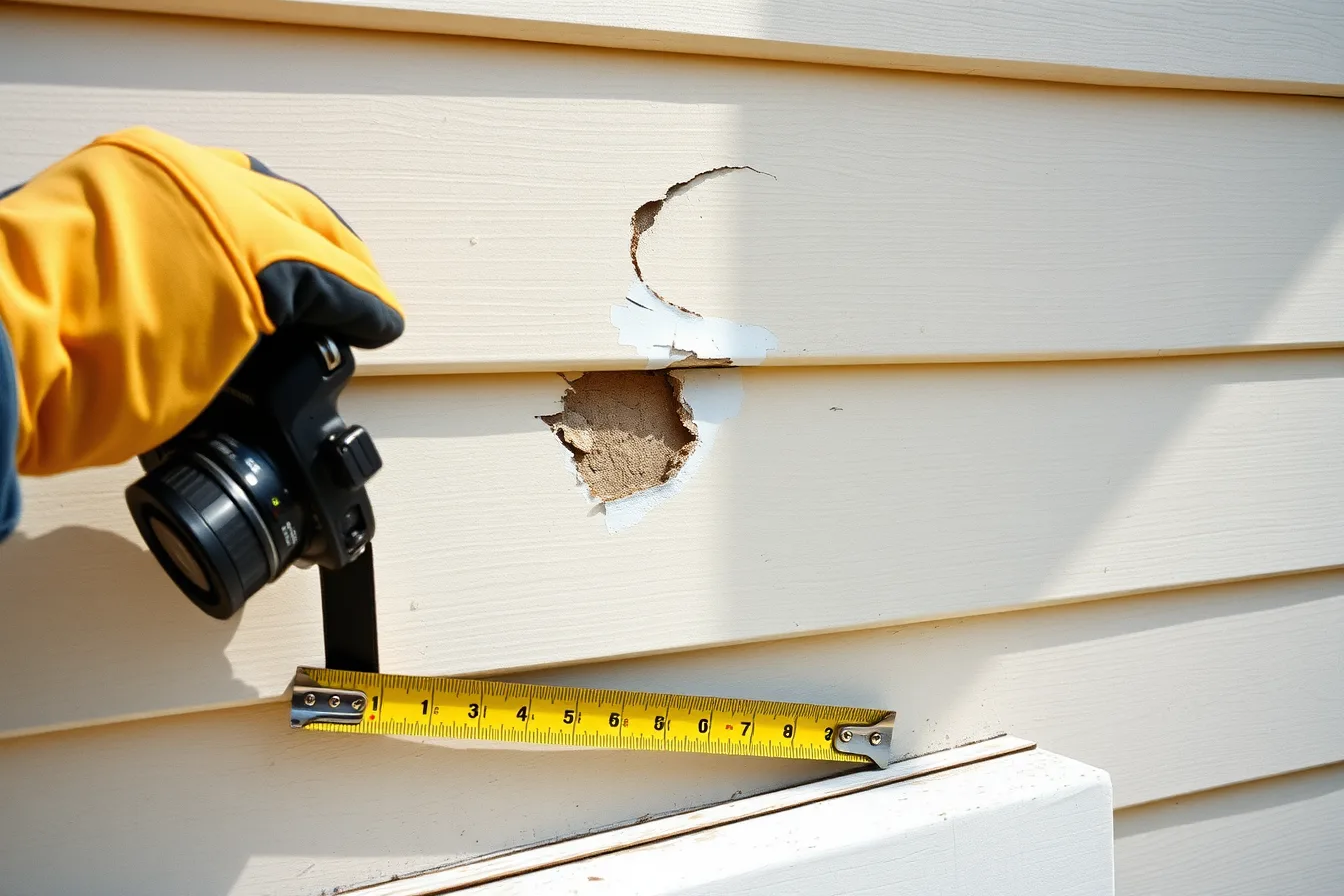
- Photograph all four elevations before you touch anything, with a tape measure in frame at each impact mark.
- Measure damage in square feet per elevation. Percentages get reduced.
- Claim paperwork runs two to four hours per file. Put that time in the price.
- Price storm work as rush work: short-notice mobilization, extra scraping, staged payments tied to the claim.
How hail and sun damage differ on a Denver wall
Denver sits in the Front Range hail alley. Afternoon storms drop large stones on the metro from spring through early fall, and they hit a house in two ways.
Hail reads as circular fractures, chipped edges, exposed substrate and bruised spots where the film has separated from the siding but not yet peeled. On a south or west wall, one storm can strip a coating that was already thin.
Sun damage looks nothing like that. Colorado's elevation means thinner atmosphere and stronger ultraviolet exposure than most American cities at the same latitude. The result is chalking, color fade, gloss loss and a film that powders when you rub it.
The Weather page at NOAA tracks the storm and climate patterns behind that split between sudden impact and slow solar wear.
Separating the two is the core skill in this market. A homeowner sees faded paint and calls it storm damage. An adjuster sees ten years of sun and calls it maintenance. You have to show, wall by wall, which is which.
Denver's growth adds volume to the problem. New subdivisions in Adams, Arapahoe, Douglas and Jefferson counties put millions of square feet of fiber cement, engineered wood and stucco into a climate that punishes all three. That stock is now hitting its first repaint window, often right after a hail event.
Assessing hail damage and documenting it for a claim
A hail assessment is a walk of every elevation with a light, a straightedge and a camera. You are looking for impact marks, not general wear.
Work in this order:
- Photograph all four elevations in daylight before touching anything.
- Mark suspected impact points with removable chalk and photograph each with a tape measure in frame.
- Test adhesion on a small patch to see whether the film releases in sheets or crumbles.
- Measure affected area in square feet per elevation, not in vague percentages.
- Note substrate type, existing coating system and approximate age.
- Record the storm date and any local hail reports.
- Photograph adjacent undamaged surfaces for comparison.
Run the UV assessment alongside it. Chalking, fading and hairline checking on the sun-facing walls belong in a separate section of the report, labeled as wear. Mixing the two weakens the claim and hands the adjuster an easy reason to cut the scope.
Coating durability claims should rest on test data, not on a product rep's promise. Materials research from NIST covers how films behave under exposure.
Insurance claim documentation a painter should hand over
Adjusters handle hundreds of files after a storm. The contractor who submits a clean package gets paid faster and argues less.
Hand over a single PDF with numbered pages. Put the homeowner's name, property address, claim number and date of loss on the cover sheet. Then the photo log, the measurement sheet, and the product data sheets for the proposed system. Also a line-item estimate splitting labor, material, equipment and disposal.
- Cover sheet with claim number and date of loss
- Photo log with elevation labels and scale references
- Square-foot measurements per elevation
- Substrate and existing coating notes
- Product data sheets for the proposed system
- Line-item estimate with labor and material split
- Written scope stating what is excluded, such as rotten trim or gutter work
Keep your own copy of everything. If the claim is disputed, the same file supports your position and protects you under your own liability coverage. Review that coverage against your insurance costs and coverage before storm season opens.
Coating selection for high-altitude sun
High-altitude coating selection starts with UV resistance, not color. At this elevation, a coating that lasts eight years near sea level may chalk out in half that time on a west wall.
Specify acrylic or siliconized systems rated for high UV exposure with a light-stable pigment package. Elastomerics bridge small cracks but trap moisture if the substrate is damp, so they belong on sound masonry and stucco, not failing wood.
Hail-resistant paint is mostly a myth. No coating survives direct large hail. Specify better film build and flexibility, then tell the homeowner plainly what hail will still do. Impact-resistant roofing and siding carry that load; paint is the finish, not the armor.
Surface prep decides the outcome. Denver's dry air and wide temperature swings mean dew and afternoon heat both matter. Stay inside the manufacturer's application window, and never spray latex on a wall that will drop below the recommended minimum overnight.
Keep data sheets on file for every system you install. They back the warranty, the claim file and any later complaint handling if a homeowner disputes how the coating held up.
Pricing a storm repaint
Storm pricing is not planned-repaint pricing. Demand spikes, schedules compress, and homeowners are anxious. Price the conditions you are actually working in.
Build from measured square footage, then add the storm premium: short-notice mobilization, extra prep where hail opened the film, and the administrative time the claim consumes. That paperwork is real labor, two to four hours per file, and it belongs in the number.
A 2,400 square foot ranch in Aurora with hail bruising on the north and west walls measures 1,900 square feet of wall area. Base prep and two coats at your standard rate gives one figure. Add storm premium and claim time to get the price you write into the scope before the adjuster visit.
Use a written quote template so every storm job carries the same structure: scope, exclusions, payment schedule, warranty terms and a clause covering hidden damage found after work begins. That clause is your margin protection, because rotted trim and failed caulk only appear once you start scraping.
Set deposit and progress terms before you order material. Insurance checks arrive in stages, and you should not finance a homeowner's claim. For rate-setting across all your work, see how a painting business sets prices for profit and how to price services for a fair margin on jobs that carry real risk.
Track actual hours against estimate on every storm job. One season tells you your real storm premium, and you can price the next one from data instead of instinct.
Working with FEMA and insurer timelines
After a major hail event, two clocks run at once: the insurer's claim clock and the federal disaster clock. FEMA disaster assistance can cover needs insurance does not, and homeowners in a declared county often do not know it exists. Point them there while their claim is open.
Businesses get their own track. If your crew is waiting on payment or you need working capital to carry material through a slow claim cycle, FEMA business assistance is worth a look alongside standard Small Business Administration loan programs.
Insurer timelines vary by carrier and event size. A single-property claim may move in weeks. A metro-wide hail event can push adjuster visits out by months. Put your scheduling assumptions in the contract at the first visit.
The sequence that works:
- Inspect and document before the adjuster arrives.
- Submit your package within days, not weeks.
- Meet the adjuster on site whenever possible.
- Send a written supplement if the approved scope misses damage you documented.
- Schedule only after scope and payment terms are confirmed in writing.
Storm seasons also shift how painters compete for labor and material. Line up your crew and suppliers before the June hail window opens, not after the first storm hits.
Common questions
Does insurance pay for UV fade in Denver?
No. Policies cover sudden accidental damage such as hail impact. Chalking, fading and gloss loss from sun exposure are wear and tear, so keep them in a separate section of your report.
How long do I have to file a hail claim in Colorado?
Deadlines come from the policy and from state law, and they vary. Tell the homeowner to read their policy language or call their adjuster rather than relying on a number from you.
Can a painter talk directly to the adjuster?
Yes, and it usually helps. Meeting on site lets you point out documented impact marks and answer scope questions in real time.
What if the approved scope is too small?
Submit a written supplement with your original photos and measurements attached. Do not start work on a scope you know is short.