Guides
What a painting contractor business hire must learn in the first weeks
A painting contractor employee training checklist in four stages, from day one safety to enamel and spray work, with what sign-off means at each step.
What to take away
- Train in stages with a sign-off at each one. A signature against a specific skill is worth more than a certificate against a topic.
- Day one is safety and protection only. No finish work, no exceptions.
- Preparation is the longest stage and the one that decides your callback rate.
- Record every session with the date, the trainer, and what was demonstrated. Training you cannot evidence counts for nothing in an inspection or a claim.
Stage one: day one, before any work
- Site safety: hazards on a painting site, what to do about a spill, where the first aid kit and extinguisher are.
- Ladders and access equipment: selecting, setting, inspecting, and when to stop and ask for a rental instead.
- Respiratory protection and eye protection: which products need what, and how to check a seal.
- Safety data sheets: where they are and how to read the handling section.
- Oily rags and solvent storage, including why rags go in a closed metal container.
- Site conduct: hours, phones, music, parking, pets, and how to speak to a customer.
Safety training is an obligation, not a courtesy. Build it on the federal guidance for fall protection in residential construction, which covers the situations a painting crew meets most often, and teach from it rather than filing it away.
Stage two: protection and materials, weeks one and two
- Floor protection: what goes down first, taping without damaging finishes, and handling contents.
- Masking: tape grades for delicate surfaces, film and paper, and pulling a line cleanly.
- Material handling: stirring, straining, decanting, and keeping containers labeled by room.
- Waste and cleanup: wash water, solvent, and site condition at the end of each day.
- Recognizing when a surface or a room is not ready, and telling someone.
Sign-off means the person can protect an occupied room unsupervised and the customer would have no complaint about it.
Stage three: surface preparation, the long stage
| Skill | What sign-off requires |
|---|---|
| Washing and degreasing | Knows which surfaces need it and can identify remaining contamination |
| Scraping and removing failed coating | Works back to a sound edge and feathers it |
| Sanding | Repair is flush to the hand and casts no shadow under a raking light |
| Filling and caulking | Correct product for the gap, tooled properly, no shrink ridges |
| Priming | Knows why a repair is primed, and which stains need a blocking primer |
| Substrate judgment | Can say when wood is too damp or a surface too chalky to coat |
Preparation is where most of the labor and most of the failures live. Do not compress this stage because the schedule is tight. The written definitions to train against belong in your own documents, which is the argument in how to document painting contractor service standards.
Stage four: application and finish work
- Cut in: a clean line at ceilings, trim, and corners, without a loaded brush.
- Rolling: nap selection for the surface, keeping a wet edge, and laying off consistently.
- Recoat timing: reading the product data sheet rather than guessing.
- Trim and doors: sanding between coats, avoiding runs, and handling hardware.
- Spray: masking discipline, gun distance and speed, and the maintenance routine afterwards.
- Enamel and cabinets: dust control, cure time, and why doors are not rehung early.
Spray and enamel work sit at the top of the ladder for a reason. Both fail visibly, and both need equipment that is maintained rather than merely owned, which the equipment and setup guide covers.
Running the training without stopping production
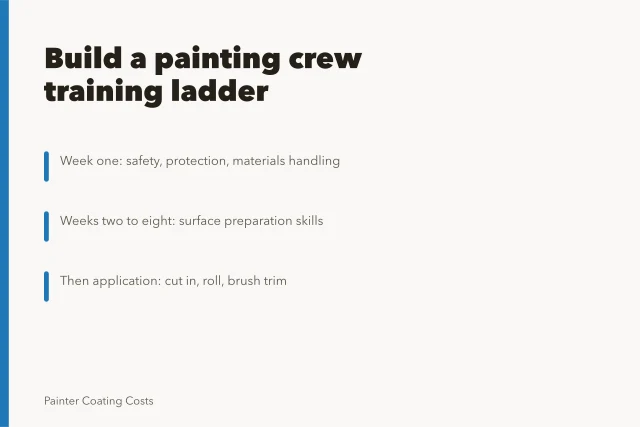
Pair training with real jobs rather than classroom time. One demonstration, one supervised attempt, one checked solo attempt, then sign-off. Fifteen minutes at the start of a day covers most sessions. A written training ladder also feeds the crew roles and rungs in the painting contractor hiring and training guide.
Keep a simple record per person: skill, date, trainer, and result. That record supports your duties as an employer and shows you honestly who can run a crew.
The Department of Labor's compliance assistance for small businesses covers wider recordkeeping and wage rules that come with employing people. The EEOC small business resource center covers keeping training and advancement decisions fair and job related.
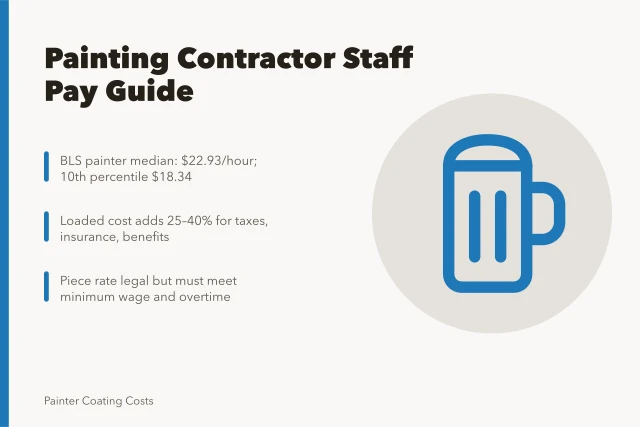
Pay progression should follow the ladder visibly. Market wage estimates for painters by state and metro are published in the Bureau of Labor Statistics wage tables, and a company that ties rungs to rates keeps people longer than one that negotiates individually in the truck.
Where this connects
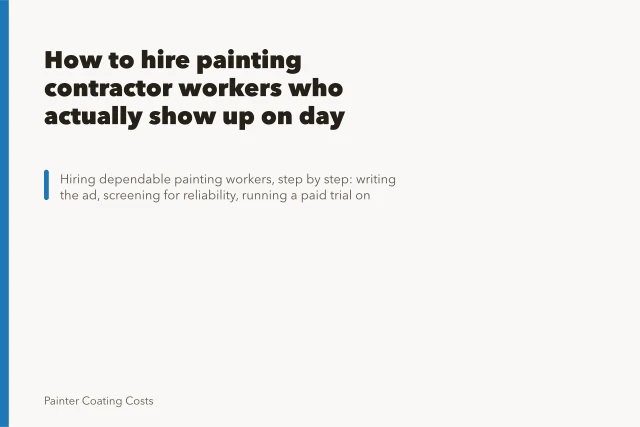
Training makes hiring worthwhile, so the two belong in one plan. The sequence for finding and testing people is in hiring dependable painting contractor workers.
The structure of roles and rungs is in the hiring and training guide. Which skills are worth building depends on the work available to you, a market question covered in best markets for a painting contractor business.
Common questions
How long before a new helper is productive?
They are productive on day two, doing protection and cleanup. Producing finished work unsupervised takes a season for most people, and longer for enamel.
Should training be paid?
Yes. Time spent training at your direction is generally working time, and treating it otherwise creates a wage problem as well as a morale one.
What if an experienced hire refuses to follow our method?
Treat it as a conversation about the standard, not about seniority. If the standard is written and the reason explained, most experienced painters comply. If they will not, the mismatch will show up in a callback soon enough.
How often should refresher training happen?
Safety and access equipment at least annually and after any incident. Application skills whenever you change a product or add a service, because the failure modes change with it.