Guides
Where does winter interior painting work come from in Minneapolis and Chicago?
Winter interior painting work in Minneapolis and Chicago comes from rental turns, commercial repaints, and water damage repair, booked in October.
What to take away
- Exterior latex in Minneapolis and Chicago stops when overnight lows approach freezing, so interior production carries four to five months of revenue.
- Multi-family turns, commercial repaints and water damage restoration are the three winter segments; homeowner work fills gaps at better margin.
- Book the winter book by October 15 with signed scopes, a hard exterior cutoff date, and drying time built into the schedule.
- Dust control on occupied jobs comes down to HEPA sanding, zipper-door containment, sealed HVAC returns and filtered air movers.
- Bill deposits, progress payments by unit or floor, and invoice the day a phase closes; hold a fall reserve for two to three months of fixed costs.
Where winter interior work comes from in cold metros
Exterior painting in Minneapolis, MN and Chicago, IL runs about May through October. Freeze-thaw cycles and early frost end latex exterior work before the calendar does. What remains is four to five months of interior-only production, and the contractors who fill it lined up the work in September.
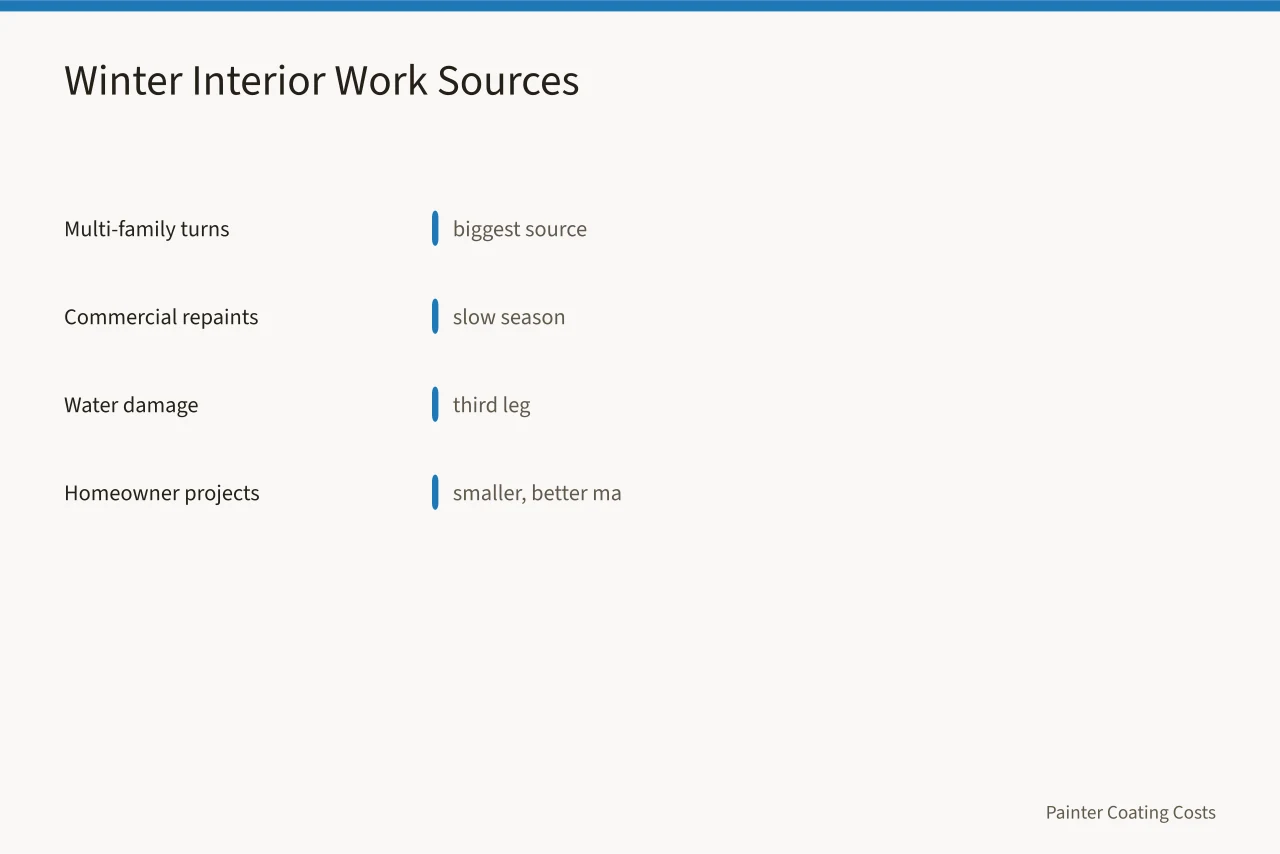
Multi-family turns are the biggest source. Property managers repaint vacant units between leases, and turnover does not pause in January. A manager with a few hundred units produces a steady drip of one and two bedroom repaints all winter. Get on the approved vendor list in September.
Commercial and institutional repaints follow the same logic. Offices, clinics, schools and restaurants schedule interior work for the slow season, when disruption is lower and staff are on holiday. Retail chains often want a refresh before spring selling, which puts crews inside stores in January and February.
Water damage is the third leg. Burst pipes, ice dams and sprinkler failures have to be dried, patched and painted. Minneapolis sees plenty of ice dam claims, and restoration contractors need painting subs who can mobilize in cold weather. That work is rarely bid on price alone.
There is the homeowner who simply wants it done. Kitchens, basements and stairwells get painted in winter because the family is indoors anyway. This segment is smaller but carries better margin than volume turns.
Use it to fill gaps, not to build the book. Demand across all four shifts with remodeling activity, so watch the NAHB remodeling data and review painting contractor licensing and compliance before you commit crews.
Planning November through March production
Winter production is a scheduling problem before it is a painting problem. Daylight is short, dry times are long, and buildings cannot be left open to the weather. Write the season down in October.
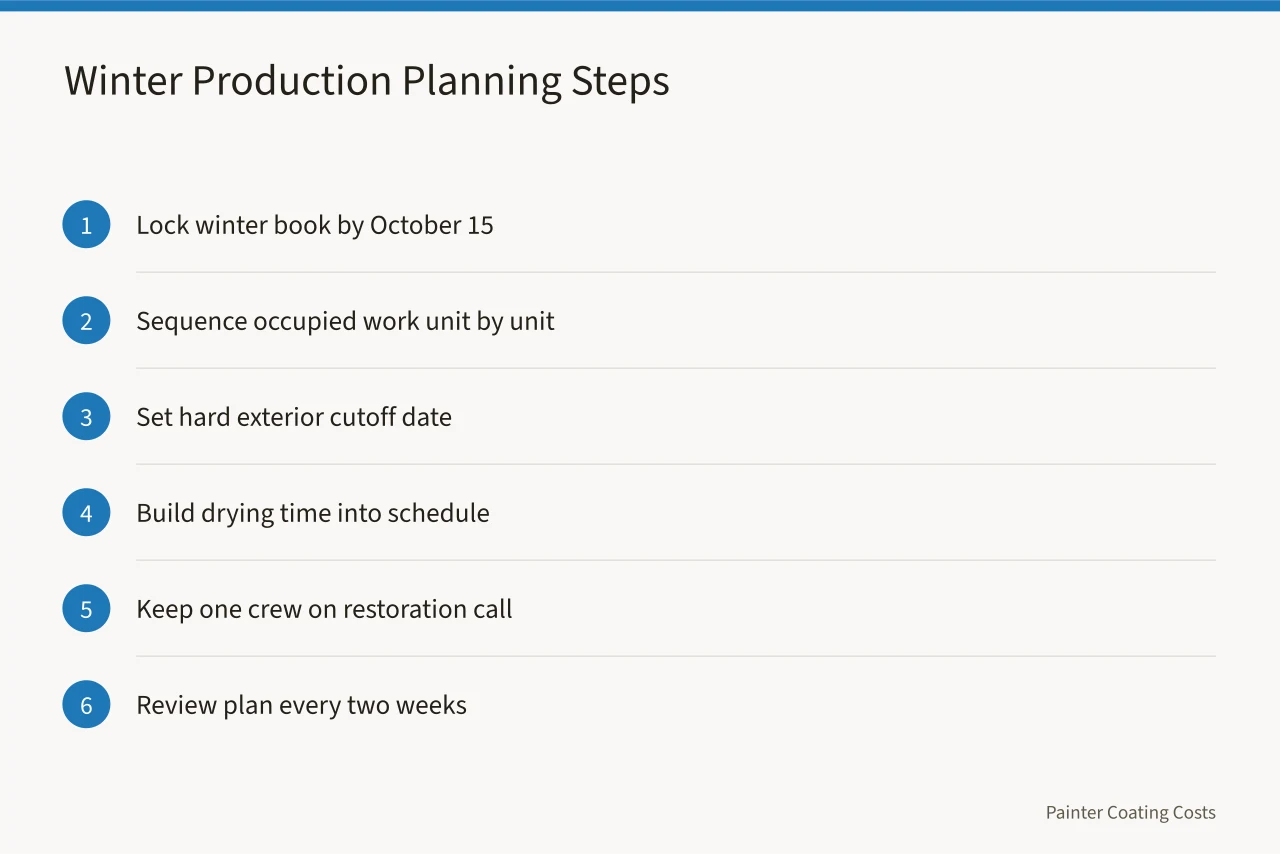
- Lock the winter book by October 15 with a signed scope and start window for every turn, commercial repaint and restoration agreement.
- Sequence occupied work around the building, one floor or one unit at a time, so hallways stay usable.
- Set a hard exterior cutoff date and tell customers. Once overnight lows sit near freezing, exterior latex is a gamble.
- Build drying time into the schedule. A two-coat day in July may need an overnight gap in January.
- Keep one crew on call for restoration, able to mobilize within 24 hours.
- Review the plan every two weeks against actual production, and move labor before you move a deadline.
A worked example shows the stakes. Suppose three crews bill about $18,000 a week in exterior season, and in January two interior jobs are running with one crew idle.
If the winter book was planned in October, that third crew is on a commercial repaint at lower margin but steady pace. If it was not, you are paying three crews to sit, and the loss compounds weekly.
Crew size is the other lever. Winter interior work is detail heavy: cutting in around trim, patching, and finish coats in tight rooms. A smaller, more skilled crew usually beats a large one on occupied interiors. Keep your best finishers inside and let seasonal labor go in November.
Dust and ventilation control on occupied jobs
Occupied work in Minneapolis and Chicago means sealed windows, running furnaces, and people ten feet from your sprayer. Dust and fumes are what get a contractor removed from a vendor list.
Control dust at the source. Sanding with a vacuum attachment and a HEPA filter captures most of it before it travels. Isolate the work area with plastic sheeting and zipper doors, and tape off HVAC returns in the room. Skip that step and the building's furnace filters load up fast.
Negative air machines and box fans with filters keep air moving out of the occupied space. In a sealed winter building you cannot rely on open windows.
Set the machine so air flows from clean areas toward the work zone, then exhausts through a filter.
Change filters before they clog, because a loaded filter stops moving air and fumes back up into the unit.
Ventilation also sets dry time. A room with no air movement stays humid, and humid air slows curing. Run air movers on low overnight, and check that the building's own ventilation is not pushing fumes into stairwells or neighboring units.
Protection is part of the plan. The OSHA personal protective equipment requirements for painters cover respirators, eye protection and gloves. Match the cartridge to the product, and follow the OSHA hazard communication overview for labels and safety data sheets on every job.
Communicate last, and communicate in writing. Give tenants or building staff the access days and the noisy hours. A short note prevents most complaints and protects the relationship that produces next winter's work.
Low-odor and fast-dry product choices
Product selection decides whether you can work during business hours or only at night. In a closed building, odor and dry time are the whole game.
Low-odor waterborne coatings with low VOC content let you paint clinics, offices and occupied apartments without complaints. Zero and low VOC lines from major manufacturers cover and level well enough for most walls and ceilings.
Fast-dry interior coatings solve the scheduling problem. A fast-dry wall coating can be recoated in a few hours instead of overnight, which lets a crew finish a unit in one shift rather than two. That matters when a property manager needs the unit back on the market.
Match product to substrate and room. Alkyd and oil based products still earn their place on trim and doors for hardness, but they carry more odor and longer dry times. Use them where you can ventilate and where durability justifies the tradeoff. For ceilings and large wall areas, waterborne is usually right.
Read the temperature and humidity limits on the label. Most waterborne coatings want substrate and air above a minimum temperature, often around 50 degrees Fahrenheit, and low humidity helps. In an unheated January unit you may need temporary heat before you open a can.
Keep a product sheet for every coating and train the crew on which product goes where. That consistency is what lets you quote interior work with confidence and hold the margin you set at rates that pay the bills.
Cash flow when exterior work stops
Winter is a cash flow problem more than a demand problem. Exterior revenue falls to near zero while truck payments, insurance and wages continue.
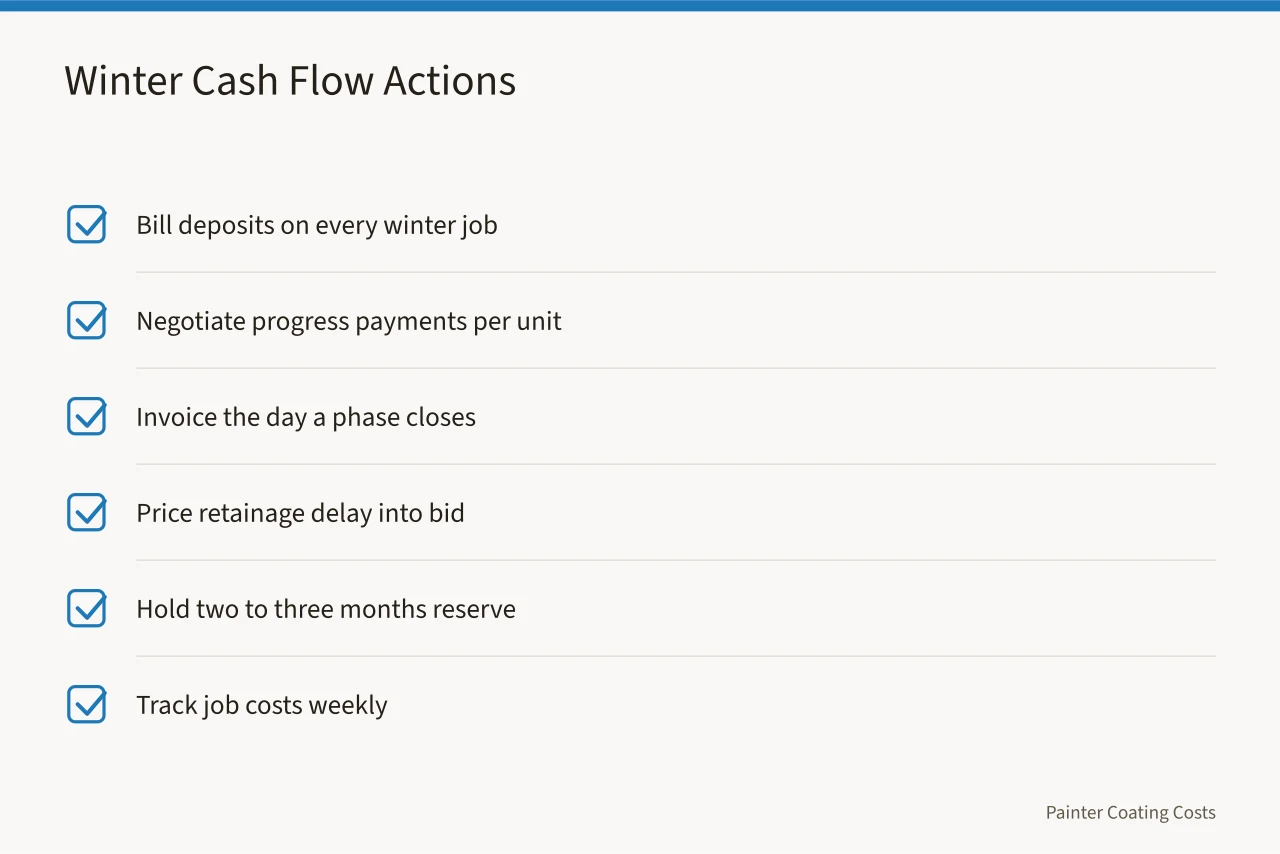
Bill deposits on every winter job. A deposit covers materials and the first days of labor, and it filters out customers who are not serious. On commercial and multi-family work, negotiate progress payments tied to completed units or floors rather than one final invoice.
Shorten the billing cycle. Invoice the day a phase closes, not at month end. Send statements weekly and chase anything past 30 days. Retainage on commercial jobs can hold 5 to 10 percent of your money for months, so price that delay into the bid.
Hold a winter reserve. Set aside a share of fall exterior revenue to cover two to three months of fixed costs. That reserve is what lets you decline bad winter work and accept good work that starts slowly.
Use credit carefully. A line of credit should fund work you have already sold, not work you hope to sell. Track job costs weekly so you know which jobs are making money while they run.
Keep the books clean through the slow season. Deposits, progress billings, retainage and subcontractor payments all need recording as they happen, which is also the base of a local SEO checklist for painting contractors. Owners filing Schedule C and issuing 1099-NEC forms to subs need those records anyway.
Chicago permit and building rules to check first
Chicago has rules that catch out-of-town contractors off guard. Before you mobilize, check whether the work needs a permit and whether the building has requirements that change how you paint.
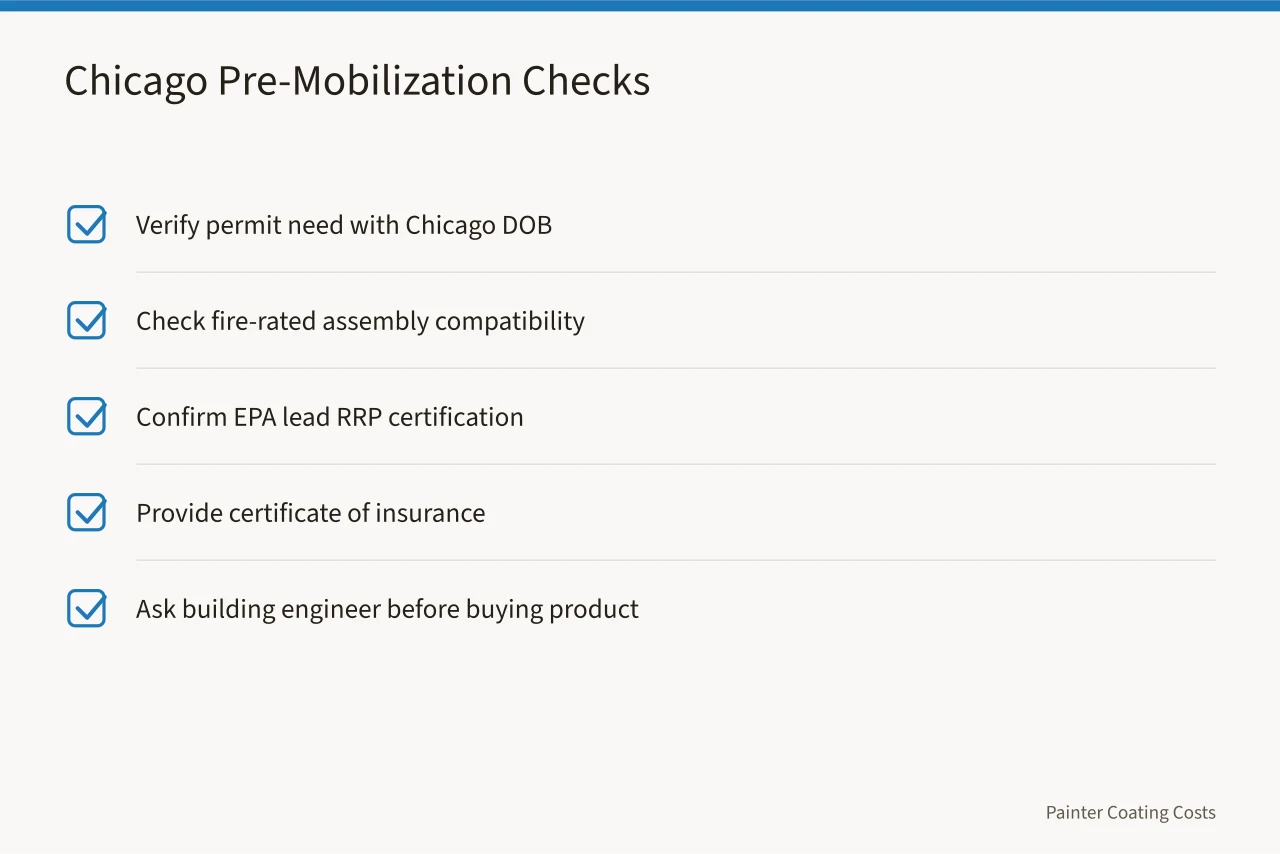
The Chicago Department of Buildings regulates construction and renovation in the city, including many interior projects. Painting alone is often exempt, but drywall repair, structural patching or work in a commercial space can trigger a permit. Verify the scope before you sign a contract that assumes no permit, using the City of Chicago Department of Buildings permit pages.
Multi-unit and high-rise buildings add layers. Common areas, stairwells and corridors may fall under code requirements for fire rated assemblies and finishes. If you are recoating a rated wall or door, the coating has to be compatible with the assembly. Ask the building engineer before you buy product.
Lead paint rules apply to older housing stock. Chicago and Minneapolis both have pre-1978 homes, and the EPA Lead Renovation, Repair and Painting Rule requires certified firms and renovators for work that disturbs lead paint. Get firm certification current before winter, because the backlog can cost you a job.
Insurance and access rules matter too. Many Chicago buildings require a certificate of insurance naming the building as additional insured, plus proof of workers compensation. Some require background checks or union labor for certain trades. Confirm all of it before the crew reaches the loading dock.
Once the rules are clear, sell the winter book the way you sell exterior work, with a real marketing plan for a painting contractor aimed at property managers and building owners rather than homeowners.
Contractors who treat winter as a season to be sold rather than survived keep crews busy and hold margin until spring. They also win more painting contractor customers in every season.
Common questions
How early should I book winter interior work in Minneapolis and Chicago?
By mid October. Property managers and commercial owners set winter vendor lists in fall, and contractors who call in September get the turns that run through March.
Do I need a permit to paint interiors in Chicago?
Painting alone is often exempt, but drywall repair, commercial buildouts and work in rated assemblies can require one. Check the scope with the Chicago Department of Buildings before you bid.
What products work best in occupied buildings?
Low-odor waterborne coatings for walls and ceilings, and fast-dry interior coatings where you need a quick recoat. Reserve alkyds for trim where durability justifies the odor and dry time.
How do I keep dust out of occupied space?
Isolate the work area with plastic and zipper doors, sand with HEPA vacuum attachments, seal HVAC returns, and run negative air machines with clean filters.
How do I survive the cash flow gap in January?
Take deposits, bill progress payments by unit or floor, invoice immediately, and hold a reserve from fall exterior revenue to cover two to three months of fixed costs.
Does the EPA lead rule apply to winter interior repaints?
Yes, if the building predates 1978 and the work disturbs painted surfaces. Use a certified firm and follow the RRP work practices on every qualifying job.