Guides
EPA RRP lead-safe rules and your painting estimate in older US housing
Lead-safe work on pre-1978 housing adds certified oversight, containment, cleaning and clearance to a repaint estimate, and each one is quotable.
What to take away
- The trigger is the year the structure was built, not the size of the job. Paid work that disturbs painted surfaces in pre-1978 housing falls under the EPA Renovation, Repair and Painting Rule.
- Firm certification and renovator training renew on a five-year cycle. That is overhead spread across billable hours, not a charge to one customer.
- Containment setup, HEPA and wet cleaning, and the reclean after a failed clearance are crew hours you can measure per room and quote from your own time records.
- Clearance testing is a separate line because a certified inspector performs it, not your crew.
- OSHA 1926.62 runs on the same job as the EPA rule and can add respirators, fit testing, washing facilities and blood lead testing to the estimate.
Start with the year the structure was built
Every repaint bid opens with one question: when was this building finished? A 1965 house in Cleveland, a 1952 bungalow in Phoenix and a 1920s walk-up in Chicago carry the same presumption. Painted surfaces may contain lead until testing says otherwise.
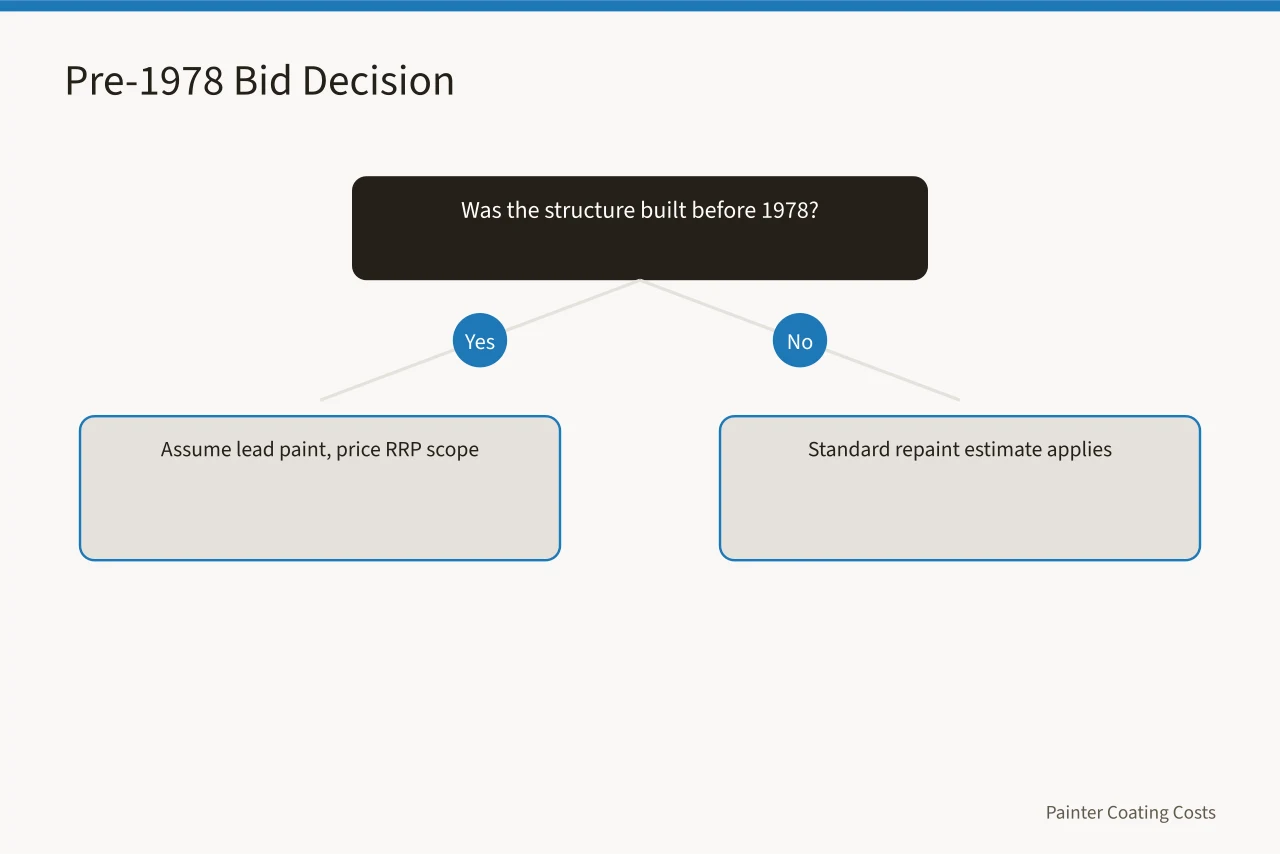
If the customer does not know the year, price the job as if the paint contains lead. Guessing low and discovering lead after the crew has sanded is the most expensive mistake in this work.
The rule itself is set out on the Lead Renovation, Repair and Painting Program | US EPA. Read it before you bid, not after.
Sanding, scraping and chemical stripping all disturb paint. So does some prep work contractors treat as too small to matter. The rule does not exempt small jobs the way many crews assume.
There is an exit. If a certified inspector or qualified tester confirms the components you will disturb are lead-free, those components fall outside RRP. That determination costs money and takes time, so it gets its own line in the estimate rather than being offered as a favor.
Where the pre-1978 housing sits in your pipeline
Age of housing stock decides how often this reaches your desk. Northeast and Midwest metros, plus older California, Illinois and New York neighborhoods, produce a steady share of pre-1978 repaints.
Sunbelt markets in Arizona, Florida and Texas have newer median housing. Every one of those states still has pre-1978 pockets, and one job there pulls you into the rule.
Contractors working in that housing also carry a disclosure duty. Federal law requires sellers and landlords to disclose known lead-based paint and hand the EPA pamphlet to buyers and tenants. Expect customers to ask what the rule requires of them and of you.
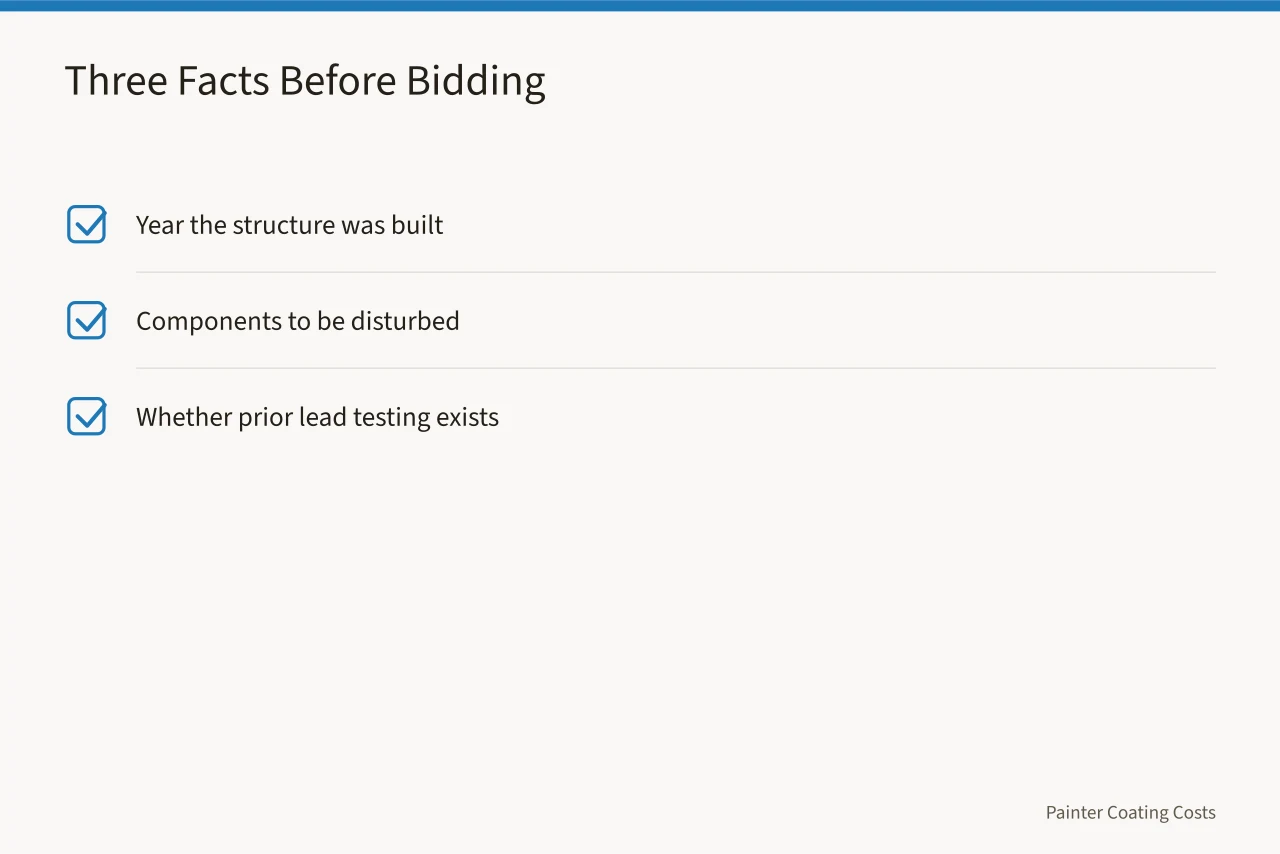
Three facts turn a repaint from a guess into a bid: year built, components to be disturbed, and whether prior testing exists. Without all three, you are pricing blind.
Firm certification and renovator training as burden rate
A firm that performs, offers or claims to perform renovation in pre-1978 housing must be certified by the EPA or an authorized state program. Certification belongs to the firm, not the worker.
Renovator training is separate. At least one certified renovator must be assigned to each job, and that person must have completed an EPA-accredited course. The certified renovator trains the crew on site and owns the containment, cleaning and post-work verification.
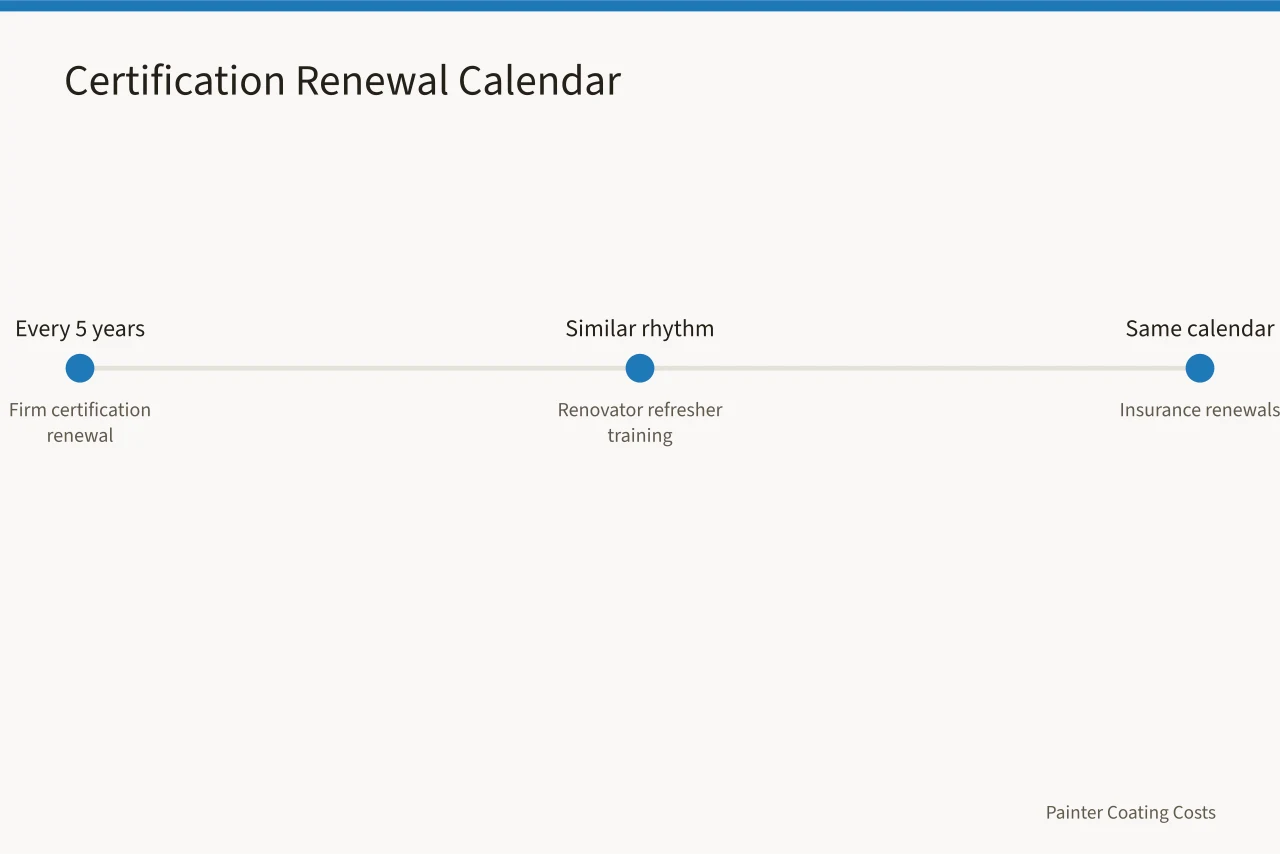
Federal firm certification renews on a five-year cycle, and renovator refresher training follows a similar rhythm. Put both dates on the same calendar as your insurance renewals. A certificate that lapses mid-project is a compliance failure no clean work erases.
Certification cost is fixed overhead. Divide your annual certification and training spend by annual billable hours and add the result to your labor burden. Loading it onto one customer's line items makes that bid uncompetitive and leaves the next job carrying nothing.
The compliance checklist for a new painting business is a workable place to track those renewal dates next to licensing and insurance.
What the written estimate must show is narrower than what the rule demands of your operations. State that the firm is EPA certified, name the certified renovator assigned, and list the lead-safe practices included. Do not promise a specific clearance result before testing happens.
Some states run their own authorized RRP programs with their own fees and paperwork. Confirm which program governs your job before assuming the federal process applies. Texas and California both run licensing structures worth checking, and the licensing requirements that apply to your trade sit alongside lead-safe work, insurance and business registration as conditions of doing the job legally.
Containment, cleaning and clearance as measurable line items
Containment is the visible cost of the rule and the easiest to quote. Plastic sheeting, sealed doorways, disposable covers and negative air machines where required. The materials are cheap. The labor to install and remove them is not.
The rule names specific work practices: contain the work area, avoid open-flame burning and high-heat guns, clean with wet methods and HEPA vacuums, then verify. Each one becomes a line you can price.
Measure containment per room or per 100 square feet of work area, whichever matches how your crew actually sets up. A crew containing a 12 by 14 foot bedroom takes a predictable amount of time. Track it for a month and you have a unit price instead of an argument.
Cleaning is the line contractors underprice most. Wet wiping, HEPA vacuuming and repeated passes run longer than a broom-and-bag cleanup. Price it as its own task or it disappears into margin.
Clearance testing is not your work. A certified inspector or risk assessor examines the surfaces after cleaning and issues a written report. You schedule it, you wait, and if it fails you reclean and the inspector retests.
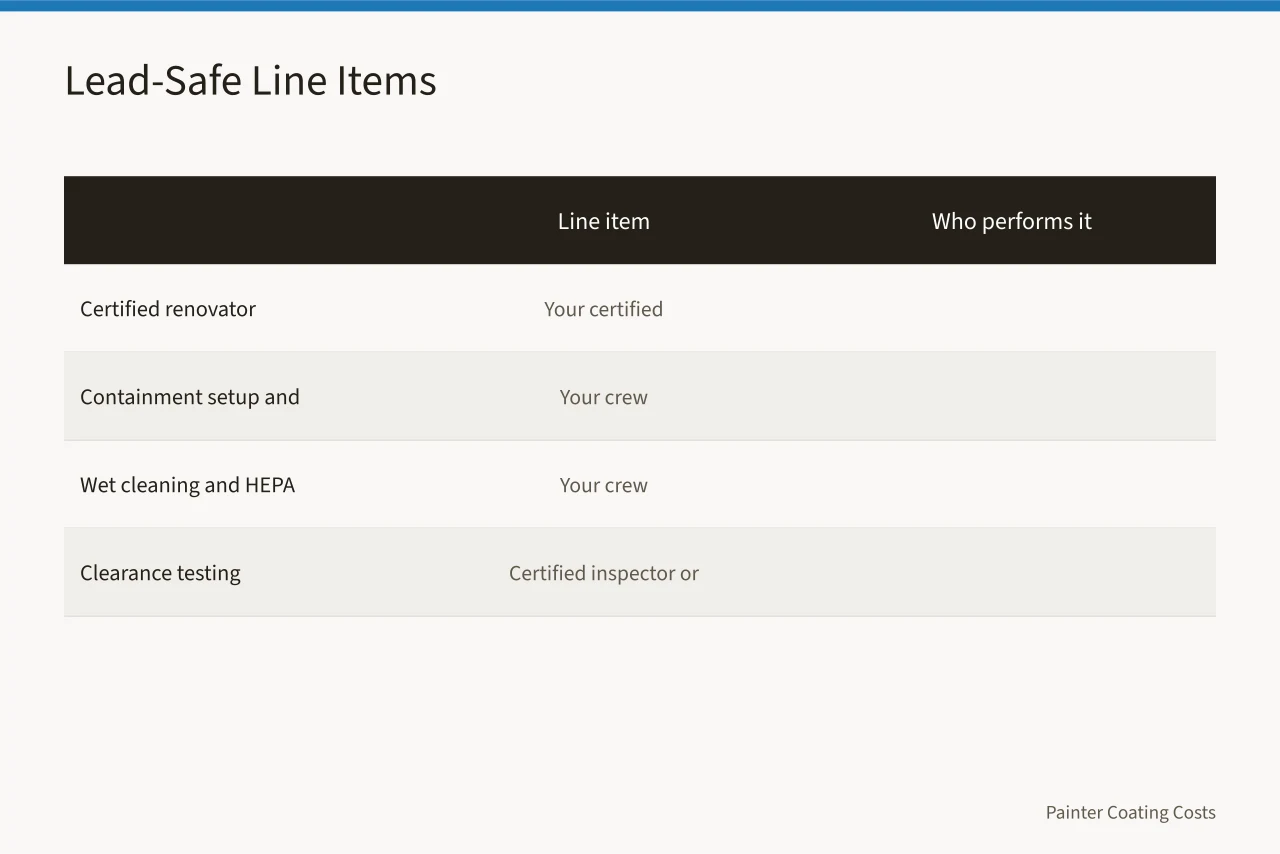
| Line item | Unit | What it covers | Who performs it |
|---|---|---|---|
| Certified renovator oversight | Hours | On-site direction, crew training, record keeping | Your certified renovator |
| Containment setup and removal | Per room | Plastic, tape, sealed entries, negative air if needed | Your crew |
| HEPA vacuum and wet cleaning | Per room | Multiple cleaning passes, waste bagging | Your crew |
| Clearance examination | Per unit | Surface sampling and written report | Certified inspector |
| Reclean allowance | Per job | Second cleaning and retest if clearance fails | Your crew and inspector |
The reclean allowance is the item contractors skip and later regret. Clearance failures happen. When one does, the crew returns, the inspector returns, and the schedule slips. A modest allowance priced into every lead-safe job covers the ones that go wrong.
Debris from a lead-safe job is bagged, sealed and disposed of under state and local rules, which may differ from ordinary construction waste. Ask your disposal site what it accepts before you quote.
OSHA 1926.62 and the worker protection line
The EPA rule protects occupants. OSHA protects your crew. Both obligations run at once on the same job, and 1926.62 - Lead | Occupational Safety and Health Administration sets the exposure limits and required protections.
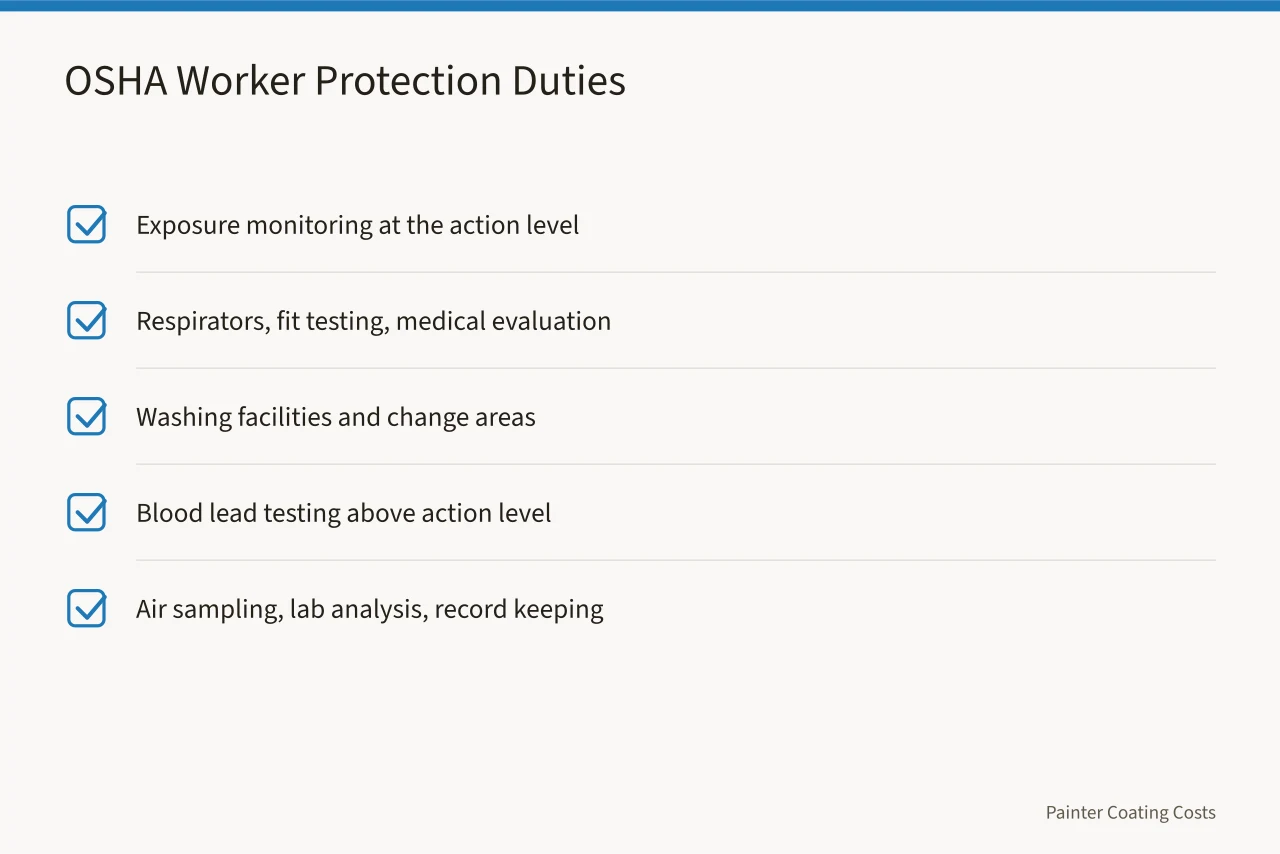
The standard works from a permissible exposure limit and an action level. Reach the action level and the employer must monitor. Exceed the limit and further controls apply. Painting and coating work that disturbs lead paint is the task the standard was written for.
Respiratory protection means respirators, fit testing and medical evaluation for anyone who wears one. Hygiene means washing facilities and change areas so lead dust does not ride home on clothing.
Medical surveillance is the cost contractors forget. Employees exposed above the action level for a set number of days must be offered blood lead testing. That is recurring, per employee, not a one-time purchase. Exposure monitoring adds air sampling, laboratory analysis and record keeping on top.
Training overlaps between the two programs. RRP renovator training covers lead-safe work practices; OSHA training covers hazard recognition and protection. Some courses address both, which cuts total hours, but the records must satisfy each program separately. For exposure questions, the authorities are OSHA and NIOSH, and a physician for any individual.
Crews trained in lead-safe practice work faster inside containment because nobody is improvising. The training cost comes back on the first few jobs where setup goes right the first time.
Confirm with your carrier that general liability covers lead-related work and that your workers compensation classification reflects the exposure. A claim denied for an undisclosed lead exposure is an expensive way to learn your policy language.
Building the lead-safe block in a written estimate
The lead-safe section should be a distinct block, not folded into general prep. Customers compare bids, and a separate block makes your number explainable instead of merely higher.
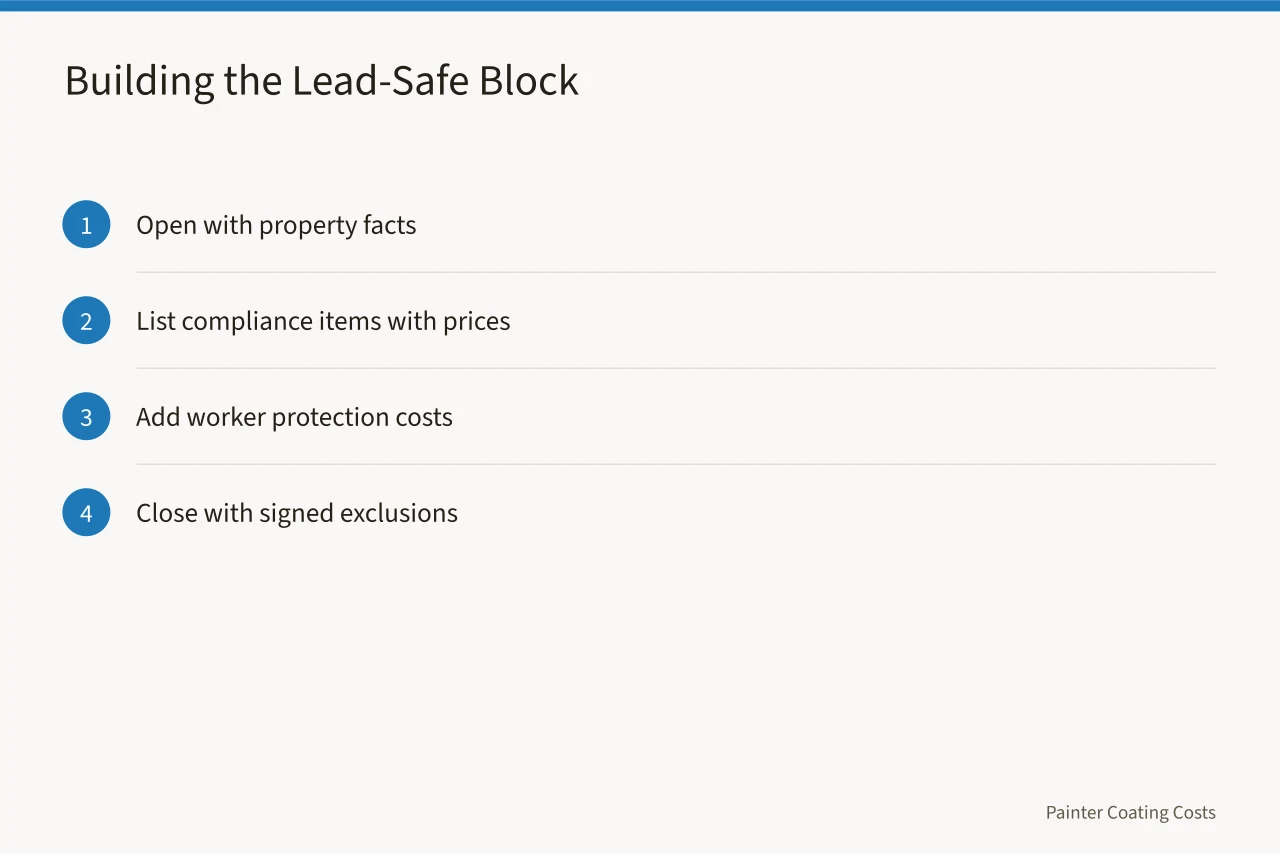
Open with the property facts: year built, components to be disturbed, prior testing. Then the compliance items, each with a price and a plain note about why it exists.
Follow with worker protection. Respirators, fit testing, medical surveillance where it applies, exposure monitoring where the job warrants it. The customer sees one lead-safe scope, not two rulebooks.
Close with exclusions. If the customer declines clearance testing or wants containment skipped, put that in writing as a declined item with a signature. That documents their decision and protects you.
A quote template with a lead-safe block already built saves time on every pre-1978 bid. Adjust quantities per job instead of rewriting the language.
Pricing the block is where contractors hesitate. Your ordinary painting contractor rates do not cover lead-safe work, because the labor content differs. Price the block from your own time records, never as a percentage markup on the base job.
Treat lead-safe work as a scope with its own margin. The prices for profit approach holds here as anywhere: know cost per unit, apply margin, and never discount the compliance items to win a bid.
Documentation that turns a higher number into an accepted one
Documentation is what stops a customer shopping on price alone. The one who understands the rule starts comparing scopes.
Keep what the rule requires: firm certification, renovator training certificates, job site records of the work practices used, and clearance reports. Retain them for the period your state or the EPA sets.
Hand the customer the EPA pamphlet and the disclosure information for pre-1978 housing. The EPA lead program hub is the plainest source for a homeowner who wants to read the requirements, and Lead | US EPA covers certification and renovation rules in more depth.
HUD material helps when the customer is a landlord, a housing authority or a buyer using a federal loan. The 25red-Office of Lead Hazard Control and Healthy Homes | HUD.gov / U.S. Department of Housing and Urban Development (HUD) guidance explains lead hazard control in housing and why the scope looks the way it does.
Photograph the setup. Before-and-after shots of containment, sealed doorways and the final clean state are the cheapest evidence you will ever produce, and they answer the customer's question about what they paid for without a meeting.
Run this checklist on every pre-1978 job so nothing gets skipped under schedule pressure:
- Confirm year built and document the source
- Check for prior lead testing or inspection reports
- Verify firm certification and renovator assignment are current
- Deliver the EPA pamphlet and disclosure information
- Photograph containment before work starts
- Record cleaning method and completion
- File the clearance report and any reclean records
When a customer pushes back on price, walk the checklist. Most objections dissolve once they see that containment, cleaning and clearance are required steps with real labor behind them.
Common questions
Does the RRP Rule cover exterior work?
Yes. It applies to renovation, repair and painting that disturbs painted surfaces in pre-1978 housing and in child-occupied facilities, interior or exterior. Exterior work carries its own containment and cleanup requirements.
Can testing the paint take a job out of the rule?
For the components you will disturb, yes. If a certified inspector or qualified tester confirms those components are lead-free, RRP does not apply to them. The testing itself is a cost you quote.
Who performs clearance testing, and what happens if it fails?
A certified inspector or risk assessor who is independent of the renovation work. Your crew cleans, the inspector verifies. On a failure, your crew recleans and the inspector retests, which is why the reclean allowance sits in the estimate.
Do OSHA rules apply when the EPA rule does not?
OSHA 1926.62 applies to construction work with lead exposure regardless of the building's age. Disturb a coating that contains lead and the worker protection obligations apply even where RRP does not.