Guides
What Condo Painting Costs in Vancouver: Strata Rules and Rates
Condo painting cost Vancouver strata rules change what a contractor can quote, which approvals a BC owner needs, and how long a repaint takes.
What to take away
- What condo painting costs in Vancouver depends on unit size, surface, and strata rules.
- Strata corporation approval is separate from City of Vancouver permits, and most interior repaints in a strata lot do not need a city permit.
- BC strata rules govern common property, limited common property, and sometimes the visible exterior of a strata lot.
- A contractor must show current liability insurance and Workers' Compensation Board coverage before work starts.
- Skipping strata approval can lead to a stop-work order and a forced repaint at the owner's expense.
Who has jurisdiction
Three layers of rules can apply to one condo paint job in Vancouver: provincial strata law, municipal building and property use bylaws, and the strata corporation's own bylaws and rules. British Columbia's strata housing regulations set out repair and maintenance duties for owners and strata corporations.
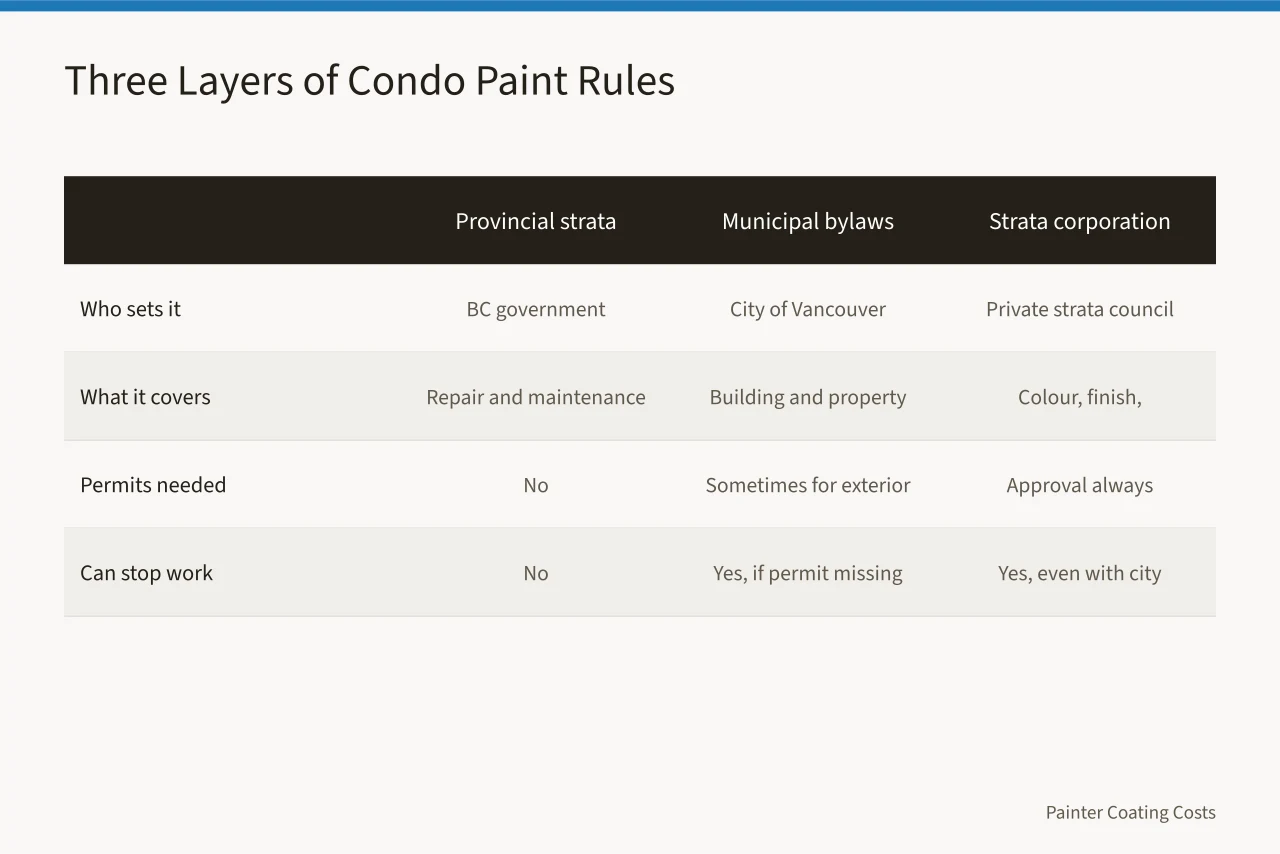
The City of Vancouver's building bylaw can require permits for exterior work on some buildings. A strata corporation is private, so it can add stricter color, finish and contractor conditions through its bylaws even when the city does not care. An owner with a city permit but no strata approval can still be stopped by the strata.
What triggers a strata painting approval
Common property and limited common property are the main triggers. The BC strata repair and maintenance guidelines list paints on exterior walls, hallways, lobbies, parkade doors and balconies as strata responsibilities when they are common property.
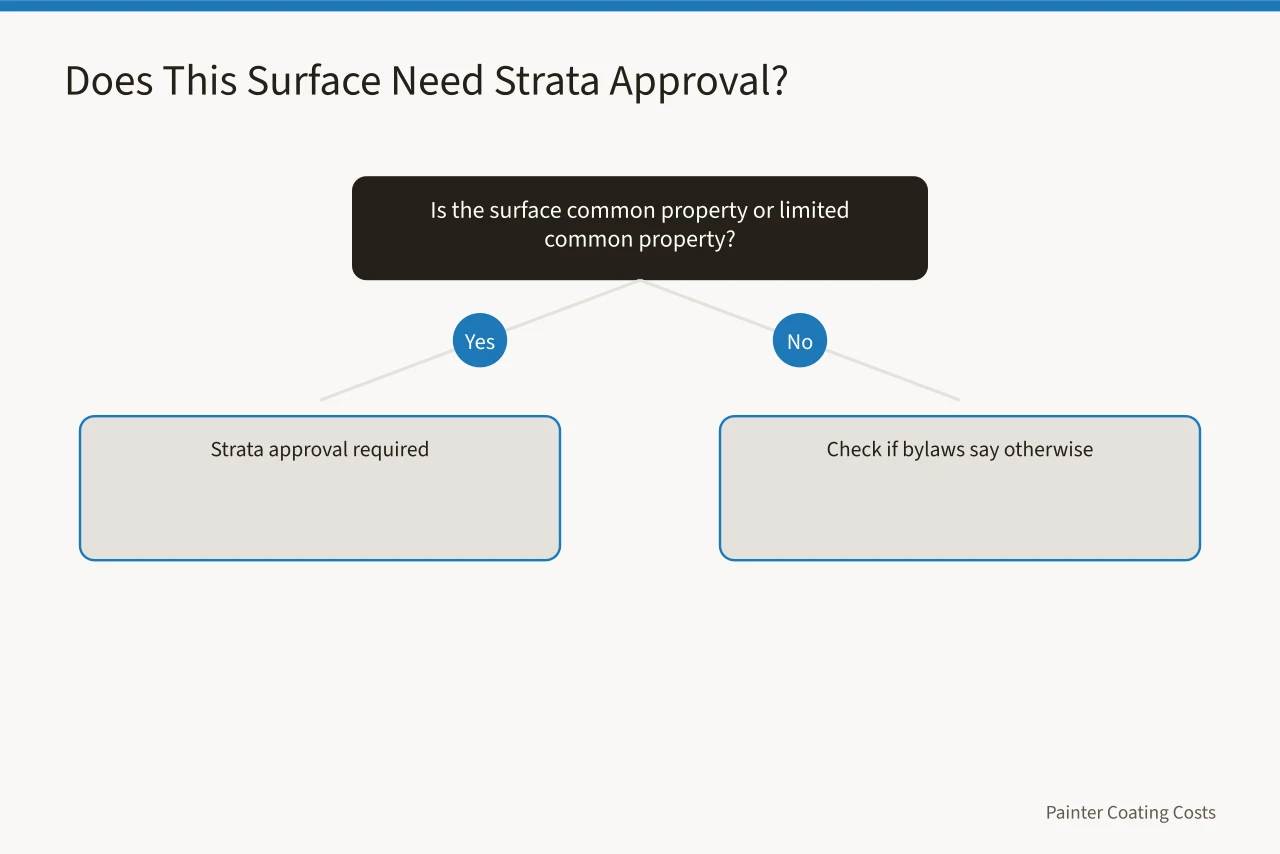
Limited common property, such as a balcony that only one unit can use, often still needs council permission before any paint or coating changes. Interior walls inside a strata lot usually do not need approval unless the bylaws say otherwise or the work affects plumbing, electrical or fire-rated assemblies.
A common mistake in Vancouver is treating a balcony surface as part of your unit. Under many BC strata plans, balconies are limited common property, so painting them usually requires strata approval.
What to submit to the strata corporation
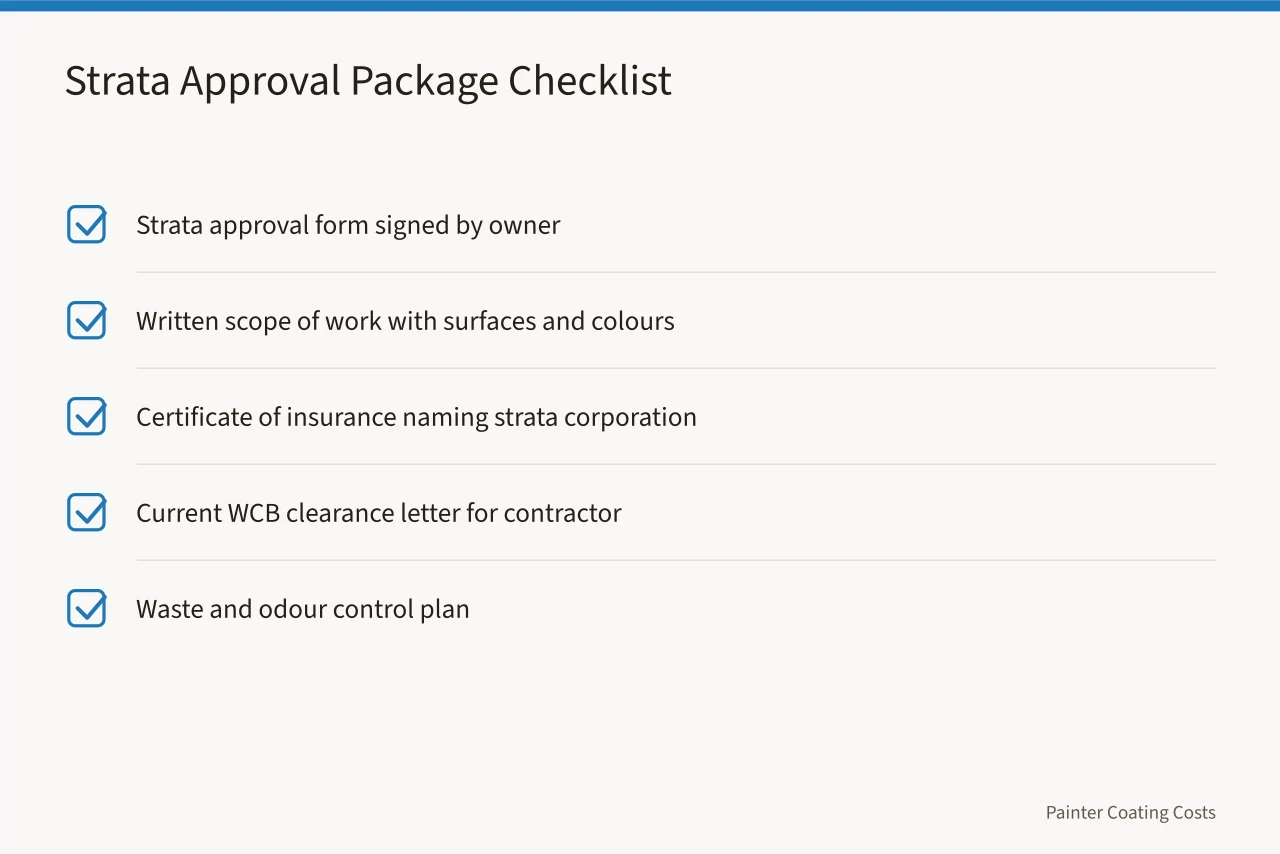
A complete package to council usually includes:
Strata approval does not replace federal tax obligations. A painting contractor's GST or HST treatment is a separate matter governed by the Canada Revenue Agency.
How long approval takes
Council schedules drive the timeline. Many Vancouver strata councils meet once a month. If the complete package arrives after the agenda deadline, the decision waits for the next meeting.
For exterior painting on common property, the strata may need quotes from more than one contractor before council votes. Interior unit repaints with no common area impact are often approved by a property manager within a few days.
Emergency work, such as a leak repair requiring immediate spot painting, can move faster when the property manager has written authority from council.
A property manager can confirm whether the next council meeting has room on the agenda. Owners who submit a complete package first usually get a decision sooner.
Vancouver strata rules impose restrictions that differ from detached home work in other provinces. For example, exterior house painting cost in Ontario follows a different set of municipal and provincial triggers, so BC owners should not assume the same process.
What condo painting costs in Vancouver
Typical Vancouver quotes for an empty strata-lot repaint, as of 2026, run $1,800 to $3,500 for a 550 to 750 sq ft one-bedroom. A 850 to 1,100 sq ft two-bedroom often lands at $3,000 to $6,000. A 1,200 to 1,500 sq ft three-bedroom runs $5,000 to $9,000.
Ceilings add 15% to 25% to those figures. Trim and doors add $75 to $150 per door, baseboards add $3 to $6 per linear foot, and an accent wall adds $150 to $400. Heavy patching, high ceilings, and furniture moving push costs to the top of the range.
Painters in Metro Vancouver typically bill $45 to $85 per hour. Some quote per square foot instead: $2 to $4 per sq ft of floor area for a basic two-coat interior repaint. Premium paints and extensive prep push that rate higher.
Common property work carries different rates. A hallway repaint commonly runs $1.10 to $2.50 per sq ft of floor area. Balcony railings run $150 to $400 each. A full exterior repaint on a 100-unit building typically falls between $150,000 and $400,000, depending on stucco, concrete, or metal surfaces.
Paint materials affect the quote. Benjamin Moore Regal Select interior eggshell retails around $80 to $100 per gallon in Canada. Sherwin-Williams SuperPaint runs $70 to $90. Cloverdale Paint EcoLogic runs $60 to $85. Dulux Diamond runs $70 to $95. Behr Premium Plus runs $45 to $65. Contractor pricing is often lower.
Strata fees can add to the total. Many Vancouver strata corporations charge a $100 to $500 renovation deposit and a $50 to $150 elevator booking fee. A City of Vancouver building permit for minor exterior work typically runs a few hundred dollars. Most interior repaints need no city permit.
Property management companies such as FirstService Residential, Associa, Rancho Management Services, and Pacific Quorum Properties often collect these fees and schedule approvals. WorkSafeBC clearance and liability insurance remain the contractor's responsibility.
What happens if you skip it
Skipping strata approval has a concrete consequence. The strata council can issue a stop-work order and deny the contractor access to common property, elevators and water.
If the owner paints a balcony or exterior surface without permission, the council can require the owner to return it to the previous color at the owner's expense.
In British Columbia, a strata can also impose a bylaw fine and recover its costs through the Civil Resolution Tribunal. An owner who repeatedly ignores the order may face a lien against the strata lot under the Strata Property Act. This is the first thing a contractor should ask about before confirming a site visit.
The BC strata model is distinct from a condominium in Ontario because strata title rules give councils broad power over common property. That power includes setting color rules, access hours and insurance requirements for any contractor on site.
How strata conditions shape the work
Strata conditions add line items that a detached home quote might not include. A contractor may need to schedule work only during posted hours, protect hallway flooring, and use low-odor paint when the building shares a ventilation shaft.
Color changes on common property often require a sample board approved by council. Waste paint and solvent must leave the site through a route approved by the property manager. Owners should ask whether the strata has a list of pre-approved contractors, because some councils will not consider a contractor who is not on that list.
If the project stays inside the unit, an owner can compare the scope with a kitchen cabinets per linear foot job. Neither usually triggers a strata approval unless the bylaws say otherwise.
Common questions
What does a typical Vancouver condo repaint cost? As of 2026, typical ranges are $1,800 to $3,500 for a one-bedroom, $3,000 to $6,000 for a two-bedroom, and $5,000 to $9,000 for a three-bedroom. Ceilings, trim, and heavy prep add to those figures.
Does a strata corporation approve every color change? No. Interior colors rarely need approval. Common property colors usually require council sign-off.
Can a contractor start before strata approval is recorded in minutes? Not on common property. Work can be stopped if the contractor is not named in the approved application.
Who pays for a forced repaint if an owner skips approval? The owner who made the change usually pays. The strata can also recover enforcement costs through the Civil Resolution Tribunal and may place a lien on the strata lot. A parkade floor repaint may require a separate epoxy garage floor coating cost estimate because it is common property.