Guides
Lead Paint Removal Cost per Square Foot for Older Homes
Lead paint removal cost per square foot depends on EPA RRP rules, permits, and sign-off. Certification and documentation shape contractor rates.
What to take away
- Lead paint removal cost per square foot for older homes is not a federal price schedule. It depends on what the state and municipality require.
- Angi, HomeGuide, and Fixr put removal at about $3 to $8 per square foot, encapsulation at $1.50 to $4, and full abatement at $8 to $15. Whole-house projects often land at $10,000 to $30,000.
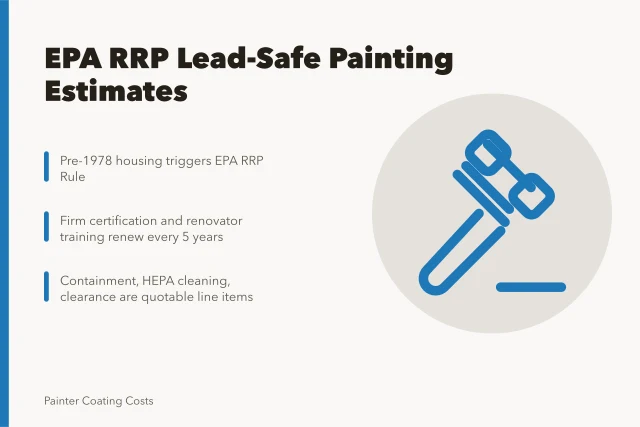
- EPA's RRP rule covers most paid work that disturbs lead paint in pre-1978 housing. A certified renovator must run the job.
- State and local permits can add documents, waiting periods, and clearance tests that change the project timeline.
- Skipping a required permit can lead to a stop-work order and an enforcement case, even if no one is injured.
Lead paint removal cost per square foot for older homes depends more on jurisdiction than surface area. Contractor rates vary by metro because local permit fees and labor supply differ.
Angi, HomeGuide, and Fixr put lead paint removal at roughly $3 to $8 per square foot for wet scraping, chemical stripping, or HEPA vacuuming. Encapsulation with a specialty coating usually runs $1.50 to $4 per square foot.
Full abatement, which includes containment, disposal, and clearance testing, typically runs $8 to $15 per square foot. A 1,500 square foot pre-1978 exterior often lands between $6,000 and $18,000.
The EPA RRP rule requirements set minimum work practices for paid jobs in pre-1978 housing. A flat square foot figure misleads before you know state and municipal rules.
Who has jurisdiction
Three layers of rules decide whether lead paint removal is legal. The federal EPA sets a floor through its RRP rule. It requires a certified renovator, containment, and specific cleanup steps.
States authorized by EPA can add stricter abatement permits and clearance standards. Municipal building departments issue local permits when lead work touches structural elements. Private rules from a landlord, insurer, or homeowners association can also block or condition the work.
OSHA standards for occupational exposure to lead run in parallel and may require air monitoring on some removal jobs. The distinction matters because a state permit does not replace a municipal one, and neither replaces a private contract clause.
Permit fees sit on top of the per square foot price. Municipal lead permits commonly run $50 to $300. State abatement plan review can add $200 to $1,000 or more, and those fees can make a small job cost 20 percent more than the same job in a nearby county.
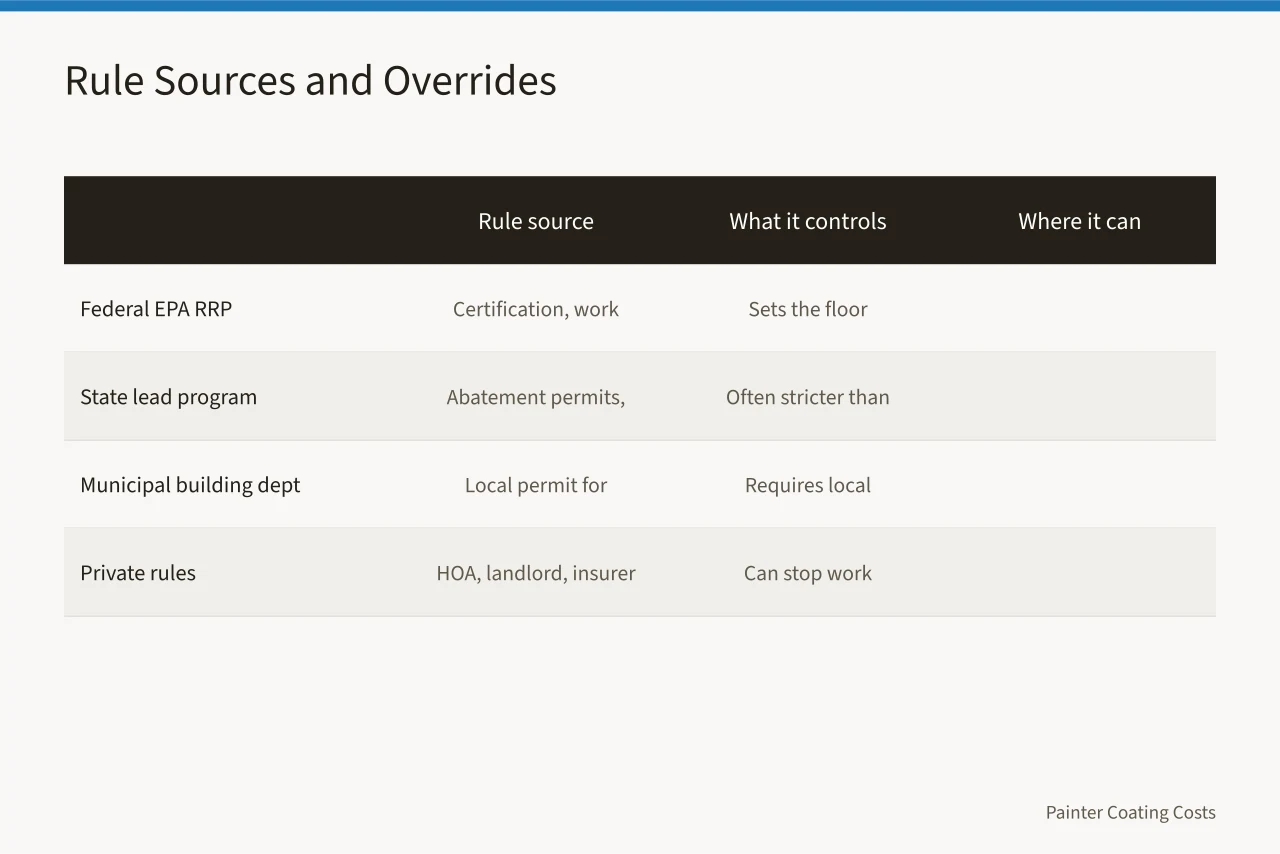
| Rule source | What it controls | Where it can override |
|---|---|---|
| Federal EPA RRP | Certification, work practices, cleanup | Sets the floor; states can add to it |
| State lead program | Abatement permits, clearance tests, waste rules | Often stricter than EPA where authorized |
| Municipal building department | Local permit for structural changes tied to lead work | Can require local sign-off before work starts |
| Private rules | HOA, landlord, insurer requirements | Can stop work even with government permits |
Before quoting a pre-1978 exterior repaint, compare how climate shifts Phoenix vs Seattle exterior repaint costs. The same RRP duties apply in both cities, but weather changes surface prep and containment.
What triggers a permit
Not every lead paint job needs an abatement permit. Renovation under EPA rules is not the same as abatement. Renovation covers repair and painting that disturbs paint, such as sanding or scraping.
Abatement is a permanent elimination of lead hazards, and it is regulated separately. In many states, full removal of lead paint from a wall or component triggers a state abatement permit.
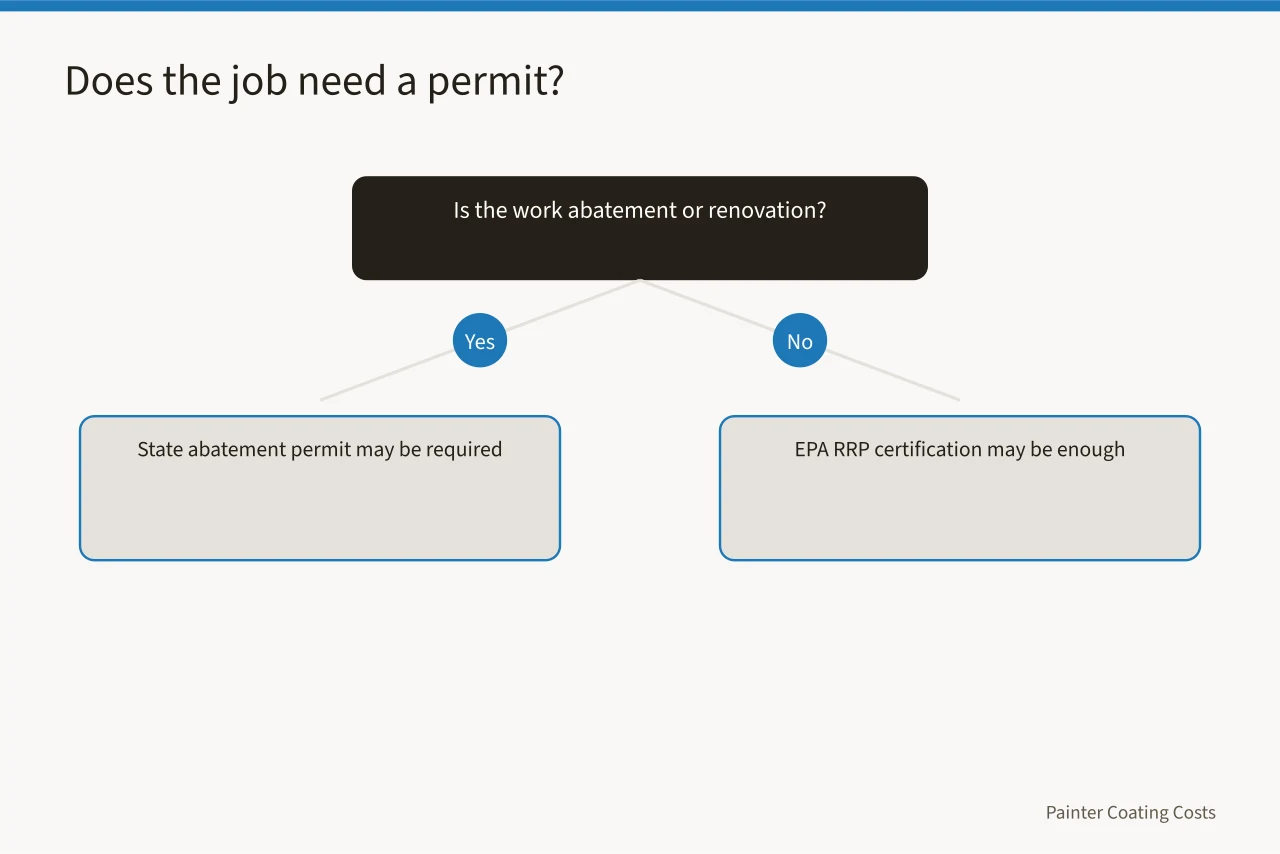
Municipal permits are triggered when work changes structure, such as removing a window or built-in with lead paint. EPA's RRP rule applies to paid renovators who disturb more than six square feet of interior painted surface or 20 square feet of exterior painted surface in a pre-1978 home.
The six square foot and 20 square foot thresholds are for renovation, not full abatement. That threshold does not require a permit by itself. It does require a certified firm and a trained renovator.
Lead paint abatement cost is often driven by that classification, because abatement permits require more documentation than renovation notices. For the baseline certification rule behind these triggers, read EPA RRP lead-safe rules.
Removal by a certified abatement contractor typically starts around $8 per square foot because of containment, worker protection, and disposal. A renovation that stays under the RRP thresholds can cost far less, often $1 to $3 per square foot for careful prep and cleanup.
What to submit
An application for lead paint removal does not look like a simple paint permit. Municipal and state reviewers want evidence that the job will be contained and cleaned correctly.
EPA lead-safe certification and abatement requirements list the federal documents that many states adopt. EPA lead-safe certification cost is not a single federal fee; it is the sum of training and firm application charges.
Use this checklist when a property owner asks what the contractor needs from them.
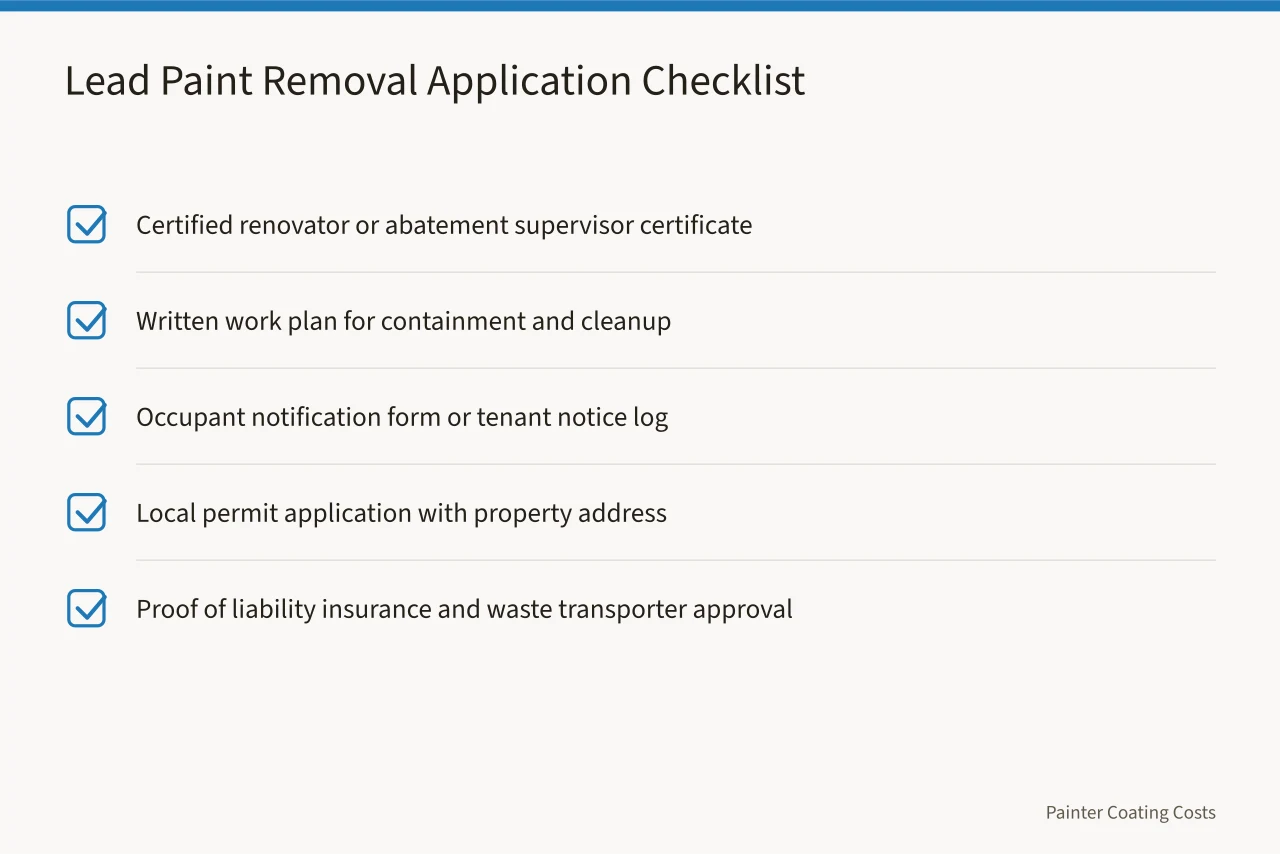
- Certified renovator or abatement supervisor name and certificate number
- Written work plan describing containment, waste handling, and final cleaning
- Occupant notification form or signed tenant notice log
- Local permit application with property address and owner contact
- Proof of liability insurance and, where required, waste transporter approval
Training for a certified renovator usually runs $200 to $400. Firm certification through EPA or an authorized state program often costs $300 to $500. Clearance testing after abatement commonly runs $150 to $500 per unit. Those costs sit on top of the per square foot removal price.
Some states require a lead inspection report or risk assessment before an abatement permit, and the practical test is whether the reviewer can see who is responsible for each stage. A complete package moves faster than a partial one.
A two-story pre-1978 exterior often needs both a state lead permit and a local building permit. The two-story house exterior article explains the surface side.
How long approval takes
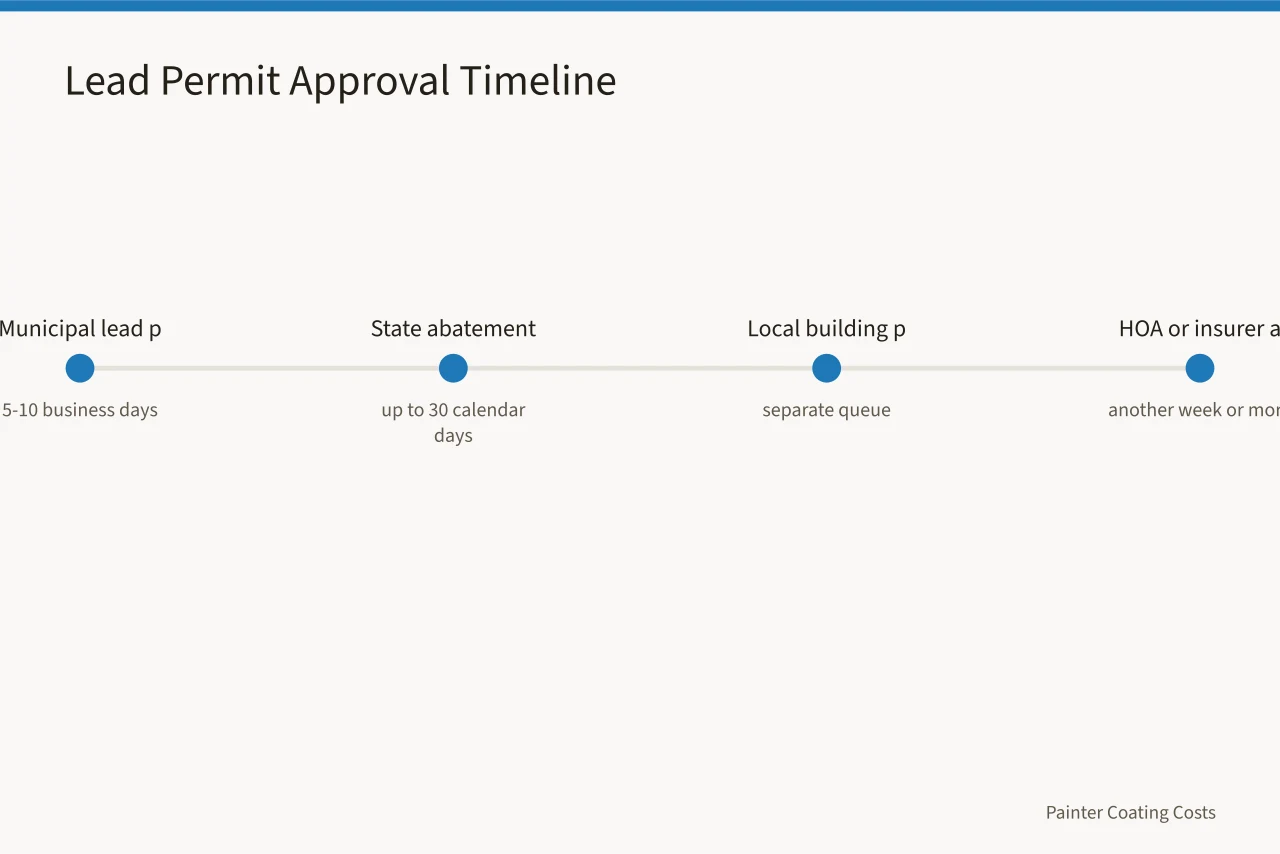
Permit timing depends on the layer of government. A municipal lead permit for a simple removal often takes five to ten business days after a complete application.
State abatement plan review can add up to 30 calendar days. If the job includes structural changes, the local building department may need its own plan check, which runs on a separate queue.
Private approval from an HOA or insurer can add another week or more, and it may require a board meeting. The clock starts only when the package is complete, not when the first question is asked.
Delay carries its own cost. A vacant pre-1978 house can lose a month of rent, often $1,200 to $2,500 in many markets. Storage and security for removed components add more.
What happens if you skip it
Skipping a required lead permit does not stay quiet for long. Neighbors, tenants, or a municipal inspector can report the work. A stop-work order is the usual first enforcement step. It halts the job on the day it is posted and requires a certified supervisor to file a corrective plan before work resumes.
Skipping a state abatement permit can lead to a stop-work order, an enforcement case, and removal of workers from the site until a new work plan is approved.
Federal civil penalties for RRP violations are adjusted for inflation and can reach tens of thousands of dollars per violation. State and local fines can stack on top.
A brick pre-1978 exterior adds masonry rules, and the Painting a Brick House article shows where those rules meet surface prep. The same stop-work logic applies, and the contractor may have to cover containment correction before any repaint.
Common questions
What does lead paint removal cost per square foot in an older home? Angi, HomeGuide, and Fixr put typical removal at $3 to $8 per square foot. Encapsulation runs $1.50 to $4, and full abatement with clearance testing runs $8 to $15. Permit fees, disposal, and metro labor push the final number.
Does the EPA RRP rule require a permit for every pre-1978 paint job? No. The RRP rule requires a certified firm and trained renovator, but a permit is separate and often comes from state or local government. A permit is more likely for abatement or structural work.
What is the difference between lead paint removal and lead abatement? Removal is the physical act of taking off paint. Abatement is a regulated activity designed to permanently eliminate lead hazards, and it usually requires a state permit and clearance testing.
How long does EPA lead-safe certification take for a firm? The firm application is submitted to EPA or an authorized state program after the renovator completes training. Approval times vary by state, but a complete application is often processed in weeks, not days.