Guides
3 licensing rules Texas and California painters must follow
Texas registers painting businesses while California licenses them, so bonds, insurance minimums and penalties differ sharply between the two states.
What to take away
- Texas has no state painting license; the Texas Department of Licensing and Regulation licenses electrical, air conditioning and elevator trades, not painters.
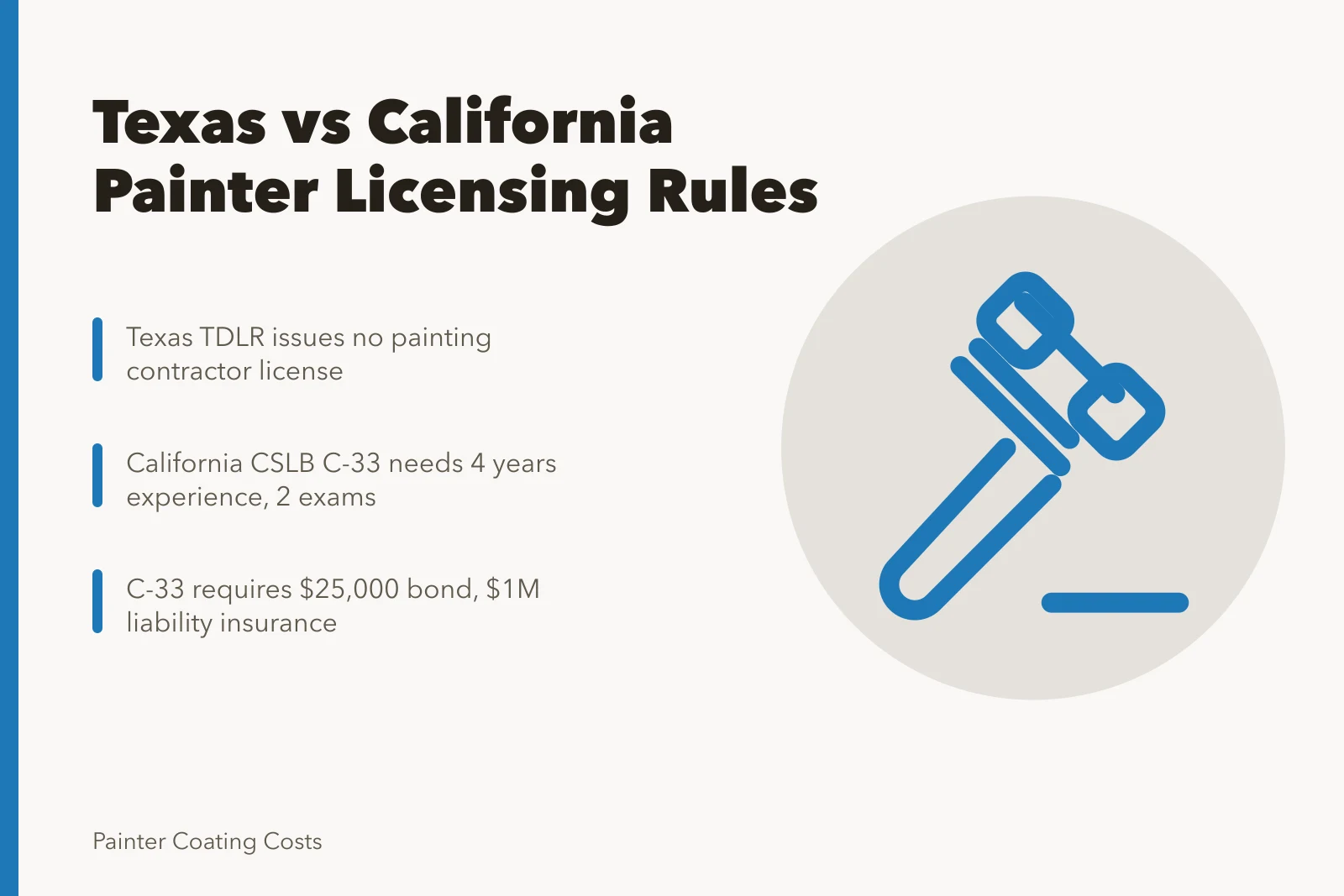
- California issues the CSLB C-33 Painting and Decorating classification, which requires four years of journeyman-level experience and two exams.
- A C-33 license carries a $25,000 contractor bond and $1 million per occurrence general liability coverage; Texas sets no state minimum.
- An unlicensed California contractor cannot sue to collect payment, which turns a lost dispute into a total loss.
- Check every subcontractor's license, bond and insurance status before signing, and recheck at renewal.
Two states, two regimes
A painter crossing the Texas-California line has to unlearn one set of rules before the other makes sense. Texas does not license painting as a trade. California does, and treats it as a classified specialty.
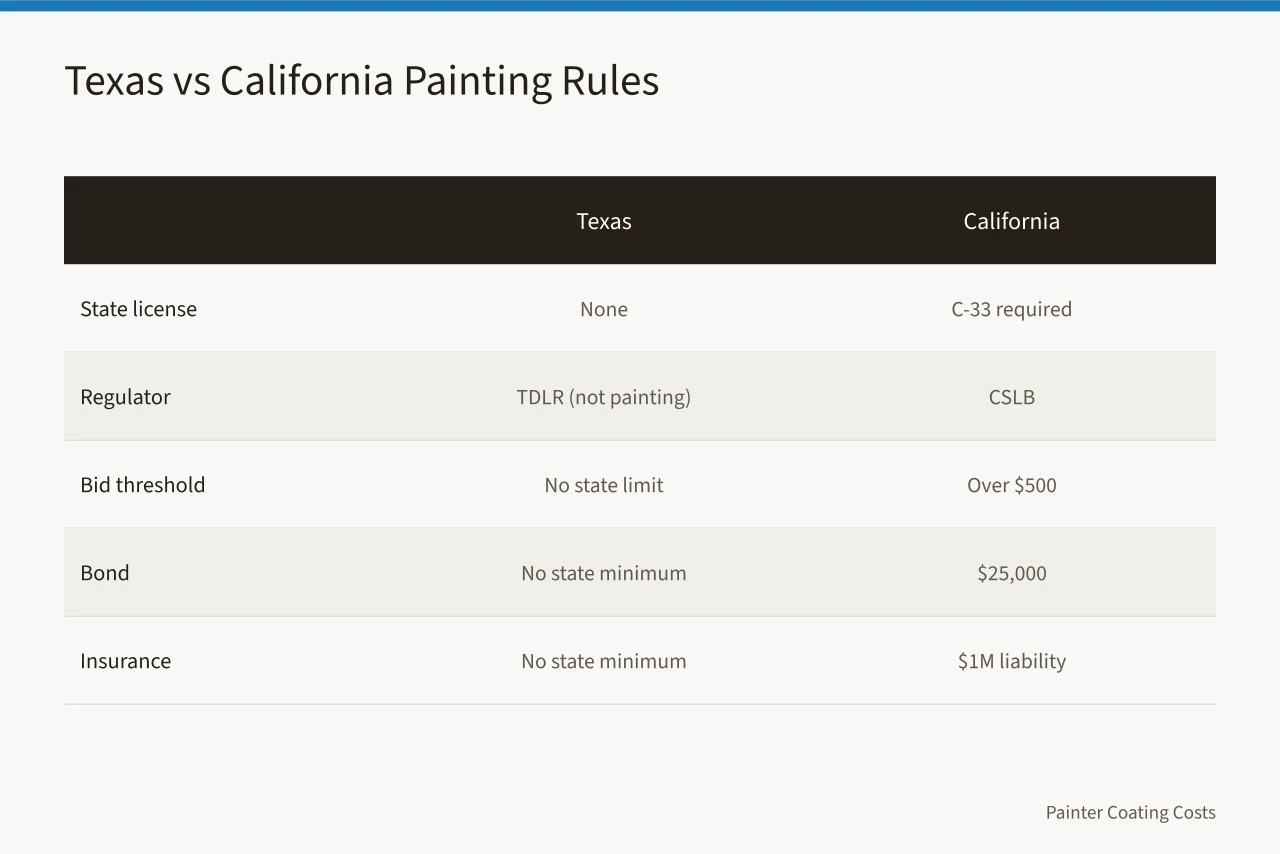
That single difference decides who may bid, what bond gets posted, what insurance is carried, and what happens when someone works without a license.
In Texas, the Texas Department of Licensing and Regulation (TDLR) regulates a published list of trades. Painting is not on it. A painting business still needs a city permit in many jurisdictions, a sales tax permit, and compliance with the EPA Lead Renovation, Repair and Painting Rule on pre-1978 housing.
Add air conditioning or electrical work and the picture changes. Those trades carry TDLR licenses, and bidding them without one draws administrative penalties and a cease and desist order.
California runs the opposite way. Painting is a licensed specialty under the Contractors State License Board (CSLB). A painting business that bids jobs over $500 in labor and materials generally needs a C-33 license.
A C-33 holder cannot take work outside the painting classification without a separate license. For how trade rules, lead-safe work and business registration stack together, the licensing and compliance guide lays out the full stack.
Texas rewards painters who keep paperwork light. California rewards painters who keep it complete. Neither state accepts ignorance as a defense when a complaint arrives.
What TDLR actually regulates
The first fact to absorb: TDLR issues no painting contractor license. It licenses electricians, air conditioning contractors, boiler operators and elevator contractors.
A Texas painting business therefore cannot be licensed by TDLR as a painter, and cannot be cited for lacking a TDLR painting license. That absence is not a loophole; it is simply a different regulatory shape.
What TDLR enforces matters to painters who expand. Bolt air conditioning or electrical work onto a painting company and the company must meet that trade's licensing rules. TDLR can assess administrative penalties and order unlicensed activity to stop.
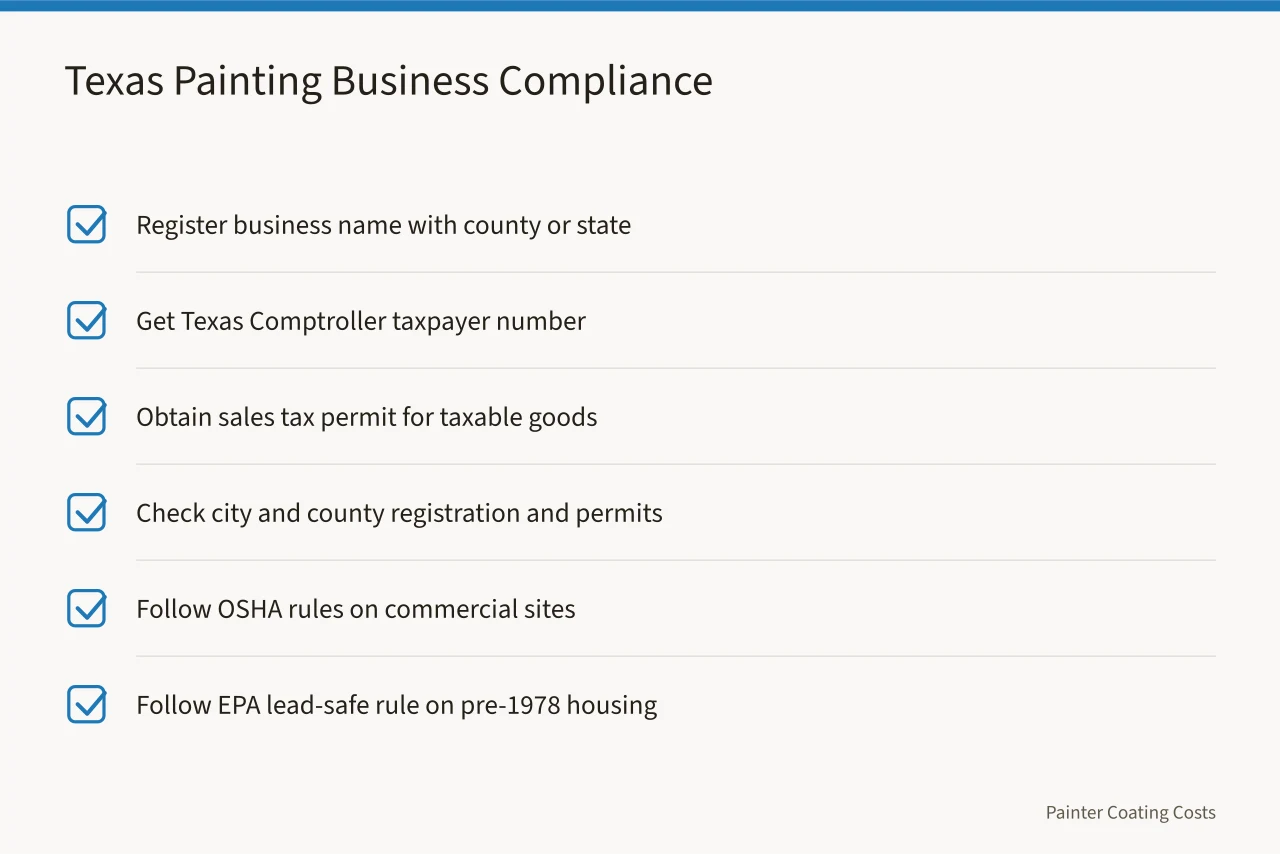
Texas painting license requirements at state level are about registration, not licensure. A sole proprietor registers a business name with the county or the Texas Secretary of State. A taxable entity gets a Texas Comptroller taxpayer number, plus a sales tax permit when selling taxable goods.
Cities and counties layer their own registration, bonding and permit rules on top for construction work inside their limits.
Federal rules apply regardless. OSHA covers painting crews on most commercial sites. The EPA Lead Renovation, Repair and Painting Rule covers pre-1978 housing and child-occupied facilities. Neither agency asks whether Texas licenses painters; both ask whether the crew followed the rule. Lead-safe work practices and respiratory protection belong with certified training providers, not a job-site guess.
An owner assembling these duties from several sources can work through an opening checklist of rules before the first bid.
California C-33, the entry point
The CSLB issues the C-33 Painting and Decorating classification. It covers surface preparation, coating application, wall coverings and related finishing work on structures. It does not authorize framing, drywall installation or electrical work.
The CSLB licenses and regulates contractors, and its public pages spell out the structure painters must follow. The About CSLB page covers the board's role in exams, complaints and enforcement.
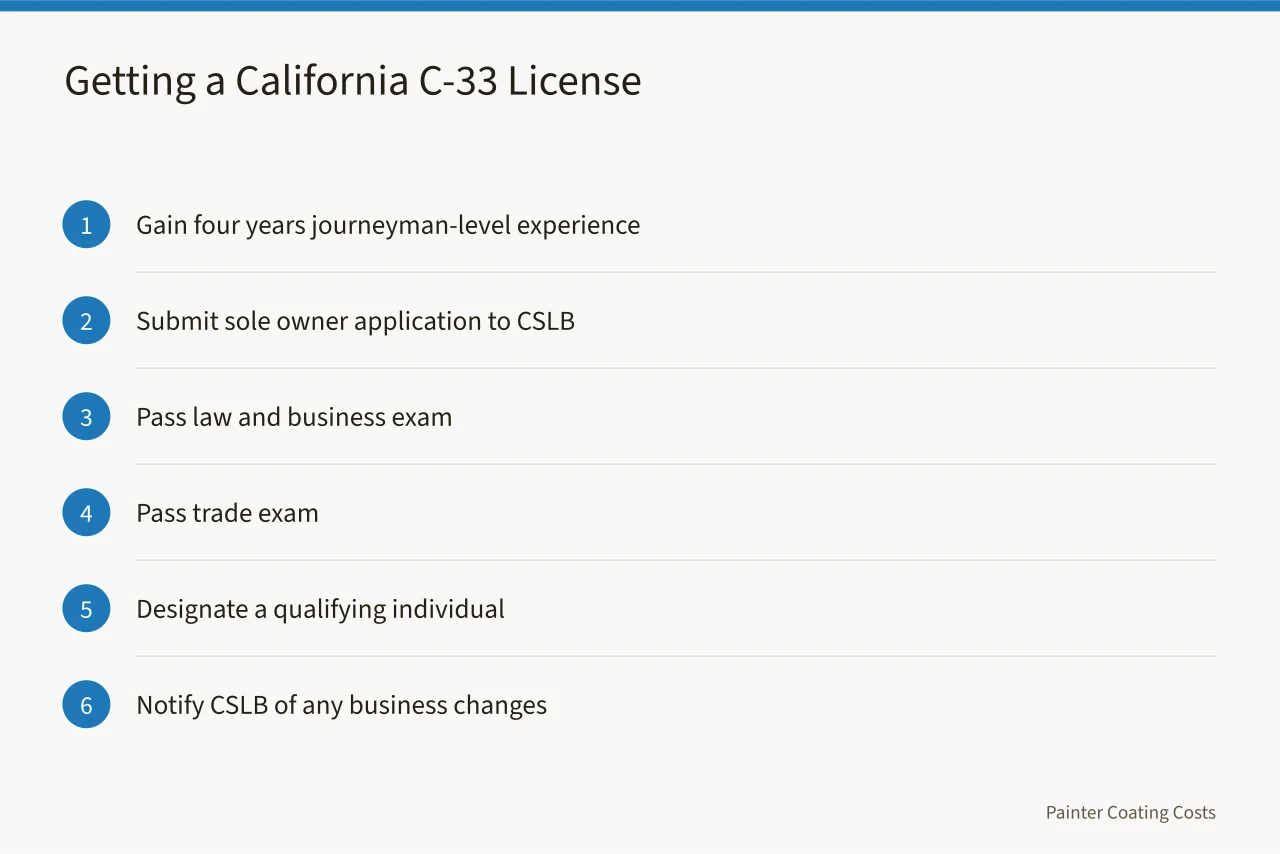
The application path for a sole owner runs through the CSLB. The Apply for a Sole Owner license page covers the paperwork, the experience requirement and the exam process.
California requires four years of journeyman-level experience in the trade, or a board-accepted mix of experience and education. The applicant passes a law and business exam and a trade exam.
Once licensed, the contractor follows the operating rules on the Licensees -CSLB page: advertising standards, contract requirements, and the duty to keep license information current. A C-33 holder who changes business name, address or personnel must notify the board.
California also requires a qualifying individual for each license. That person must be a bona fide officer, partner or employee holding the qualifying experience. Buying an existing painting company does not transfer the license; the qualifier and business structure have to satisfy CSLB rules.
For how California compares with other states, the article on license requirements walks several states side by side. California sits at the strict end, and C-33 is the entry point.
Bond and insurance minimums, state by state
California sets explicit minimums. A C-33 contractor carries a $25,000 contractor bond, and the CSLB requires proof before the license issues. The bond is consumer protection: a homeowner or supplier can claim against it when the contractor fails to pay or performs defective work.
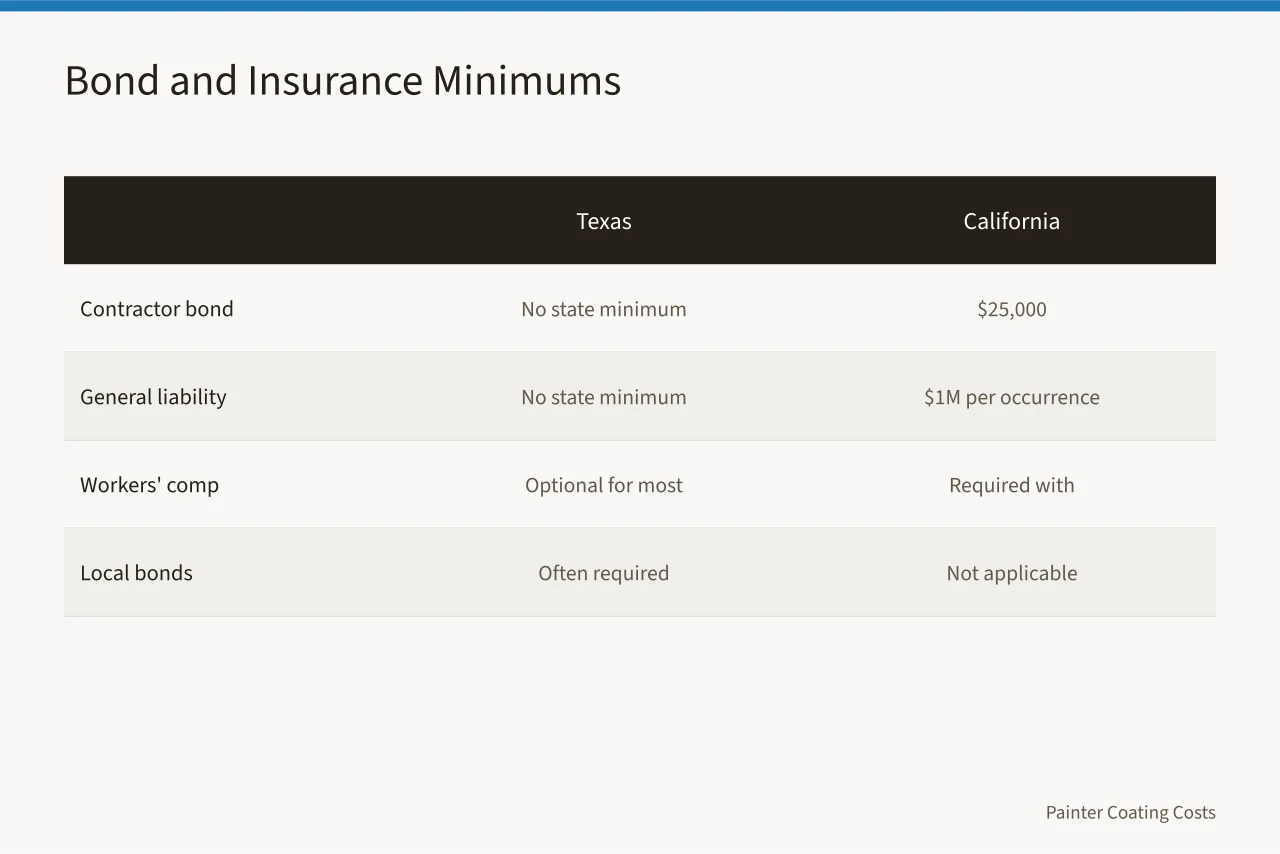
General liability insurance of at least $1 million per occurrence applies to most contractors, along with workers' compensation coverage for any employee. A contractor with no employees may file an exemption under strict conditions; the exemption does not cover uninsured subcontractors. The CSLB can suspend a license for a lapse in coverage.
Texas sets no state minimum bond or insurance requirement for painting contractors. That does not mean operating bare. Cities and counties often require a permit bond or contractor registration bond before issuing permits.
Commercial clients and general contractors routinely demand certificates of insurance. A painting business without general liability coverage loses bids to competitors who carry it.
Workers' compensation in Texas is optional for most private employers, but a contractor with no coverage carries liability exposure and may lose access to certain jobs. Health and auto coverage for crews working from vehicles is a separate line both states' painters carry.
| Requirement | Texas | California |
|---|---|---|
| State painting license | None | CSLB C-33 |
| State contractor bond | None | $25,000 |
| General liability minimum | No state rule | $1 million per occurrence |
| Workers' compensation | Optional for most employers | Required with employees |
| Local registration | Common | Common |
Premiums move with payroll, revenue and claims history. A contractor building a budget can review insurance for a painting contractor business to see how those factors price out. The California minimums are a floor, not a target; public agencies and large general contractors often require higher limits.
What unlicensed bidding costs
California treats unlicensed contracting as a serious offense. Bidding or contracting for work that requires a license can bring criminal charges, civil penalties and a court order to stop. The CSLB can pursue administrative action, and a court may order restitution to the homeowner. Repeat violations raise the exposure.
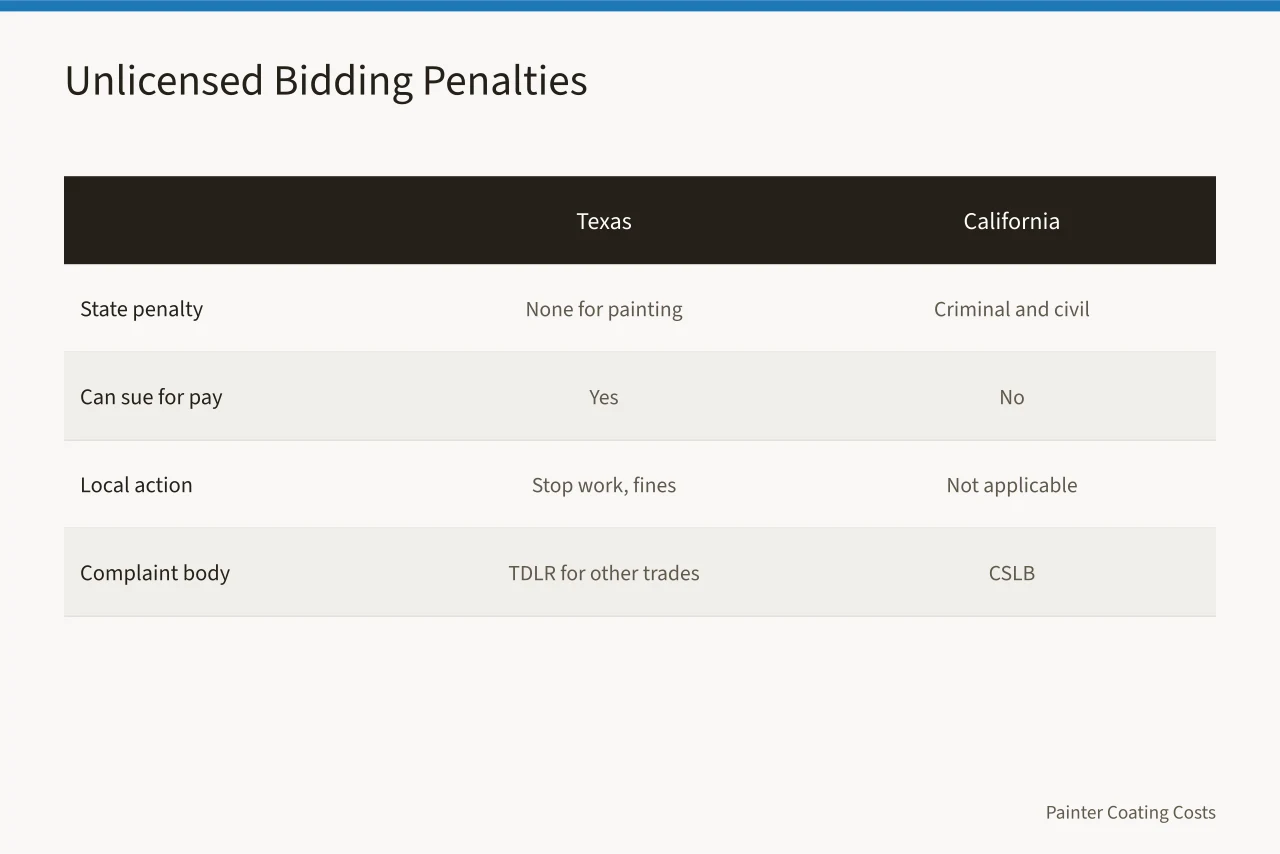
One rule changes the economics outright: an unlicensed California contractor cannot sue to collect payment for work performed. Lose a payment dispute and find the contract unenforceable, and there is no practical remedy left.
The CSLB accepts complaints from homeowners, other contractors and public agencies. The Filing a Construction Complaint - CSLB page explains the process and what the board can do, including mediation, arbitration and disciplinary action. A complaint can also trigger an investigation into the license itself.
Texas penalties for unlicensed bidding apply mainly to TDLR-regulated trades. Perform air conditioning or electrical work without a license and administrative penalties and a cease and desist order follow.
Painting sits outside that framework, so the state does not cite a painter for unlicensed painting.
Local jurisdictions can still stop work, revoke a permit or fine a contractor who skipped registration.
Both states police fraud through consumer protection and theft statutes. A painting contractor who takes a deposit and disappears can face criminal theft charges in either state, license or no license. No Texas painting license does not mean no consequences.
Treat the licensing question as a market entry cost, not a formality. The startup and market guide frames that decision around demand and local rules. California's licensing cost buys access to a market where unlicensed competitors are easier to remove. Texas's lighter rules mean more competition and more reliance on reputation and insurance.
Vetting a painting subcontractor
Hiring subcontractors transfers risk when those subs are unlicensed or uninsured. California gives contractors a free check. The Check A License - CSLB page looks up a license number, business name or personnel name.
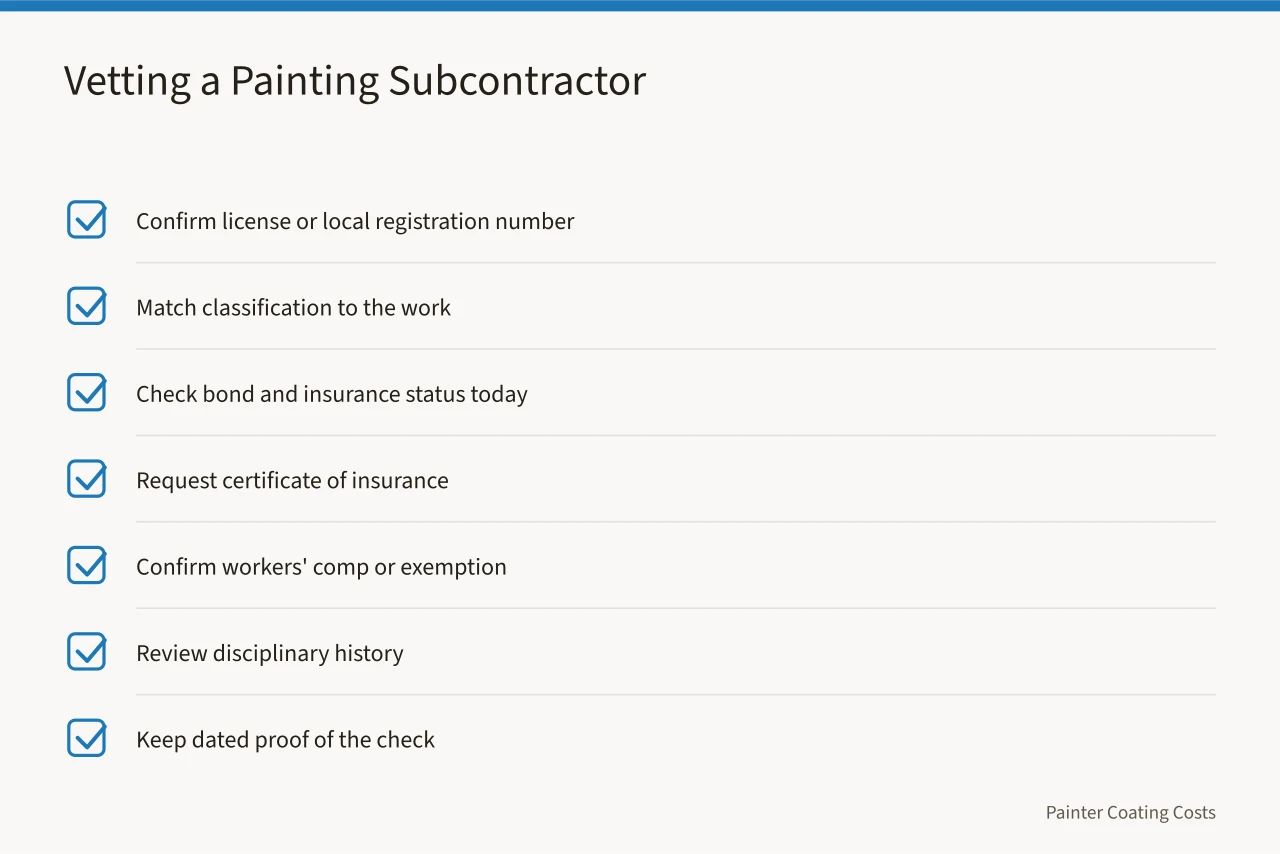
The result shows license status, classification, bond and insurance status, and disciplinary history. Run it before signing a subcontract, not after. A lapsed bond or suspended license should stop the paperwork. Save a dated screenshot or printout, because a general contractor may need to show due diligence later.
Texas has no single state lookup for painting contractors because the state does not license them. Verification means checking local registration, calling the city permit office, and collecting certificates of insurance and workers' compensation documentation. Require those documents in writing and confirm coverage directly with the insurer.
Use this checklist before adding any painting subcontractor:
- Confirm the license or local registration number and status.
- Match the classification to the work being subcontracted.
- Check bond and insurance status as of today.
- Request a certificate of insurance naming your business.
- Confirm workers' compensation coverage or a valid exemption.
- Review any disciplinary history or complaint record.
- Keep dated copies in the job file.
For a California C-33 holder, the lookup also confirms whether the subcontractor may legally bid the painting scope. A sub holding a general contractor license without C-33 may be able to paint under some conditions, but get a direct answer from the CSLB before signing.
Recheck at renewal time. California licenses run on a two-year cycle, and a sub who was compliant at hiring can lapse later. Put the renewal date in the calendar and verify again before the next phase of work.
Common questions
Does Texas require a license to paint?
No. Texas does not license painting contractors at state level, and TDLR issues no painting license. Local registration, permits and federal rules such as EPA RRP still apply.
What is a C-33 license in California?
C-33 is the CSLB classification for Painting and Decorating. It authorizes bidding and performing painting and wall covering work, and it requires experience, two exams, a bond and insurance.
How much is the California contractor bond?
The CSLB requires a $25,000 contractor bond for licensed contractors, C-33 painters included. The bond must stay active for the license to remain valid.
How do I check a painting contractor's license in California?
Use the CSLB online license lookup. Search by license number, business name or personnel name to see status, classification, bond and complaint history.